



To everyone out there living with mental health challenges, I want to begin here, without qualification or deflection.
I’m sorry.
I’m sorry for what the past few days have sounded like as people scramble to explain the heinous crime of a man who annihilated his family.
I’m sorry for how quickly your lives, diagnoses, and struggles have been pulled into that explanation. I’m sorry that before the victim’s name could even settle, the conversation turned in your direction, as if your existence could make sense of something so violent, so deliberate, so devastating and evil.
I’m sorry that once again, you were made to carry something that was never yours. I’m sorry for what all this has likely felt like in your body. I’m sorry for the familiar script that keeps unfolding every damn time something horrific happens.
You already know the lines that get spoken so reflexively. “He must have been mentally ill.” “Something had to be wrong with him.” “No sane person would do something like that.” “Mental illness is real.” “Normalize therapy.”
And I can only imagine what that sounds like to your ears and how it must land as a quiet accusation wrapped in concern. How you have to sit there and translate it and remind yourself, this ain’t about me, this is not who I am, even as the language keeps circling right back to people like you.
That kind of internal work must be exhausting as hell. Always having to constantly separate yourself from a narrative that keeps trying to claim you. Having to hold onto your own truth while the world projects fear onto your existence. That is emotional, psychological, and everyday labor that no one acknowledges when they casually reach for these words.
And each time, whether people intend it or not, your lives, diagnoses, and struggles keep getting pulled into a story that does not belong to you. What you are witnessing is not compassion or care, nor is it a serious engagement with mental health.
It is displacement.
It is the public taking something violent, deliberate, and often patterned, and relocating it into a category that feels easier to manage. They turn cruelty and evil into something clinical. They turn it into something that creates distance between themselves and the reality that this kind of violence is not as foreign, rare, or incomprehensible as they wanna believe.
Because once it gets labeled “mental illness,” it becomes a containable exception instead of a pattern and a malfunction instead of a choice. And in that shift, the harder questions disappear. Questions about power, control, entitlement, misogyny, socialization, and the beliefs that make somebody think they have the right to end another person’s life. All of that shit gets buried under a diagnosis nobody actually confirmed, and assigned by people who would rather pathologize violence than confront how ordinary its roots can be.
And in the process, it places that weight onto you.
I understand what that does, even if though I am not living with mental health challenges myself. Here you are trying, every day, trying to manage your own mind. To navigate depression that makes it hard for you to get out of bed. Anxiety that hums beneath everything you do. Bipolar disorder that reshapes your sense of time and stability. Schizophrenia that alters perception itself. You are working, often quietly and without recognition, to hold your life together.
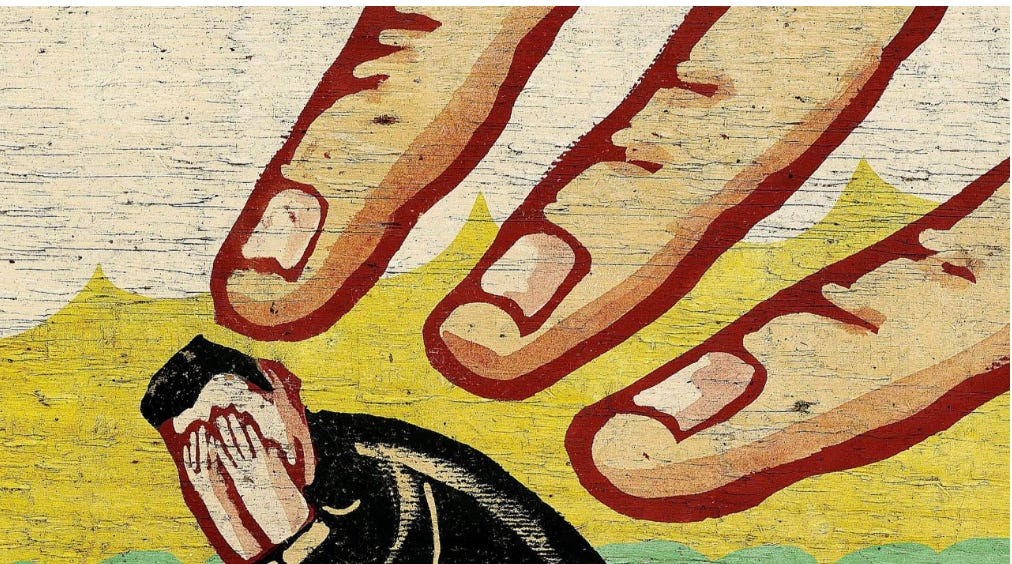
And then you turn on the news, open up social media apps, or simply listen to the people around you, and hear your reality flattened into a warning label. You have to endure hearing your existence used as shorthand for danger. It must be so terribly irksome to feel, once again, that the world is talking about you without ever actually seeing you. As the daughter of a mother who was clinically diagnosed and took her own life when I was a child, I am pissed off for you.
Because every time this happens, it reinforces a lie that you then have to live against. A lie that says your mind makes you unpredictable, unsafe, and beyond understanding. It is a lie that collapses your humanity into a stereotype people can point to when they need to make sense of something frightening. A lie that forces you to over-explain your own existence just to be seen as safe. A lie that makes your vulnerability look like a threat.
“He must have been mentally ill.” That lie is doing a whole lot of damage.
It shapes how people treat you. How institutions respond to you. It shapes whether someone feels safe disclosing their diagnosis, seeking help, or asking for support. It shapes the quiet calculations you have to make about who to trust, what to share, and how to move through the world without being misread. It is stigma, but it doesn’t always announce itself that way. It often arrives dressed as, “We need to take mental health seriously.”
But somehow, taking mental health seriously keeps looking like using it as a catch-all explanation for all kinds of brutality. It keeps looking like attaching it to acts of violence without evidence, care, or any regard for the millions of people who are living with these conditions and harming no one.
And I’m sorry for that contradiction.
I’m sorry that public conversations keep collapsing complexity into something that makes your life harder. Because the truth is, what people are calling “mental illness” in these moments is often something else entirely. It is control. It is entitlement. It is the belief that another person belongs to you. It is the inability to tolerate loss of authority, status, identity, and power. It is the conviction that if you cannot have someone, then nobody else can.
These are not abstract forces. They are learned, reinforced, modeled, minimized, and normalized. They show up in patterns of behavior that people often see long before anything escalates to violence. And yet, instead of naming those patterns or sitting with the uncomfortable reality that violence often grows out of familiar, recognizable dynamics, the conversation gets rerouted back to you. Back to your diagnosis. Back to a narrative that suggests that harm only makes sense if something was fundamentally “wrong” with the person who caused it.
That move does two things at once. First, it distances the rest of us from the violence, by allowing people to believe it is rare, aberrant, disconnected from the world we all participate in. And second, it places the burden of explanation onto you by turning your struggles into a kind of cultural shorthand that says, “this is what danger looks like,” without ever having to examine the deeper conditions that actually produce harm.
And I know that has got to feel like a betrayal. Because while people are out here using mental illness as an explanation for violence, many of you are navigating a completely different reality. One where you are far more likely to be harmed than to harm others. The research and data have confirmed this. You are also likely dealing with systems that are underfunded, inaccessible, or outright hostile to you. Every day you are facing a reality where survival itself can be an achievement that goes unseen.
Listen to me good . . . .
YOU are not the threat. YOU are not the explanation. YOU are not the reason these heinous acts happen. YOU are people living with complexity, vulnerability, and strength that often goes unacknowledged because it does not fit the narrative people want to tell.
What people keep calling “mental illness” in these moments is something else entirely. So let’s call a thing a thing. It is cruelty and domination. It is a willingness to harm, control, and destroy. It is EVIL.
Call it what it is.
Yes, people can be evil AF. And that is exactly what so many people are trying to avoid naming. Because once you say that out loud, you lose the comfort of distance. You lose the illusion that violence only comes from something broken or diagnosable. And then you have to sit with the sobering reality that some people actually choose harm. That they cultivate it and they move through the world with beliefs that justify it.
And those beliefs don’t come out of thin air. They are shaped in ordinary places. In families that excuse control and call it love. In communities that minimize red flags and tell people to “work it out.” In systems that fail to intervene, or worse, quietly reinforce dominance and entitlement. In everyday conversations where harmful ideas go unchecked because confronting them feels inconvenient or uncomfortable.
That’s the part people don’t want to face. That violence is not just an individual failure. It is something that grows in environments where it is tolerated, rationalized, and sometimes even rewarded. And that’s the part people resist the most. They don’t want to imagine that they are moving through these same environments and navigating the same ideas. That the person capable of something heinous might not be some distant, unknowable “other,” but someone familiar. Someone in their circle. Someone they’ve made excuses for. Someone they’ve been taught not to question. Or maybe even themselves.
So instead, people reach for “mental illness” as a shield. It softens what they’re seeing, makes the violence feel clinical instead of intentional, and lets them avoid the harder conversation about how everyday ideas around power, entitlement, and control can harden into something lethal. Because naming evil requires a different kind of accountability. It forces people to confront the systems that shape it, the socialization that feeds it, and the patterns that warn us long before the final act. It asks them to examine how they were raised, what they were taught, what they have excused, and what they have normalized.
Most folks don’t want to do that work. So they rename it, sanitize it and relocate it into you so they can protect themselves from having to reckon with how close all of this actually is.. They turn violence into pathology so they don’t have to face the more unsettling truth that some people are deeply invested in control and harm, and that these acts are not random eruptions, but the accumulation of ordinary ideas, behaviors, and permissions built over time that hide behind a label that was never meant to carry that weight.
So, I want to say this to you as lovingly as possible. You deserve better than to be pulled into these conversations as a placeholder for fear. You deserve language that reflects the reality of your lives, not language that distorts it. You deserve a public discourse that does not use you as a shield to avoid harder truths about violence, power, and accountability. And you deserve to move through the world without having to constantly push back against a story that was never yours to begin with.
Because when we strip away the reflex to call everything “mental illness,” what we are left with is more difficult, but also more honest. We are left with choices, patterns, and social and cultural dynamics that we can actually examine, interrupt, and change.
But getting there requires something many people resist. Which is letting go of the idea that violence is always the result of something unknowable, diagnosable, and safely contained in “other” people. It requires recognizing that harm often grows out of beliefs and behaviors that are much closer to home.
I’m sorry for the weight and repetition of all this. You deserve to exist outside of that script. You deserve to be understood on your own terms. And you deserve a world that does not keep turning your struggle into someone else’s explanation for harm.
Thanks for reading. If this piece resonated with you, then please consider becoming a paid subscriber. Paid subscriptions help keep my Substack unfiltered and ad free. They also help me raise money for HBCU journalism students who need laptops, DSLR cameras, tripods, mics, lights, software, travel funds for conferences and reporting trips, and food from our pantry. You can also follow me on Facebook!
We appreciate you!