


The Genius of Black People
Created by Rev. Dr. Otis Moss III, TheHub.news presents its Black History Month series celebrating the genius of Black people—stories of courage, faith and creativity forged in struggle. Inspired by ancestors like Walter Francis White, this series honors sacred memory and lifts up the divine brilliance shaping justice and resilience today.
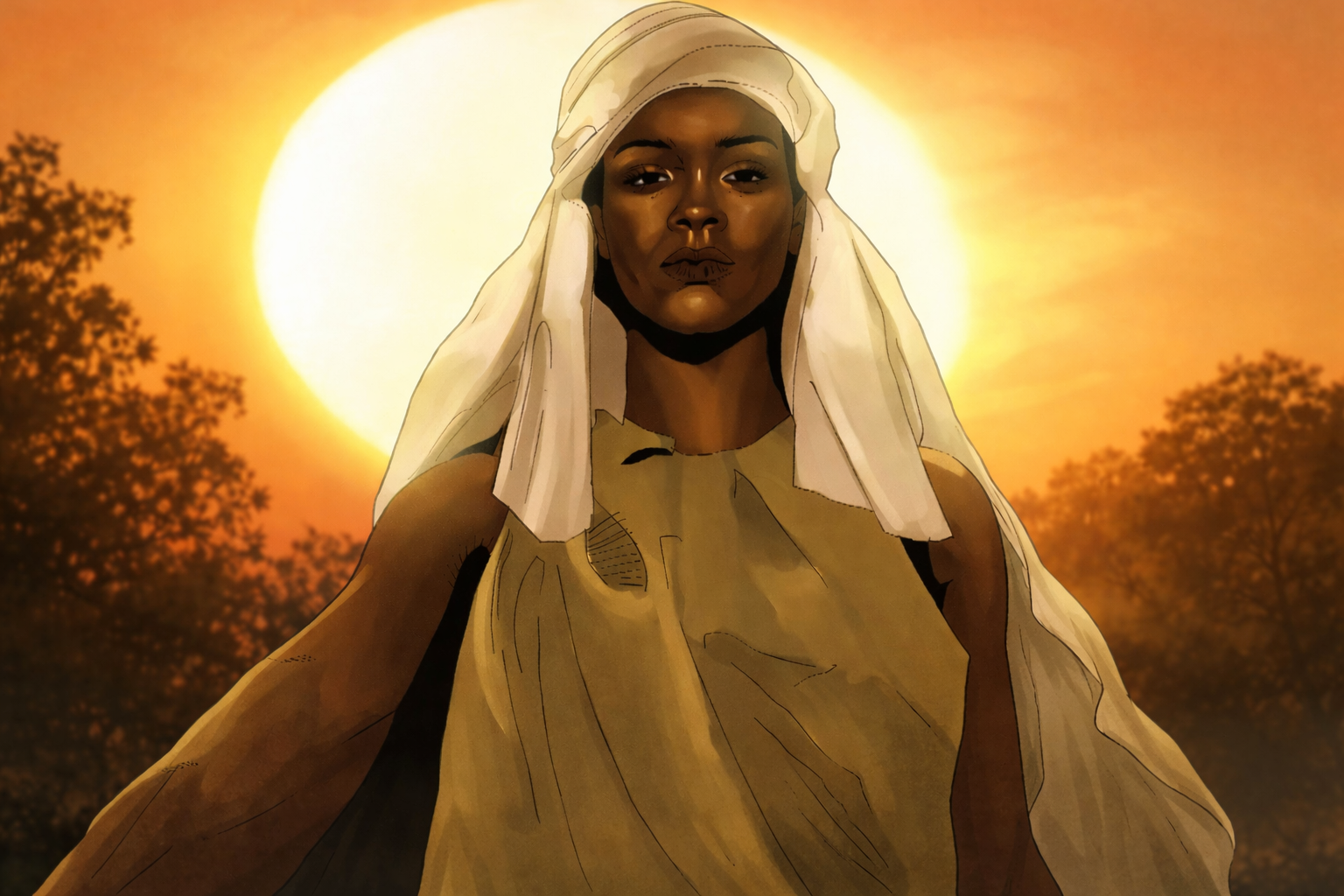
Also known as Chimpa Via, Kimpa is a daughter of the Kingdom of Kongo, born around 1684. Her life is a testament to the power of resistance to European colonization. Emerging in a time when Kongo was fractured by civil war, slave raids and foreign interference, she became a prophetic voice who dared to imagine a different future for her people.
As a young woman, Kimpa Vita was deeply shaped by Catholic teachings, which had been present in Kongo for nearly two centuries. Yet she refused to accept the idea that God and holiness were European. Claiming visions of Saint Anthony of Padua, she announced that the saint had chosen Kongo as a new spiritual center and that Christ, Mary and the apostles were in fact, Kongolese. Through this bold reimagining, Kimpa insisted that salvation did not require rejecting African identity; instead, she fused Christian symbols with Kongo political hopes.
Her movement, often called the Antonian movement, spread rapidly among peasants, nobles, and displaced war refugees. She preached that the warring Kongo factions must reunite in the historic capital of Mbanza Kongo, known as São Salvador under the Portuguese. By calling for the restoration of Kongo unity and dignity, Kimpa offered a powerful spiritual critique of both the local elite and European missionaries, whose presence she saw as complicit in the devastation of her land.
Kimpa Vita’s challenge was not only religious but profoundly political. She undermined the authority of Capuchin missionaries by preaching in Kikongo, centering African sacred sites and declaring that the true Christian community was Black and African. Her insistence that God spoke through a young, Kongolese woman threatened both patriarchal norms and the structures of colonial power.
In 1706, rival nobles and missionary priests moved against her. Accused of heresy and witchcraft, Kimpa Vita was tried and burned at the stake while pregnant, her followers dispersed or forced into silence. Yet her vision did not die with her. In reclaiming Christianity as an African faith and insisting on Kongo’s right to self-determination, she anticipated later anti-colonial and Pan-African movements.
Today, Kimpa Vita endures as a symbol of spiritual defiance and the enduring struggle to imagine liberation on one’s own terms.
Her legacy also lives in contemporary African-initiated churches, liberation theologies, and feminist readings of history, which see in her life a radical claim that the divine can be encountered in local languages, bodies and histories.
Remembering Kimpa Vita means remembering that resistance to empire is not only fought with weapons, but with stories of who we are.
Source: https://www.nypl.org/blog/2021/10/04/ kimpa-vita-kingdom-kongo-embodiment-resistance.