




Close Menu
TheHub.news

    The Guinea-Bissau Vaccine Study Fits a Long History of US Medical Racism

    By TheHub.news Staff

    “History Had Me Glued to the Seat”: Unsung Civil Rights Trailblazer, Claudette Colvin, Dies at 86

    By Danielle Bennett

    At Davos, Trump Lays Out Nationalist Agenda With Greenland Bid and Migrant Attacks

    By TheHub.news Staff

    Subscribe to Updates

    Get the latest creative news from FooBar about art, design and business.

    X (Twitter) Instagram YouTube
    X (Twitter) Instagram YouTube
    TheHub.news
    Support Our Work
    • Home
    • Our Story
      • News & Views
        • Politics
        • Injustice
        • HBCUs
        • Watch
      • Food
        • Cuisine Noir
        • soulPhoodie
      • Passport Heavy
      • Travel
      • Diaspora
      • This Day
      • Entertainment
      • History
      • Art
      • Music
    • Health
    • Money
      1. Copper2Cotton
      2. View All

      Dividend Update: August 2018

      December 9, 2025

      How to Fight Inflation and Win

      December 9, 2025

      August 2018 Net Worth Update

      December 9, 2025
      Passive Income

      Be Passive About Your $

      November 17, 2025

      August 2018 Net Worth Update

      December 9, 2025

      More Blacks Needed On Corporate Boards

      December 9, 2025

      How to Fight Inflation and Win

      December 9, 2025
      Passive Income

      Be Passive About Your $

      November 17, 2025
    • Books
    • Business
    • Sports
      1. First and Pen
      2. View All

      So Where Do Black NFL Head Coaches Stand in 2026?

      January 20, 2026

      Thank You Mike Tomlin, You Deserved Better Than Some Gave You

      January 19, 2026

      If You’re Mad at Lynn Jones-Turpin’s Kindness, That’s Your Issue

      January 14, 2026

      Doc Rivers Calls Shooting of Renee Nicole Good “Straight Up Murder”

      January 13, 2026

      So Where Do Black NFL Head Coaches Stand in 2026?

      January 20, 2026

      Thank You Mike Tomlin, You Deserved Better Than Some Gave You

      January 19, 2026

      If You’re Mad at Lynn Jones-Turpin’s Kindness, That’s Your Issue

      January 14, 2026

      Doc Rivers Calls Shooting of Renee Nicole Good “Straight Up Murder”

      January 13, 2026
    • Tech
    • Podcasts
      1. Karen Hunter is Awesome
      2. Lurie Breaks it Down
      3. Human(ing) Well with Amber Cabral
      4. Financially Speaking
      5. In Class with Carr
      6. View All

      The Guinea-Bissau Vaccine Study Fits a Long History of US Medical Racism

      January 22, 2026

      “History Had Me Glued to the Seat”: Unsung Civil Rights Trailblazer, Claudette Colvin, Dies at 86

      January 22, 2026

      At Davos, Trump Lays Out Nationalist Agenda With Greenland Bid and Migrant Attacks

      January 22, 2026

      Touadéra Secures Third Term

      January 22, 2026

      The Guinea-Bissau Vaccine Study Fits a Long History of US Medical Racism

      January 22, 2026

      “History Had Me Glued to the Seat”: Unsung Civil Rights Trailblazer, Claudette Colvin, Dies at 86

      January 22, 2026

      At Davos, Trump Lays Out Nationalist Agenda With Greenland Bid and Migrant Attacks

      January 22, 2026

      Touadéra Secures Third Term

      January 22, 2026

      The Guinea-Bissau Vaccine Study Fits a Long History of US Medical Racism

      January 22, 2026

      “History Had Me Glued to the Seat”: Unsung Civil Rights Trailblazer, Claudette Colvin, Dies at 86

      January 22, 2026

      At Davos, Trump Lays Out Nationalist Agenda With Greenland Bid and Migrant Attacks

      January 22, 2026

      Touadéra Secures Third Term

      January 22, 2026

      The Guinea-Bissau Vaccine Study Fits a Long History of US Medical Racism

      January 22, 2026

      “History Had Me Glued to the Seat”: Unsung Civil Rights Trailblazer, Claudette Colvin, Dies at 86

      January 22, 2026

      At Davos, Trump Lays Out Nationalist Agenda With Greenland Bid and Migrant Attacks

      January 22, 2026

      Touadéra Secures Third Term

      January 22, 2026

      The Guinea-Bissau Vaccine Study Fits a Long History of US Medical Racism

      January 22, 2026

      “History Had Me Glued to the Seat”: Unsung Civil Rights Trailblazer, Claudette Colvin, Dies at 86

      January 22, 2026

      At Davos, Trump Lays Out Nationalist Agenda With Greenland Bid and Migrant Attacks

      January 22, 2026

      Touadéra Secures Third Term

      January 22, 2026

      How Insurers Use Your ZIP Code and Credit Score Against You

      January 21, 2026

      In Class With Carr: New World Order

      January 19, 2026

      Will Democrats Vote to Fund Slave Catchers?

      January 17, 2026

      Iran’s Uprising Collides With Trump’s Foreign Policy

      January 16, 2026
    TheHub.news
    Health

    Breaking Stigmas: Why Are We So Quiet About Pregnancy Loss? 

    By Danielle BennettAugust 13, 202507 Mins Read
    Facebook Twitter LinkedIn Email Copy Link
    Image credit: ShutterStock
    Share
    Facebook Twitter LinkedIn Email Copy Link

    Miscarriages and stillbirths are profoundly heart-wrenching experiences that impact many individuals, hitting close to home for a staggering one in four pregnancies. The pain from such losses, whether early in pregnancy or at a later stage, can be incredibly intense and deeply personal.

    Even though these experiences are quite common, they often remain overlooked and shrouded in silence. Unlike other types of loss that are typically accompanied by funerals and community support, many who experience pregnancy loss find themselves in an isolated place filled with stigma and shame. This suppression may leave many grappling with agonizing feelings of sorrow, making them feel as though they must face their grief on their own and fight a lonely battle.

    These private tragedies are part of a vicious cycle that got its start from a wide range of deep-seated causes. In many cultures worldwide, feelings of guilt and concepts of dishonor are often tied to long-standing beliefs and traditions, and when it comes to views about motherhood and fertility specifically, Black culture was no different. In early African communities, the loss of a pregnancy carried enormous societal emotional burdens, and it was often examined through a lens of blunder and mismanagement. These ideas influenced how people processed their grief and how they interacted with their social circles in the aftermath.

    “In African culture, there is a great deal of pressure on women to have children, particularly sons,” Dr. Ngozi Okafor, a Nigerian psychiatrist and expert on African culture, explained to Africa Rebirth. “When a woman experiences a miscarriage, it can be seen as a personal failing, a failure to produce a child, and even as a punishment for some perceived wrongdoing.”

    Dr. Okafor also notes that as a result, some people might feel the need to keep their loss a secret because they fear judgment from family and friends. “They worry that sharing their pain might invite unwanted scrutiny.” Others may, “find that they don’t get the understanding or support they need,” making the process feel even lonelier.

    In the Western world, the conversation around miscarriages especially was somewhat different before the twentieth century compared to today. Back then, with birth control options nearly nonexistent (and abortion was illegal and often perilous), many women felt overwhelmed by the possibility of more children. For some, miscarriage brought relief – a financial and physical escape from the demands of caring for more offspring. Articles from the 1800s even described it as a blessing, suggesting nature intervened to alleviate their struggles.

    This openness encouraged a sense of understanding among those women during that time. But, the discussions were often romanticized, which was ultimately harmful. The truth about pregnancy loss involves serious risks, and women have historically faced, and continue to face, real threats such as infections and even death.

    Today, modern medical advancements have greatly changed our understanding of pregnancy. We can now detect it earlier—tests can spot it days before a missed period and fetal heartbeats can be identified as early as six weeks. Additionally, enhanced imaging techniques, like 3-D ultrasounds, create lifelike images of developing fetuses. While these innovations offer valuable insights, mental health experts say that this early discovery is deepening sentimental connections and attachments even in early stages. And this raises the emotional stakes that complicate how we handle pregnancy loss.

    Elizabeth A. Grill, Psy.D., Director of Psychological Services at the Ronald O. Perelman and Claudia Cohen Center for Reproductive Medicine, an Associate Professor of Psychology in the Departments of Obstetrics and Gynecology, Reproductive Medicine, and Psychiatry at Weill Medical College of Cornell University, and author of the Beyond the Womb column for Psychology Today, shares the following strategies to help us and our loved ones navigate this extremely challenging time.

    Share Your Feelings…They Matter

    Talk with Your Partner. Mourn together, not separately. Be truthful and open. Everyone gets on differently, so you might say, “This is really hard. I hope we can talk about it, even if it’s painful, and that we each cope in our own ways.” This promotes a safe space for conversation without judgment.

    On the other hand, saying, “You don’t seem as upset as I am” can come off as blaming and make it hard to have a meaningful conversation.

    Communicate with friends and family who can offer support. Share your news with those who meet your emotional needs, rather than out of obligation. Some family members might focus on their own grief and seek your support, while others aim to be helpful. Still, be aware that some may express judgment or blame, so remember, your priority is not to manage anyone else’s feelings.

    • Say: “I wanted to share something that’s been difficult, and I know I can count on your support. We had a miscarriage. I understand that this might bring up emotions for you, too, but I ask that you find other people to process with. Right now, I need all my energy to cope.”
    • Avoid minimizing or deflecting: “It wasn’t that far along” or “I’m fine. It’s no big deal; we will just try again.”

    It’s perfectly acceptable to set limits and clearly express what you need. You could say, “I’m not ready to discuss this in detail, but I really value your support.” It’s also okay to ask for assistance, like saying, “Can you check in with me next week?” or “Can we talk about something different for a bit?”

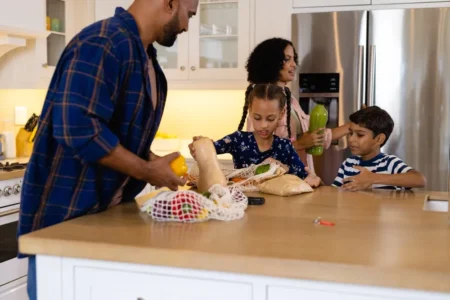
    When engaging with kids, be honest at their level. If your child or young relative was aware of the pregnancy or noticed changes in how you act, it’s crucial to recognize the loss. Ignoring it can create confusion or distrust. Kids usually pick up on when something is not right. If you don’t explain things clearly, they might feel scared or even think that they are to blame for what’s going on.

    Image credit: Barbara Olsen

    For young children (ages 3-7):

    • Say: “The baby stopped growing and won’t be born. We’re very sad, and it’s OK if you feel sad too.”
    • Avoid: Phrases like “the baby went to sleep” (which may create fear around sleep or illness).

    For older children and teens:

    • Say: “Sometimes, pregnancy doesn’t go the way we hope. It’s not anyone’s fault. We’re grieving, but we’ll get through this together.”
    • Avoid: “Don’t worry about it” (teens may feel invalidated or pushed away).

    What Not to Say to Someone Who Has Suffered a Loss (And Why)

    Even when we mean well, some words can cause more harm than good:

    • “Everything happens for a reason.”
    • “At least you can get pregnant.”
    • “You’ll have another baby soon.”

    These statements aim to provide comfort, but they can come across as disapproving. However, the following suggestions are more helpful.

    • “I’m so sorry.”
    • “I’m here for you.”
    • “This must be really hard.”
    • “How can I help?”

    Don’t Forget About Yourself

    Going through a pregnancy loss can be one of the most painful experiences you might encounter, and it’s completely normal not to have all the answers right away. Grieving is a personal journey, and it’s important to give yourself permission to feel whatever emotions come up—like anger, sadness or confusion—without feeling rushed to “get over it.”

    Finding support from a therapist, a support group or a close friend can really help. It’s not just about dealing with the loss; it’s also about healing and connecting with others who may be going through something similar. Sharing your story can not only aid your recovery but also provide comfort to others who might feel alone in their grief.

    If you or someone you know has gone through a miscarriage or pregnancy loss, you’re not alone; there is a whole community ready to support you during this difficult time. Don’t hesitate to reach out, talk about it and start your healing process.

    Below is a brief list of resources to help you get started.

    Nema Health

    Black Moms in Loss Support Group

    Lucinda’s House

    The Miscarriage Association

    Health miscarriage Pregnancy loss Wellness
    Danielle Bennett

    Danielle Bennett, a hairstylist of 20 years, is the owner of The Executive Lounge, a hair salon that caters to businesswomen, located in the Chelsea neighborhood of New York City. She specializes in natural hair care, haircuts, color, hair weaving and is certified in non-surgical hair replacement. Danielle partners with her clients to provide customized services, while she pampers them with luxury products and professional, private accommodations. “The Executive Lounge is your home away from home; it is a tranquil, modern sanctuary where you matter. Your time is valued and your opinion counts. Why? Because you deserve it.” - Danielle Bennett

    Related Posts

    The Guinea-Bissau Vaccine Study Fits a Long History of US Medical Racism

    January 22, 2026

    “History Had Me Glued to the Seat”: Unsung Civil Rights Trailblazer, Claudette Colvin, Dies at 86

    January 22, 2026

    At Davos, Trump Lays Out Nationalist Agenda With Greenland Bid and Migrant Attacks

    January 22, 2026
    Add A Comment

    Comments are closed.

    Recent Posts
    • The Guinea-Bissau Vaccine Study Fits a Long History of US Medical Racism
    • “History Had Me Glued to the Seat”: Unsung Civil Rights Trailblazer, Claudette Colvin, Dies at 86
    • At Davos, Trump Lays Out Nationalist Agenda With Greenland Bid and Migrant Attacks
    • Touadéra Secures Third Term
    • This Day in History: January 22nd

    More Than Money : If This Is a Revolution, What Changes Do You Want?

    By TheHub.news Staff

    Candace Parker Named President of Adidas Women’s Basketball

    By FirstandPen

    Ep. 86- Cooking with Coach Cass: Connect with Love

    By Donika Lleshi

    In Class with Carr: ‘The Woman King,’ ‘Black Adam’ and Re-Presentation

    By TheHub.news Staff

    Subscribe to Updates

    A free newsletter delivering stories that matter straight to your inbox.

    About
    About

    Celebrating US from one end of the land to the other. We record our acts, our accomplishments, our sufferings, and our temporary defeats throughout the diaspora. We bring content that is both unique and focused on showing the world our best unapologetically.

    X (Twitter) Instagram YouTube

    The Guinea-Bissau Vaccine Study Fits a Long History of US Medical Racism

    By TheHub.news Staff

    “History Had Me Glued to the Seat”: Unsung Civil Rights Trailblazer, Claudette Colvin, Dies at 86

    By Danielle Bennett

    At Davos, Trump Lays Out Nationalist Agenda With Greenland Bid and Migrant Attacks

    By TheHub.news Staff

    Touadéra Secures Third Term

    By Veronika Lleshi

    Subscribe to Updates

    A free newsletter delivering stories that matter straight to your inbox.

    © 2026 TheHub.news A 501(c)(3) tax-exempt organization.

    Type above and press Enter to search. Press Esc to cancel.