



Long before the term “financial inclusion” existed, Stephanie St. Clair was inventing it herself.
Shut out of white-owned banks and investing firms in Harlem in the 1920s, this brilliant entrepreneur built a massive fortune in the underground numbers racket.
Ms. St. Clair didn’t just accumulate her wealth; she funded Black-owned businesses, took down dirty cops, mentored legendary gangsters like Bumpy Johnson, and even proved that a self-made Black woman could outsmart the mob.
This is her story.
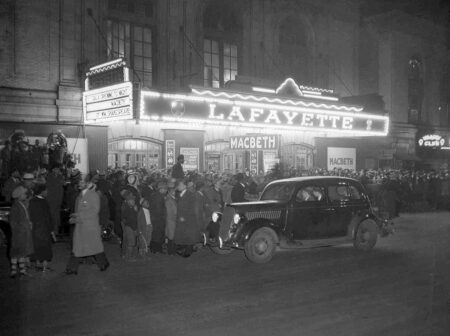
During the Great Migration, which saw millions of African Americans moving north to cities like Harlem in the 1920s and 1930s, the journey was about so much more than just escaping the harsh realities of the Jim Crow South. It was a quest for brighter opportunities, economic stability and a richer cultural life. Harlem became a dynamic hub where art, music and literature flourished, giving rise to the Harlem Renaissance.
Nevertheless, in addition to these changes, another unique aspect of daily life began to take shape during this period.
It was called the “policy” or “numbers” game, an illegal lottery that captured the imaginations and hopes of many. Players would pick three numbers between 000 and 999, eagerly anticipating the daily draws, which were often sourced from public events like the New York Stock Exchange, published interest rates and the results of horse races. This game not only provided a chance for people to dream, however. It also became a community staple that reflected the ingenuity, struggles and dreams of those finding their way in a newly bustling era.
“Numbers gambling enabled many African Americans to supplement low wages and [reach] economic security,” LaShawn Harris, a Michigan State University history professor, writes in her book Sex Workers, Psychics, and Numbers Runners: Black Women in New York City’s Underground Economy, as reported by History.com.
“Some enjoyed the opportunity of attaining wealth and financial independence. With their winnings, Blacks paid bills, bought radios and clothes, and even started their own numbers operations.”
The numbers game was thriving and it required many individuals to work together and keep it alive, from the ticket collectors to those who dished out winnings. But at the heart of it all stood the de facto banker, the financial backbone of the operation. Ms. St. Clair was one such banker, a name that resonated through the streets as she deftly managed the funds that made the game tick.
With an effortless charm and a sharp business acumen, she became a familiar face, known not just for her role in the game but also for her ability to connect with the community. People trusted her and that trust was essential in a prohibited game that prospered on the thrill of chance and the aspirations of hitting it big.
The Unwritten Years
Not much is known about Ms. St. Clair’s early life. She was born on December 24th, 1897 in Guadalupe, French West Indies, but the specifics of her journey to New York and the initial steps she took to establish her “bank” remain largely unknown. But when she was riding high, her business earned an impressive $4 million annually and she proudly dubbed herself the “Queen of Numbers.”
She led a formidable operation, initially managing a team of 40 to 50 runners, supported by 10 comptrollers and several bodyguards for her safety. One of whom was Ellsworth “Bumpy” Johnson, who served as her principal lieutenant and chief enforcer – and who would eventually become her successor. But unlike anyone else in the game at that time, she used modern technology like telephones and adding machines, making her business the most efficient in town. It was faster, more accurate and didn’t require the need for scores of runners that could increase room for error.
Eventually, the entire underworld would know Ms. St. Clair’s name. She resided at 409 Edgecombe Avenue, one of Harlem’s most prestigious buildings in the Sugar Hill section. She shared the iconic, 13-story, multi-dwelling complex with neighbors like W.E.B. DuBois, future Supreme Court Justice Thurgood Marshall and other prominent Black civil rights leaders, doctors, lawyers and artists.
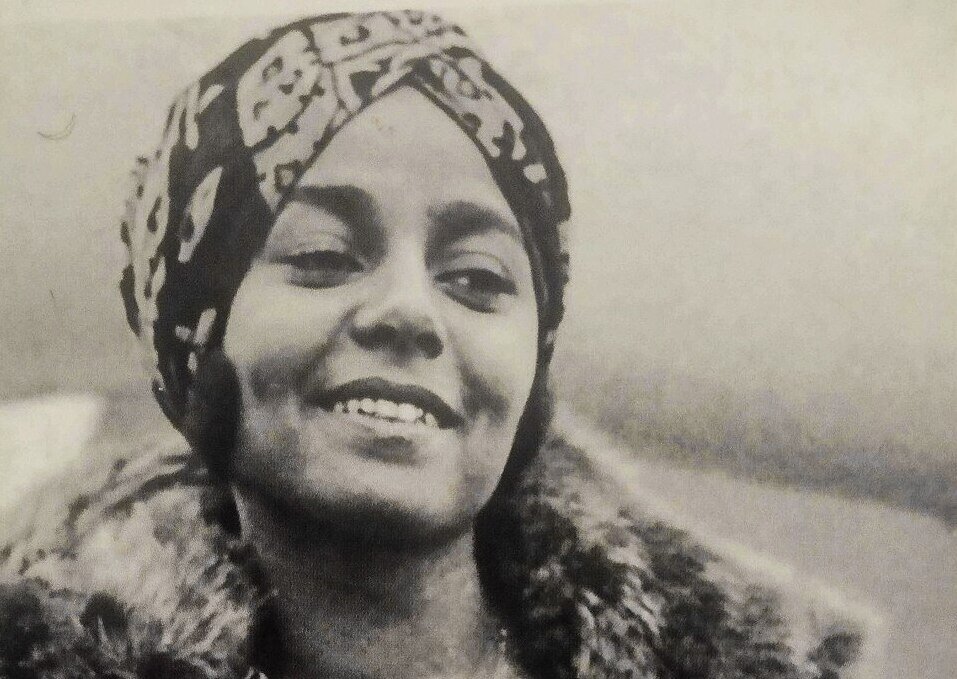
Her keen eye for real estate investments and the eventual employment of hundreds of people complemented her striking lifestyle, often adorned in stylish, attention-grabbing dresses, colorful turbans, and lavish furs. According to Harris, many Black residents of Harlem revered Ms. St. Clair, not just for her wealth but for the opportunities she created within the community. By offering jobs to many Black men and women in all areas of her businesses, she played a pivotal role in bolstering local Black commerce and championed racial advancement for both African Americans and Black immigrants.
No More Bribes
Despite having police officers on her payroll, St. Clair was arrested in December 1929. Several members of law enforcement had claimed that she had numbers slips on her person, despite witnesses saying that was not true.
On March 14, 1930, she was found guilty and sentenced to an eight-month term in a work camp for having number slips. After her release from prison, she retaliated against those police officers when she spoke with the Seabury Commission, which was looking into corruption in New York City’s police department and justice system. She revealed to the commission that she had paid city police a total of $6,600 to keep her runners safe from their attention.
Her statements resulted in more than a dozen police officers being suspended. In fact, since 1929, St. Clair had been openly exposing police corruption in articles for the Amsterdam News, a well-known Black-owned newspaper.
Still, her fearless stance against white criminals – those who tried to invade the area of Black numbers bankers – would further strengthen her reputation as a bold business woman in Harlem.
Going Toe-to-toe With The Mob
As Evans reports, during the 1920s, Harlem’s numbers racket was largely under the control of African Americans, a fact that white criminals largely overlooked; they viewed it as a minor, money-losing game played by impoverished Black people.
However, the landscape would shift dramatically in the 1930s after the end of Prohibition, which saw a decline in bootlegging profits. Mobsters like Arthur “Dutch Schultz” Flegenheimer began to recognize the lucrative opportunities presented by Black bankers in the numbers game and sought not just to participate but to dominate the market.
This led to violent confrontations as these white mobsters used intimidation and aggression to wrest control from Black operators. However, they underestimated the fierce resistance in Ms. St. Clair and were met with a ferocious mix of community organizing, boycotts and even direct intimidation of her own.
She specifically targeted white store owners in Harlem who served as betting drop-off points for Schultz’s operations, smashing their plate-glass display cases and destroying betting slips. She launched “Buy Black” campaigns in local newspapers, encouraging Harlem residents to place their bets exclusively with Black-owned, independent operators. Additionally, she placed newspaper ads exposing corrupt police officers on Schultz’s payroll.
The escalating conflict resulted in about 40 individuals left dead in the street, but it would turn even more perilous when Schultz placed a contract on St. Clair’s life, forcing her into hiding for a spell in 1935. At one point, she was reduced to hiding in a cellar, covered in coal, to escape his men.
The tumultuous power struggle reached its climax when Schultz was assassinated by rival gang members, Murder Inc., in 1935, but by that time, the mob had firmly established itself in Harlem, effectively dismantling the once-thriving network of Black banks that had numbered around thirty, now dwindling to just a handful.
Beyond the Ledger
By the mid-1930s, St. Clair had distanced herself from the numbers game but found herself entangled in a different kind of turmoil. In 1936, she married Sufi Abdul Hamid, a prominent yet contentious African American religious and labor leader, which, at first, seemed to mark a new chapter in her life. But just two years later, a moment of jealousy led to tragedy when she shot Hamid, suspecting infidelity. This impulsive act resulted in her conviction for first-degree assault and possession of a hidden weapon, landing her a 10-year prison sentence. The exact duration of her incarceration remains a bit murky, as noted by Harris, but after her release, St. Clair largely retreated into the Harlem community, opting for a quieter existence but still finding ways to contribute.
Her later years were marked by a commitment to uplifting her community despite personal challenges. She became an active philanthropist, advocating for civil rights and helping Black immigrants settle in the neighborhood.
She passed away in 1969 at a psychiatric facility in Central Islip, Long Island.
A Legend in her own Right
Interestingly, the illegal numbers games that succeeded in the shadows of Harlem and other American cities actually sparked a revolution in state-sponsored gambling. And it ultimately led to the creation and legalization of modern lotteries.
Even though governments condemned these underground operations and devoted resources to shutting them down, they couldn’t ignore the allure of the very systems that made these games so popular.
Recognizing a golden opportunity for alternative revenue, states cleverly adopted frequent drawings and flexible betting mechanics that made number games a hit among players. And by doing so, they tapped into a massive stream of cash that had previously flowed into the pockets of illegal operators. This shift not only allowed states to grab billions in gambling profits but also provided a legitimate framework that could be regulated and taxed.
Among the figures who designed and piloted this outlook was St. Clair, a woman often vilified for her role in the gambling scene. The debate surrounding her legacy – whether she was a hero or an anti-hero – highlights the complexity of her character and her contributions to society. In a world that often glosses over women’s achievements, her story stands out as a powerful reminder of the diverse roles women have played in driving social change.
And while her methods were considered unorthodox, St. Clair created a financial system that provided vital support for Black individuals and families who were systematically excluded from traditional banking. This facet of her life is crucial because it not only reflects her entrepreneurial spirit but also her commitment to uplifting her community during a time of widespread racial and economic injustice.
So, while opinions may vary on her moral standing, one thing is clear: Stephanie St. Clair’s impact was undeniably important. It serves as a beacon of resilience and inventiveness that continues to inspire discussions about equity and representation today.