


Two Ghanaian nationals submitted an official request to the International Criminal Court earlier this month to address rising xenophobic violence in South Africa.
Former Ghanaian government spokesperson Palgrave Boakye-Danquah and security analyst Emmanuel Kotin submitted a petition to the ICC prosecutor on July 15. In their petition, they asked the ICC to examine xenophobia in South Africa, urging it to force the government to take accountability following years of attacks. Boakye-Danquah and Kotin are seeking to have the violence officially deemed a crime against humanity.
The petition specifically focuses on violence against African migrants from 2015 to the present day, citing “a pattern of widespread and systematic attacks.” The document alleges that authorities did not do their part to prevent the violence or prosecute those responsible.
The submission to the ICC is permitted under the Rome Statute, which allows any individual to report a crime if there is enough evidence to proceed.
It is unknown whether the case will proceed to the investigation stage. South African officials responded to the petition, claiming that the country has adequate legislation against discrimination.
“For years, African brothers and sisters have been killed, beaten and driven from their homes in South Africa,” Boakye-Danquah and Kotin said in a press release. “While we commend individuals in South Africa who have condemned these acts, the pattern, scale and recurrence of the violence raise serious questions about the failure of state authorities to prevent, investigate and punish these crimes.”
In recent weeks, the level of xenophobic attacks against African migrants, who make up roughly 5% of South Africa’s population, has grown exponentially.
Although South Africa has relied on migrants for labor for generations, the rise in immigration to South Africa is often attributed to Nelson Mandela, who encouraged unity after being elected president in 1994. An increase in poverty and government corruption in Northern African countries also led to a rise in the number of migrants traveling to South Africa.
Approximately 2.4 million migrants from nations such as Malawi, Lesotho, Zimbabwe and Mozambique lived in South Africa as of 2022. In recent years, a “nativist” attitude has led to a significant rise in xenophobic violence amid claims that high levels of unemployment and inequality in South Africa are the result of migration. According to Trading Economics, approximately 8.1 million people are unemployed in South Africa, marking a 0.7% increase since earlier in the year.
By blaming foreign nationals for issues such as worsening crime and economic conditions, these vigilante groups have prevented them from accessing rights such as health care and education.
The nation has struggled with anti-immigrant violence since 2008, when 62 people were killed. During the attacks across seven of South Africa’s nine provinces, thousands were injured, and 40,000 foreign nationals were displaced.
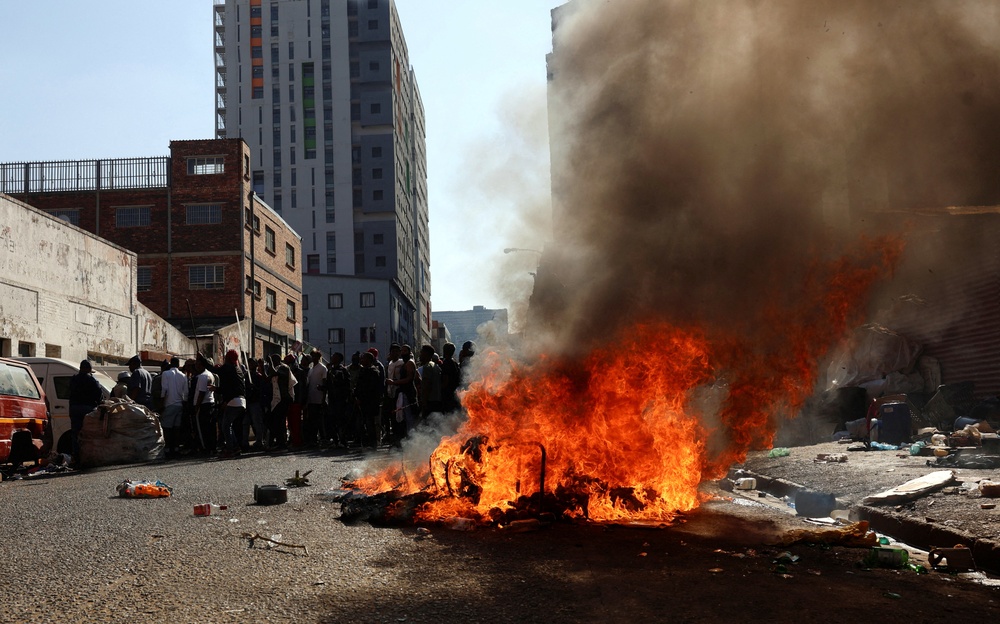
March of this year, however, marked a resurgence in anti-immigration protests. On June 30, the protests were at their most disruptive, with more than 900 people arrested. Approximately 12 protests led to clashes with police as thousands took to the streets to announce a “deadline” for immigrants to leave the country.
Amid the increased violence, migrants have been robbed daily, beaten and forced to leave their homes in South Africa.
In an interview with The Guardian, Moosa Addi Kunje, who is from Malawi, spoke about his own attack. On July 16, approximately five men broke into his home and physically assaulted him. They left with his belongings, including his refrigerator, TV and mobile phone. After the encounter, Kunje needed stitches after he was hit in the head with a pistol. Blood covered his walls and tracksuit.
At least five other households reported similar incidents, with 60-year-old Eibraheen Hussein also reporting that he was physically assaulted.
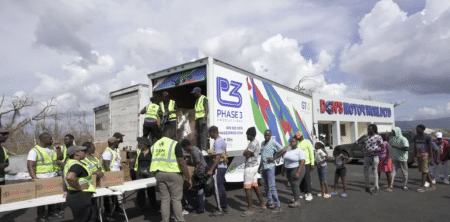
Thousands of Malawian nationals were forced to return home as more than 53,000 South African immigrants were deported. Thousands are also sleeping outside consulates in below-50-degree weather, awaiting transportation and remaining in line to secure a spot. Others are gathering outside the Department of Home Affairs in hopes that the South African government will help them find a safe place and a home.
In an official press release, Southern African Doctors for Human Rights and Amnesty International intensified calls for South African authorities to take action.
“We note with alarm reports of increasing numbers of migrants, refugees, asylum seekers and other marginalized populations whose lives are being disrupted as they seek refuge in temporary shelters, places of worship, informal gathering points and other locations amid fears for their safety and uncertainty regarding their future,” the leaders said in a statement. “Such situations have the potential to create significant protection and health-related risks while further exposing already marginalized populations to hardship and insecurity. The right to life, dignity, health and freedom from discrimination are fundamental human rights that must be safeguarded at all times and for all people, regardless of nationality, migration status or national origin.”