


Close Menu
TheHub.news

    Reclaiming Health: 13 Foods That Fight Chronic Disease in the Black Community 

    By Danielle Bennett

    The Surgeon Who Ignored the Rules and Touched the Human Heart

    By Kaba Abdul-Fattaah

    Prime Video to Debut “Meal Ticket” Doc on McDonald’s All-American Game

    By FirstandPen

    Subscribe to Updates

    Get the latest creative news from FooBar about art, design and business.

    X (Twitter) Instagram YouTube
    X (Twitter) Instagram YouTube
    TheHub.news
    Support Our Work
    • Home
    • Our Story
      • News & Views
        • Politics
        • Injustice
        • HBCUs
        • Watch
      • Food
        • Cuisine Noir
        • soulPhoodie
      • Passport Heavy
      • Travel
      • Diaspora
      • This Day
      • Entertainment
      • History
      • Art
      • Music
    • Health
    • Money
      1. Copper2Cotton
      2. View All

      How to Fight Inflation and Win

      December 9, 2025

      August 2018 Net Worth Update

      December 9, 2025

      Dividend Update: August 2018

      December 9, 2025
      Passive Income

      Be Passive About Your $

      November 17, 2025

      Economic Empowerment Has Always Been a Part of Black History

      February 12, 2026

      How to Fight Inflation and Win

      December 9, 2025

      August 2018 Net Worth Update

      December 9, 2025

      More Blacks Needed On Corporate Boards

      December 9, 2025
    • Books
    • Business
    • Sports
      1. First and Pen
      2. View All

      Diverse Representation to Host Its Annual Sports Agent Bootcamp on March 21st

      March 3, 2026

      In 1988, Doug Williams and Jesse Jackson Showed Us It Could Be Done

      March 3, 2026

      Tony Dungy Might Be Out at NBC’s “Football Night in America”

      February 27, 2026

      Trailblazing Wrestling Legend Bobby Douglas Passes Away

      February 26, 2026

      Prime Video to Debut “Meal Ticket” Doc on McDonald’s All-American Game

      March 4, 2026

      Diverse Representation to Host Its Annual Sports Agent Bootcamp on March 21st

      March 3, 2026

      In 1988, Doug Williams and Jesse Jackson Showed Us It Could Be Done

      March 3, 2026

      Tony Dungy Might Be Out at NBC’s “Football Night in America”

      February 27, 2026
    • Tech
    • Podcasts
      1. Karen Hunter is Awesome
      2. Lurie Breaks it Down
      3. Human(ing) Well with Amber Cabral
      4. Financially Speaking
      5. In Class with Carr
      6. View All

      Reclaiming Health: 13 Foods That Fight Chronic Disease in the Black Community 

      March 4, 2026

      The Surgeon Who Ignored the Rules and Touched the Human Heart

      March 4, 2026

      Prime Video to Debut “Meal Ticket” Doc on McDonald’s All-American Game

      March 4, 2026

      Three News Stories You Missed That Reveal Republicans’ Coordinated Attack on Women

      March 4, 2026

      Reclaiming Health: 13 Foods That Fight Chronic Disease in the Black Community 

      March 4, 2026

      The Surgeon Who Ignored the Rules and Touched the Human Heart

      March 4, 2026

      Prime Video to Debut “Meal Ticket” Doc on McDonald’s All-American Game

      March 4, 2026

      Three News Stories You Missed That Reveal Republicans’ Coordinated Attack on Women

      March 4, 2026

      Reclaiming Health: 13 Foods That Fight Chronic Disease in the Black Community 

      March 4, 2026

      The Surgeon Who Ignored the Rules and Touched the Human Heart

      March 4, 2026

      Prime Video to Debut “Meal Ticket” Doc on McDonald’s All-American Game

      March 4, 2026

      Three News Stories You Missed That Reveal Republicans’ Coordinated Attack on Women

      March 4, 2026

      Reclaiming Health: 13 Foods That Fight Chronic Disease in the Black Community 

      March 4, 2026

      The Surgeon Who Ignored the Rules and Touched the Human Heart

      March 4, 2026

      Prime Video to Debut “Meal Ticket” Doc on McDonald’s All-American Game

      March 4, 2026

      Three News Stories You Missed That Reveal Republicans’ Coordinated Attack on Women

      March 4, 2026

      Reclaiming Health: 13 Foods That Fight Chronic Disease in the Black Community 

      March 4, 2026

      The Surgeon Who Ignored the Rules and Touched the Human Heart

      March 4, 2026

      Prime Video to Debut “Meal Ticket” Doc on McDonald’s All-American Game

      March 4, 2026

      Three News Stories You Missed That Reveal Republicans’ Coordinated Attack on Women

      March 4, 2026

      In Class with Carr: “Slavemasters Without Slaves”

      March 2, 2026

      Karen Hunter Questions Why BAFTA Let the Slur Air

      February 26, 2026

      In Class with Carr: Black History in Times of Trouble

      February 2, 2026

      The Rise of the “Righteous Whites” and the Collapse of Plausible Deniability

      January 24, 2026
    TheHub.news
    Health

    Why are so Many Black Men Dying from Skin Cancer?

    By Danielle BennettAugust 23, 20237 Mins Read
    Share Email Copy Link
    Image credit: Unsplash
    Share
    Facebook Twitter LinkedIn Email Copy Link Threads

    Of all the common cancers diagnosed in the United States, the skin cancer melanoma has one of the highest survival rates. But when it comes to Black people, all melanoma diagnoses aren’t created equal.


    According to a recent study published in the Journal of the American Academy of Dermatology, Black patients have the worst survival rates for melanoma and are three times more likely than their white counterparts to die within five years of their diagnosis. The risk is even higher for Black men. The study takes a closer look at men with melanoma, where Black men are showing lower chances of living five years or longer after their diagnoses, roughly 52%. The findings are significantly less than the overall survival rate recorded among their white male counterparts, at about 75%. Hispanic, Asian, American Indian/Alaska Native men all show five-year overall survival rates between 66% and 69%.
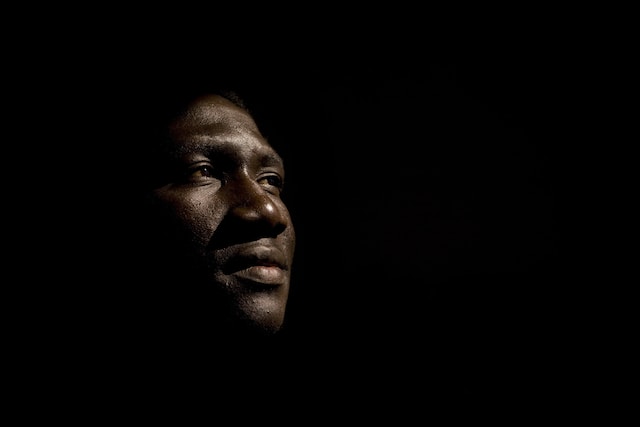
    Image credit: Unsplash

    Why is the Mortality Rate So Much Higher for Black Men?


    The data also reveals that Black patients go untreated far longer than white patients and are often diagnosed with late-stage melanoma when detected by a doctor. When these health outcomes are considered, disparities such as inadequate medical access and socioeconomic status typically come into play, but the lower perceived risk of skin cancer for Black people and the fact that most medical training, awareness and practice take place on white skin might make a stronger case for why the alarming statistics track with the inequities that have disproportionately harmed Black patients.

    Acral lentiginous melanoma (ALM), for example—it is recognized as the initial diagnosis Bob Marley received—is one of the most common forms of melanoma among people with darker complexions. However, the potentially deadly disease is often difficult to spot in Black people because not only is dark skin rarely the subject of conversations surrounding skin cancer, but this type of melanoma does not appear to be related to sun exposure. Genetic mutations, inflammation and trauma to the hands and feet are common occurrences, but more research is needed to understand ALM. The exact cause remains unknown, so for Black people, it poses a higher cancer burden and greater obstacles for prevention and detection.

    Thankfully, healthcare providers, medical school faculty and students across the country are working to change that.

    The Call for System-Wide Change


    Dr. Meena Moosavi, MD, a practicing dermatologist in Detroit, Michigan—a city where the population is more than 80% people of color—had these inequities in mind when she, her colleagues and students at Wayne State University School of Medicine in Detroit (she is an assistant professor there) began their research into the disparate screenings and outcomes in melanoma for Black people overall. They looked at surveillance data to study the incidence and survival in late-stage ALM patients and concluded that an overhaul in education, along with a better understanding of the risks, was a top priority. They found that although Black people are far less likely to come down with melanoma than non-Hispanic whites, the much lower survival rates in those Black people who do develop the cancer are best mitigated by heightened awareness and more diversified medical curricula.

    The university’s research also illustrates how a major part of the issue is that melanoma in Black patients presents as ALM and is found on the soles of the feet, palms, or beneath the nails, as opposed to parts of the skin that are typically more exposed to sunlight and are more commonly seen in lighter complexions – those which dermatologists are generally most familiar. As a result, the diagnosis tends to occur later, if confirmed at all. Symptoms include nail streaks, damaged fingernails, changing spots that are connected to moles, irregular-shaped growths and thickened skin patches. “If you get diagnosed right away, it’s a better prognosis than when the diagnosis is made after months or years,” Moossavi says. “I’ve been talking about this with residents and students, and we always come to the same conclusion: Education is the most important thing.”

    Dr. Loren Krueger, MD, an assistant professor of dermatology at Emory University School of Medicine in Atlanta, Georgia, agrees with the urgent need for medical professionals to have a clearer awareness of the symptoms of melanoma in Black individuals so they can save more Black lives. Krueger and her colleagues surveyed dermatologists by presenting them with photos of differing skin conditions in both lighter and darker skin tones and found that in their assessments of darker skin, clinicians were more likely to recommend biopsy for noncancerous scenarios and were less likely to identify more potentially deadly conditions. However, the same doctors accurately diagnosed conditions on lighter skin tones.

    https://www.instagram.com/p/BynYnk8nS1m/?utm_source=ig_web_copy_link&igshid=MzRlODBiNWFlZA==

    “We have a unique responsibility to understand how skin color and ethnicity play into diagnosis,” Dr. Krueger explains. “We have to make sure that we’re well trained in features that are commonly seen in both benign and cancerous conditions in both light and dark skin. I think there is a lack of exposure and training in darker skin tones overall.”

    In her first year of medical school at the University of Illinois College of Medicine in Peoria, student Katherine Perlman noticed how her dermatology curriculum presented very little representation of skin tones of color. After consulting with dermatologists and mentors, she led a review of the medical student tools used for identifying skin conditions and discovered that almost all resources lacked the representation of darker skin. The research identified that, across all images, only 15% were of complexions of color, even when common skin conditions for Black people were present, such as alopecia and eczema. In an interview with the Association of American Medical Colleges, Perlman explained how the lack of diverse courses of study in dermatology continues to widen the knowledge gap and compromise equal opportunities in care: “It’s a very visual field and I noticed our [educational] resources were almost entirely on pathologies on very light skin. This is a huge problem for medical students because if you’re not trained to identify and describe even the most common skin conditions, then you’re hurting patient care.”

    Recently, there has been a push to broaden education materials and several medical schools across the country have started the process of updating academic curricula to become more racially inclusive. In addition, the American Academy of Dermatology has also launched a new Skin of Color Curriculum aimed at offering its members credit while they learn the latest in treating patients with deeper complexions.
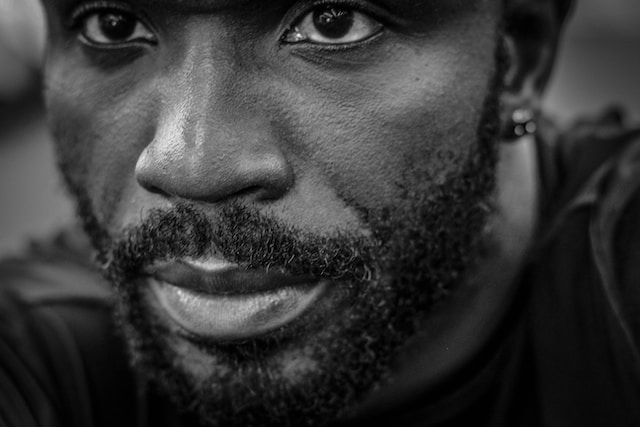
    Image credit: Unsplash

    The Final Takeaway


    While it’s no secret anyone of any skin color can get skin cancer and our melanin doesn’t completely protect us from the sun’s UV rays (yes, we melanated folk should slather on the sunscreen year-round), researchers say the specific cause of ALM remains a mystery, so more education and research is needed in order to identify those causal factors that put Black people at higher risk of developing this potentially fatal condition.

    The good news, however, is doctors say ALM is highly curable when diagnosed early, so we should make time to know its signs as a means to advocate for the men in our lives and for ourselves.

    Our seeking assistance from medical professionals who are well-educated and trained in diverse skin conditions and from organizations such as the Skin of Color Society, The Skin Cancer Foundation, the American Academy of Dermatology, and the American Cancer Society are steps in the right direction.


    Black men Health skin cancer Wellness
    Danielle Bennett

    Danielle Bennett, a hairstylist of 20 years, is the owner of The Executive Lounge, a hair salon that caters to businesswomen, located in the Chelsea neighborhood of New York City. She specializes in natural hair care, haircuts, color, hair weaving and is certified in non-surgical hair replacement. Danielle partners with her clients to provide customized services, while she pampers them with luxury products and professional, private accommodations. “The Executive Lounge is your home away from home; it is a tranquil, modern sanctuary where you matter. Your time is valued and your opinion counts. Why? Because you deserve it.” - Danielle Bennett

    Related Stories

    Noni Juice

    December 9, 2025

    For Black People, Surviving Skin Cancer Begins With Knowing What to Look For

    June 18, 2025

    Physician Healed Herself

    June 17, 2025

    How to Help Your Kids Process the Presidential Election Results

    November 7, 2024

    Mangoes: The King of Fruits

    July 26, 2023

    The Power of Pollen

    June 21, 2023
    Recent Posts
    • Reclaiming Health: 13 Foods That Fight Chronic Disease in the Black Community 
    • The Surgeon Who Ignored the Rules and Touched the Human Heart
    • Prime Video to Debut “Meal Ticket” Doc on McDonald’s All-American Game
    • Three News Stories You Missed That Reveal Republicans’ Coordinated Attack on Women
    • This Day in History: March 4th

    Reclaiming Health: 13 Foods That Fight Chronic Disease in the Black Community 

    By Danielle Bennett

    The Surgeon Who Ignored the Rules and Touched the Human Heart

    By Kaba Abdul-Fattaah

    Prime Video to Debut “Meal Ticket” Doc on McDonald’s All-American Game

    By FirstandPen

    Three News Stories You Missed That Reveal Republicans’ Coordinated Attack on Women

    By Pari Eve

    Subscribe to Updates

    A free newsletter delivering stories that matter straight to your inbox.

    About
    About

    TheHub.news is a storytelling and news platform committed to telling our stories through our lens.With unapologetic facts at the center, we document the lived reality of our experience globally—our progress, our challenges, and our impact—without distortion, dilution, or apology.

    X (Twitter) Instagram YouTube

    Reclaiming Health: 13 Foods That Fight Chronic Disease in the Black Community 

    By Danielle Bennett

    The Surgeon Who Ignored the Rules and Touched the Human Heart

    By Kaba Abdul-Fattaah

    Prime Video to Debut “Meal Ticket” Doc on McDonald’s All-American Game

    By FirstandPen

    Three News Stories You Missed That Reveal Republicans’ Coordinated Attack on Women

    By Pari Eve

    Subscribe to Updates

    A free newsletter delivering stories that matter straight to your inbox.

    © 2026 TheHub.news A 501(c)(3) tax-exempt organization.

    Type above and press Enter to search. Press Esc to cancel.