


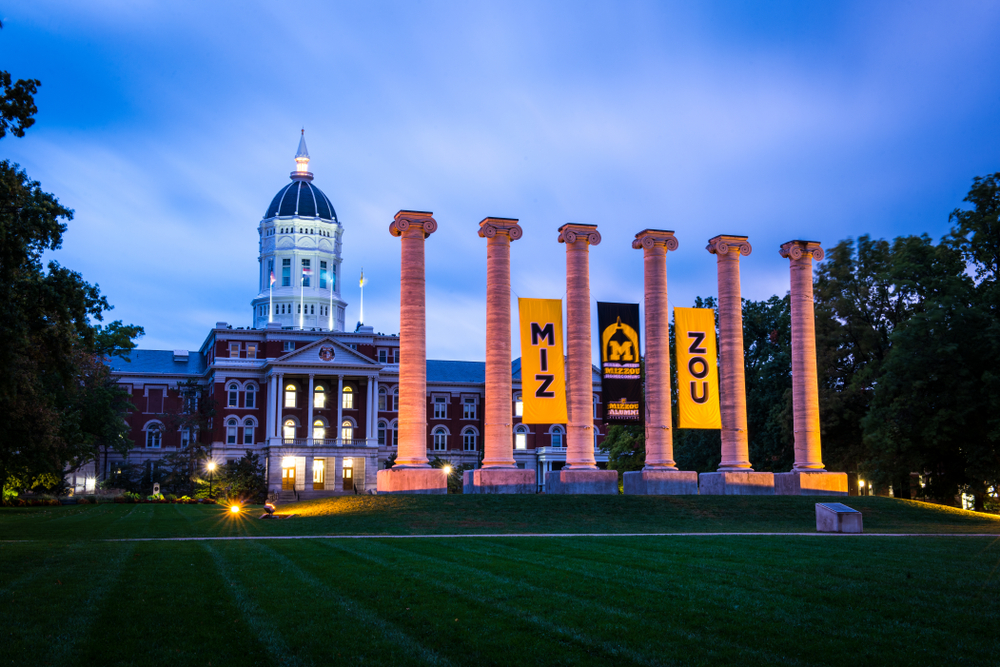
Earlier this month, the University of Missouri announced it was defunding the Legion of Black Collegians (LBC), the first and only Black university student government in the U.S.
The University, which also defunded the Asian American Association, the Association of Latin American Students, the Queer Liberation Front, and FourFront, rationalized the decision by stating it had to comply with the Department of Justice’s DEI restrictions, restrictions that are guidelines, not law.
But that didn’t matter to the university, an institution with a history of deep seeded racism.
The Kansas City Defender published a great story on the school’s ties to racism– from being founded with slave owner money and refusing to educate qualified and legally entitled Black students to protecting racist students, the University of Missouri seems to embrace its role as a conductor of racist activity.
And instead of trying to distance itself from its past and right its wrongs, it continues down the same path, now defunding groups dedicated to supporting marginalized groups on campus.
But the move against the LBC is particularly infuriating as it takes a historic organization and effectively hamstrings its effectiveness by not only snatching away its $63,000 budget, but also by reclassifying it as a Recognized Student Organization. That means that not only will it no longer have the ability to engage directly with administrators and university leadership, but its now like every other student organization on campus, and must apply for funding that has a max of $3,000 out of a shared pool of money.
That’s a direct attack on progress and a silencing of a crucial and influential voice that had helped many be heard since its founding in 1968.
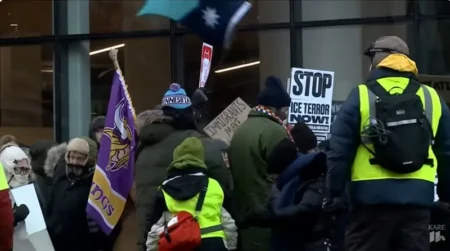
In response, hundreds of students from the impacted organizations packed an auditorium on campus to discuss the situation, and over 1,000 more watched the livestream of the event, according to the Kansas City Defender.
Yet one group has sadly remained silent during this time, a group that bravely took a stand over a decade ago in support of Black students and a group that wields a tremendous amount of power.
Black athletes.
In 2015, after years of racist incidents occurring on campus, a Black graduate student named Jonathan Butler launched a hunger strike.
And the football team, including white and Black players and coaches, jumped up in support.
The team, led by its Black players, threatened to boycott a game after the school’s refusal to deal with the racist incidents in a timely manner. The threat of a forfeit, which could have cost the school more than $1 million, became a unifying moment brought the campus together against hate.
And it was one that brought swift change as it resulted in the resignations of University President Tim Wolfe and Chancellor R. Bowen Loftin.
But that change was obviously temporary for a decade later, hate and fear has resurfaced thanks to the Tr**p administration, which pressured (or gave the green light to) the school to exact its revenge on the historic Black student government organization.
So where are Black athletes and the football team now?
Students are meeting and plotting ways to fight back, yet the most powerful group, the one that can punish the university by pummeling it in the pocket, is frustratingly silent.
Its another sad example of the loss of Black athlete activism that has swept across the country as NIL payments have neutered these influential voices through the lure of enriching their bank accounts.
With the attacks on Black history by the “anti-woke” faux crusade in states like Florida, Texas, Alabama and Oklahoma, Black athletes have been denied the knowledge of the ways in which their gridiron brethren of the past stood up to racism.
Otherwise, they would know about how the Penn State football team in the 1940s stood up to racism.
They would have learned about the stand Black Texas Longhorns football players took against the school’s racist song. They would know about what the 1992 UNC football team, the Bluefield College Men’s basketball team and the Eastern Tennessee State men’s basketball team did in response to racist incidents such as the murder of George Floyd.
But thanks to legislation and compensation, the desire to fight back has slowly been suffocated.
Yet all is not lost.