



For Isata Dumbuya, an obstetrics nurse and midwife, it was her own pretenses that led her back to her roots in Sierra Leone.
She had worked for more than twenty years for the National Health Service across many hospitals in Great Britain, and in a recent interview with The New York Times, she recounted how she would share heartfelt stories about the beauty and culture of her homeland with her colleagues.
However, her workmates often responded to her enthusiasm with skepticism.
They pointed out the harsh realities that Sierra Leone faced, including its devastating civil war in the 1990s and the Ebola outbreak that wreaked havoc from 2014 to 2016 which led to the country having the highest maternal mortality rate in the world at the dawn of the 21st century.
Ms. Dumbaya would begin to feel the weight of their arguments. Despite her extensive experience delivering over 3,000 babies across the British Isles, she couldn’t help but acknowledge the challenges her own country was grappling with.
“It was almost a challenge like, ‘you have all this inspiration and talk about how Sierra Leone is so wonderful, and yet you’re here and there are women dying,’” she told the publication, in a video call from Koidu, Sierra Leone. “You almost felt like it’s your fault or responsibility.”
Yet, rather than retreating in discouragement, her colleagues’ doubts sparked a profound realization in her. And fueled by a desire to make a tangible difference and rooted in her deep love for Sierra Leone, she chose to return home, embracing the opportunity to contribute to the very community she had so passionately defended.
Ms. Dumbaya took that responsibility so seriously that in 2018, the mother of five (and 47-years-old at the time) returned to Sierra Leone to help address the country’s issues with maternal, adolescent and newborn health.
During the video interview, she described her initial job at the Koidu Government Hospital in the struggling Kono District, which is helped by Partners in Health. This global nonprofit aims to provide health care to people in poverty and collaborates with governments to improve public health systems and policies. She also explained how she later took on the role of director for the reproductive, maternal, newborn, adolescent and child health program with Partners in Health Sierra Leone. And in the past eight years, she has taught nurses and midwives various skills, such as new methods to spot early signs of risky pregnancies and how to make family planning more accessible.
More recently, however, Ms. Dumbuya has played a key role in managing the design and training for the new Maternal Center of Excellence (M.C.O.E), a new part of the hospital that opened last month and is run in collaboration with the Ministry of Health.
The new $25 million facility, which has a team of nearly 500 people including doctors, nurses, midwives and administrators, aims to improve care for mothers and newborns in Sierra Leone. It could also serve as a model for maternal health care in other regions.
Minister of Health, Austin Demby, emphasized the genuine progress being made in healthcare.
“It’s not a hope, this is what we are doing,” explaining that the new facility serves several essential roles that add tremendous value, he told The Times. “The value of the M.C.O.E. is it is serving multiple purposes. One is that it’s delivering services. Two, it’s a training venue for not only nurses and doctors, but they are enrolled in the residency program where OB-GYNs are going out there to practice. So it comes with faculty and students as well.”
Dr. Demby highlights a remarkable achievement in Sierra Leone, noting a 70% drop in maternal deaths, which he proudly calls “the fastest drop in the world.” But despite this encouraging statistic, Sierra Leone still finds itself among the top 20 countries with the highest maternal mortality rates. This paradox can be traced back to a multitude of factors, including the lingering effects of civil war and the devastating Ebola outbreak, which have severely strained the healthcare system. Kunle Adeniyi, the United Nations Population Fund representative for Sierra Leone, also points out that while about 85% of pregnant women are delivering in healthcare facilities, this figure reflects only a fraction of the overall population; many women remain without access to crucial medical care. The reality is that for those fortunate enough to reach a clinic or hospital, the experience can still be fraught with challenges, such as inadequate resources and staffing. So, establishing a facility like the M.C.O.E., one that can provide complete maternal care is not just important – it’s absolutely vital.
Recent reports indicate that the new facility is expected to cost between $10 and $12 million each year to run and it promises to be a transformative healthcare hub in the region. With a comprehensive layout that includes a birthing center, inpatient wards with a capacity for 120 beds, three state-of-the-art operating rooms and a lab, it will also feature the country’s first unit dedicated to providing mechanical ventilation for premature babies. This center is set to handle over 4,700 births each year, catering primarily to women in Sierra Leone while also welcoming patients from neighboring countries like Guinea and Liberia.
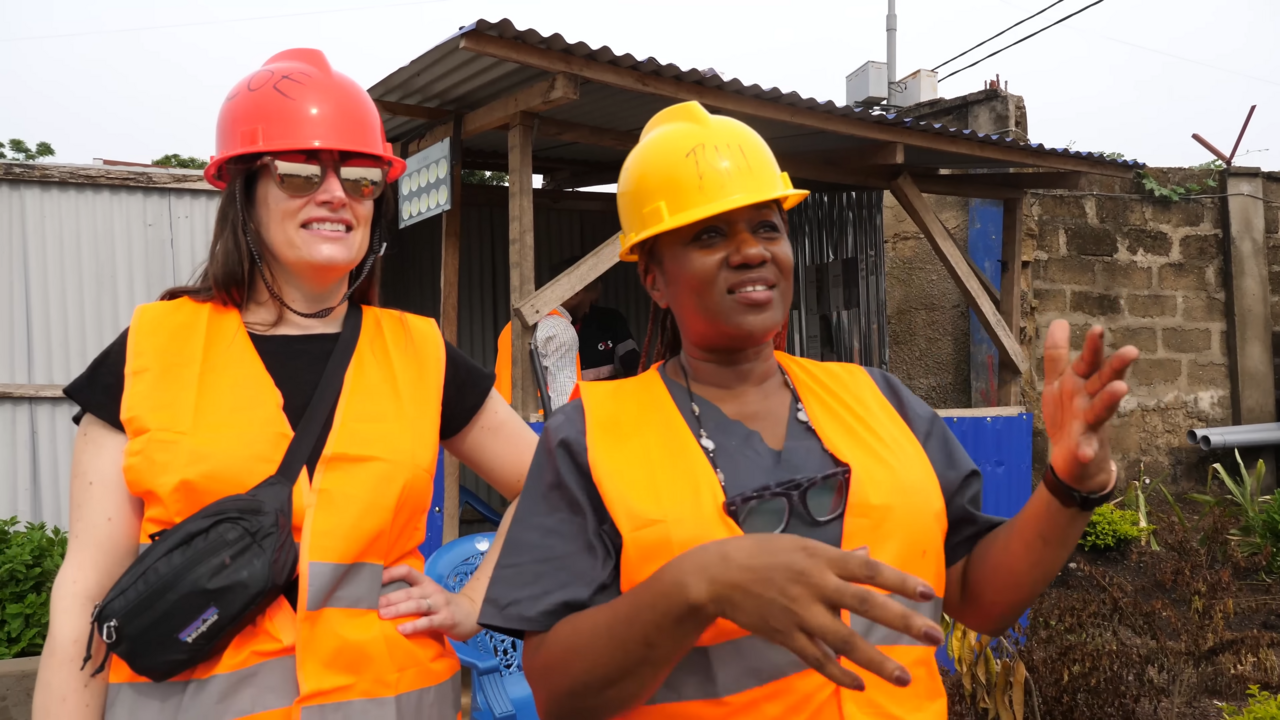
Interestingly, one of the unexpected perks of this construction project, as noted by Ms. Dumbuya, is the outstanding involvement of women in the workforce; over 60% of the construction workers were women, many of whom entered the job without prior skills. This not only empowers them with employment opportunities but it also encourages a strong sense of community and support as they contribute to something that will benefit countless families in the future.
In a moment of reflection, Ms. Dumbaya shared a powerful sentiment that really struck a chord.
“One of [the women workers] said, ‘I’m building for my great-grandchildren who will still be here and my great-grandchild would have her child here. Even if I am not here, I will know I have done something good.’”