



Close Menu
TheHub.news

    The Weight of a First: Chief Justice Natalie Hudson Leaves the Minnesota Supreme Court

    By Insight News

    Mark Jones Ends His 36 Year Run at ESPN

    By FirstandPen

    This Day in History: April 14th

    By TheHub.news Staff

    Subscribe to Updates

    Get the latest creative news from FooBar about art, design and business.

    X (Twitter) Instagram YouTube
    X (Twitter) Instagram YouTube
    TheHub.news
    Support Our Work
    • Home
    • Our Story
      • News & Views
        • Politics
        • Injustice
        • HBCUs
        • Watch
      • Food
        • Cuisine Noir
        • soulPhoodie
      • Passport Heavy
      • Travel
      • Diaspora
      • This Day
      • Entertainment
      • History
      • Art
      • Music
    • Health
    • Money
      1. Copper2Cotton
      2. View All

      How to Fight Inflation and Win

      December 9, 2025

      August 2018 Net Worth Update

      December 9, 2025

      Dividend Update: August 2018

      December 9, 2025
      Passive Income

      Be Passive About Your $

      November 17, 2025

      Economic Empowerment Has Always Been a Part of Black History

      February 12, 2026

      How to Fight Inflation and Win

      December 9, 2025

      August 2018 Net Worth Update

      December 9, 2025

      More Blacks Needed On Corporate Boards

      December 9, 2025
    • Books
    • Business
    • Sports
      1. First and Pen
      2. View All

      Mark Jones Ends His 36 Year Run at ESPN

      April 14, 2026

      Michigan’s NCAA Title Run Revived the Impact of the Iconic Fab Five

      April 13, 2026

      WNBA Expansion Is Laced With Rich Basketball History

      April 13, 2026

      Tracy McGrady, Jadakiss Tip-off Ones Basketball League in NY

      April 7, 2026

      Mark Jones Ends His 36 Year Run at ESPN

      April 14, 2026

      Michigan’s NCAA Title Run Revived the Impact of the Iconic Fab Five

      April 13, 2026

      WNBA Expansion Is Laced With Rich Basketball History

      April 13, 2026

      Tracy McGrady, Jadakiss Tip-off Ones Basketball League in NY

      April 7, 2026
    • Tech
    • Podcasts
      1. Karen Hunter is Awesome
      2. Lurie Breaks it Down
      3. Human(ing) Well with Amber Cabral
      4. Financially Speaking
      5. In Class with Carr
      6. View All

      The Weight of a First: Chief Justice Natalie Hudson Leaves the Minnesota Supreme Court

      April 14, 2026

      Mark Jones Ends His 36 Year Run at ESPN

      April 14, 2026

      This Day in History: April 14th

      April 14, 2026

      If You Hit a Child, You Are a Child Abuser. The Body Doesn’t Care What You Believe.

      April 13, 2026

      The Weight of a First: Chief Justice Natalie Hudson Leaves the Minnesota Supreme Court

      April 14, 2026

      Mark Jones Ends His 36 Year Run at ESPN

      April 14, 2026

      This Day in History: April 14th

      April 14, 2026

      If You Hit a Child, You Are a Child Abuser. The Body Doesn’t Care What You Believe.

      April 13, 2026

      The Weight of a First: Chief Justice Natalie Hudson Leaves the Minnesota Supreme Court

      April 14, 2026

      Mark Jones Ends His 36 Year Run at ESPN

      April 14, 2026

      This Day in History: April 14th

      April 14, 2026

      If You Hit a Child, You Are a Child Abuser. The Body Doesn’t Care What You Believe.

      April 13, 2026

      The Weight of a First: Chief Justice Natalie Hudson Leaves the Minnesota Supreme Court

      April 14, 2026

      Mark Jones Ends His 36 Year Run at ESPN

      April 14, 2026

      This Day in History: April 14th

      April 14, 2026

      If You Hit a Child, You Are a Child Abuser. The Body Doesn’t Care What You Believe.

      April 13, 2026

      The Weight of a First: Chief Justice Natalie Hudson Leaves the Minnesota Supreme Court

      April 14, 2026

      Mark Jones Ends His 36 Year Run at ESPN

      April 14, 2026

      This Day in History: April 14th

      April 14, 2026

      If You Hit a Child, You Are a Child Abuser. The Body Doesn’t Care What You Believe.

      April 13, 2026

      In Class with Carr: Citizens or Subjects: Belonging and Certainty in an Age of Distraction

      April 6, 2026

      In Class with Carr: “Six/Seven”

      March 30, 2026

      In Class with Carr: “Slavemasters Without Slaves”

      March 2, 2026

      Karen Hunter Questions Why BAFTA Let the Slur Air

      February 26, 2026
    TheHub.news
    Diaspora

    Illegal but Alive: The Global Fight Against Chattel Slavery

    By Veronika LleshiSeptember 4, 20255 Mins Read
    Share Email Copy Link
    Image credit: ShutterStock
    Share
    Facebook Twitter LinkedIn Email Copy Link Threads

    For over 200 years, white supremacy destroyed families and dehumanized more than 12.5 million Africans from the Central and West African nations in a practice known as chattel slavery.

    From as early as 1619, African people were traded, with the first recorded instance being documented by planter John Rolfe. Rolfe wrote of a Dutch trading ship, which in actuality was an English pirate trip, traveling up the James River to trade food and supplies for enslaved people in what is now known as Hampton, Virginia, kickstarting the creation of one of the most well-known societies built on enslavement.

    Considered to be one of the most profitable institutions in international history, nearly $3.5 billion was made by enslavers through treating Black people as property. Defined as one of the most brutal forms of enslavement, chattel slavery likens people to livestock as they become the property of enslavers, forced into labor and at risk of being traded and sold.

    On plantations in the South, victims of chattel slavery were forced to toil in harsh conditions, clearing land, hauling wood, picking cotton, digging ditches and working inside the homes of their enslavers. Forced to live in small quarters, the enslaved people were exposed to unsanitary conditions and the consistent threat of disease, particularly on rice plantations where malaria was prominent. Child mortality on these plantations was estimated to be 66% on average, going up to 90% in some cases.

    Although chattel slavery was concentrated in the South, the North was complicit in the institution, relying on products cultivated through enslavement and entering into business with Southern enterprises.

    While earlier legislation was passed focusing on addressing chattel slavery, such as “the Act Prohibiting Importation of Slaves,” the end of enslavement is recognized with the issuing of the Emancipation Proclamation.

    Issued on Jan 1, 1863, and actualized until June 19, 1865, the proclamation changed the legal status of over 3.5 million enslaved Black Americans from enslaved to free. Through the 13th Amendment, enslavement was officially made unconstitutional in the U.S.
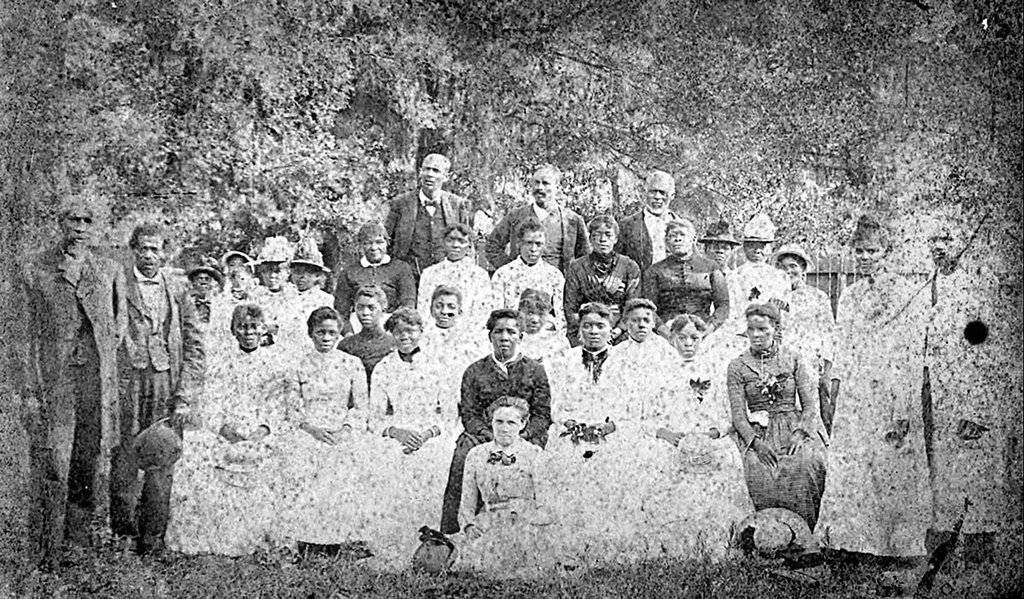
    Juneteenth Celebration at Emancipation Park 1880 touched up. A group photograph of thirty-one people at a Juneteenth Celebration in Emancipation Park in Houston’s Fourth Ward. Reverend Jack Yates is pictured on the left and Sallie Yates is pictured in the center toward the front in a black outfit Image credit: Wikimedia Commons

    To what extent was chattel slavery a global institution, not just an American one?

    Evidence of chattel slavery has been found as far back as Mesopotamia, considered the site of the earliest transition in the First Agricultural Revolution. Instituted in the “Code of Hammurabi,” laws 278 to 282 regulated enslavement, providing warranties and guidelines for purchases abroad.

    Other ancient civilizations, such as ancient Egypt, ancient Greece, ancient China, ancient India, Babylonia, Persia and the Roman Empire, also have similar evidence of the implementation of chattel slavery, though the focus was more on debt-slavery, criminal punishment and prisoners of war.

    Chattel slavery has also been extensively documented in countries alongside the Nile River valley, the Sahel and North Africa, as observed by records written by Arabic and European traders.

    The African country Mauritania has most famously been linked to chattel slavery in the 21st century, despite passing a 1981 law abolishing it. Although the government has denied accusations, UN leaders have maintained that the country’s leaders have not fully enforced legislation against enslavement. Per CNN, an estimate of 10% to 20% of the country’s 3.4 million population is enslaved.

    Several figures in the country have been outspoken about Mauritania’s connections to chattel slavery.

    Lawyer Fatimata M’baye has consistently advocated for human rights in the nation, founding the Mauritanian Human Rights Association in 1991. Following a report on the country’s connections to enslavement on French TV, she and the organization’s president were arrested for being a part of a “non-government-approved association,” serving 13 months in prison.

    For her work combating enslavement and oppression, M’baye has been awarded the Nuremberg International Human Rights Award, recognition in the Trafficking in Persons Report, and the 2016 International Women of Courage award.

    The Initiative for the Resurgence of the Abolitionist Movement in Mauritania, or IRA-Mauritania, has also been vocal about the country’s practices. Founded in 2008 by Biram Dah Abeid, the son of an enslaved person, and co-led by vice president Brahim Bilal Ramdane, the group has organized mass sit-ins, hunger strikes and marches against enslavement.

    Throughout their efforts, the two have suffered from numerous violent interactions, culminating in hospitalizations and prison time, according to Freedom Now. Most recently, Abeid was imprisoned for reasons many deemed as a means to prevent his participation in the country’s parliamentary elections. Now a deputy of the National Assembly, he was elected from his prison cell.

    “The continued existence of slavery and other slavery-like practices in Mauritania regrettably demonstrates that relevant laws are not enforced in practice and that a social transformation and a change in the mindset of the country’s leaders is needed in order to fully recognize and address slavery instead of denying its existence,” said UN Special Rapporteur Tomoya Obokata in a report.

    Overall, as of today, the National Underground Railroad Freedom Center estimates that nearly 21 million men, women and children are enslaved today, despite chattel slavery being illegal worldwide. Per the organization, five major forms of enslavement continue to exist in the form of forced labor, debt labor, sex enslavement, domestic servitude and child enslavement.

    Of these 20.9 million enslaved people, approximately 90% are enslaved by the private economy in efforts to maintain cheap labor costs.

    “This system [chattel slavery], which allowed people — considered legal property — to be bought, sold and owned forever, was lawful and supported by the United States and European powers from the 16th to 18th centuries,” wrote the organization in their latest report. “Thankfully, slavery is no longer legally protected anywhere in the world. Yet, the control and exploitation of one human being by another still remains.”


    chattel slavery Mauritania Thehub.news
    Veronika Lleshi

    Veronika Lleshi is an aspiring journalist. She currently writes for Hunter College's school newspaper, Hunter News Now. In her free time, she enjoys reading, writing and making music. Lleshi is an Athena scholar who enjoys getting involved in her community.

    Related Stories

    The Quander Family: Legacy Without Interruption

    February 8, 2026

    Black Genius Before Modernity: Imhotep and the Birth of Scientific Medicine

    February 7, 2026

    This Day in History: January 8th

    January 8, 2026

    Beyond Bitcoin: Nigeria and Ghana Drive West Africa’s Fastest-growing Stablecoin Remittance Revolution

    September 16, 2025

    Escalating Crisis in Sudan: New Report Highlights UN Challenges in Delivering Aid

    December 9, 2024

    A Catastrophic Dock Collapse Shines Light on a Georgia Community’s Fight for Safety and Cultural Preservation

    October 24, 2024
    Recent Posts
    • The Weight of a First: Chief Justice Natalie Hudson Leaves the Minnesota Supreme Court
    • Mark Jones Ends His 36 Year Run at ESPN
    • This Day in History: April 14th
    • If You Hit a Child, You Are a Child Abuser. The Body Doesn’t Care What You Believe.
    • Michigan’s NCAA Title Run Revived the Impact of the Iconic Fab Five

    The Weight of a First: Chief Justice Natalie Hudson Leaves the Minnesota Supreme Court

    By Insight News

    Mark Jones Ends His 36 Year Run at ESPN

    By FirstandPen

    This Day in History: April 14th

    By TheHub.news Staff

    If You Hit a Child, You Are a Child Abuser. The Body Doesn’t Care What You Believe.

    By Dr. Stacey Patton

    Subscribe to Updates

    A free newsletter delivering stories that matter straight to your inbox.

    About
    About

    TheHub.news is a storytelling and news platform committed to telling our stories through our lens.With unapologetic facts at the center, we document the lived reality of our experience globally—our progress, our challenges, and our impact—without distortion, dilution, or apology.

    X (Twitter) Instagram YouTube

    The Weight of a First: Chief Justice Natalie Hudson Leaves the Minnesota Supreme Court

    By Insight News

    Mark Jones Ends His 36 Year Run at ESPN

    By FirstandPen

    This Day in History: April 14th

    By TheHub.news Staff

    If You Hit a Child, You Are a Child Abuser. The Body Doesn’t Care What You Believe.

    By Dr. Stacey Patton

    Subscribe to Updates

    A free newsletter delivering stories that matter straight to your inbox.

    © 2026 TheHub.news A 501(c)(3) tax-exempt organization.

    Type above and press Enter to search. Press Esc to cancel.