



How Modern Food Design Turns Habits Into Addiction.
We’re still in the early days of January. Aspirations are high. Gym memberships spike. Grocery carts look cleaner. Many of us begin the year determined to exercise more, feel better, reclaim our energy and finally change our relationship with food. Yet by mid-February, most of those resolutions quietly fade. Fewer than 10% of people fully complete their New Year’s health goals. The usual explanation is a lack of discipline. The more honest one is, lack of awareness of what people are actually up against. One of the biggest obstacles to reaching health goals isn’t time or motivation. It’s addiction—especially when it comes to food. Food addiction is real, measurable and far more common than many realize. Research using the Yale Food Addiction Scale, developed by researchers at Yale University, suggests that roughly one in seven adults shows addiction-like eating behaviors, with similar patterns appearing in adolescents. Many don’t recognize it as addiction. They simply feel confused—why certain foods override intention, fullness and resolve. That confusion is often the first sign.
When people talk about health, exercise tends to dominate the conversation. But what lands on the plate is just as influential as what happens in the gym. This is where many people misjudge the challenge ahead. They assume they’re only up against laziness or bad habits. What’s often missed is the environment itself—an environment shaped by deliberate design. Much of the modern food supply isn’t merely convenient or indulgent. It is engineered to drive repeat consumption. What makes this moment different from the past isn’t simply that people eat more. It’s how quickly overeating now turns into illness. Conditions that once took decades to develop now appear in years. Childhood obesity. Type 2 diabetes in teenagers. Fatty liver disease in people who don’t drink. Chronic inflammation is becoming a baseline rather than a warning sign. This shift didn’t happen because people suddenly became weaker. It happened because the environment changed.
For most of human history, overeating had natural limits. Food was seasonal. Preparation took time. Sugar was rare. Snacking wasn’t constant. Even indulgence had boundaries. I’ve noticed this contrast clearly when traveling outside the United States. In many parts of the world, eating between meals is minimal, and ultra-processed snacks are far less central to daily life. Population data reflect this observation: societies with lower exposure to ultra-processed foods consistently show lower rates of obesity and metabolic disease. Today, those limits are gone. Modern processed foods are concentrated, fast-acting and neurologically potent. They deliver calories rapidly, require little chewing, bypass fullness signals and stimulate the brain’s reward system with an intensity whole foods rarely match. What feels like casual eating is often a neurological event—dopamine spikes paired with stress relief, comfort, distraction and reward firing together.
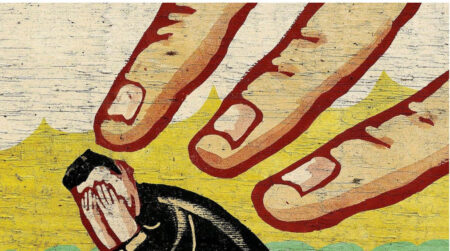
This is where the misunderstanding deepens. Many people think they’re fighting cravings. Or laziness. Or themselves. Increasingly, they’re fighting a multibillion-dollar design. Research from public-health institutions, internal industry disclosures and former food-industry executives has shown that ultra-processed foods are intentionally engineered for overconsumption. Variables like texture, crunch, mouthfeel and “bliss point” optimization are carefully studied. Billions are spent refining these mechanisms. The goal isn’t nourishment. It’s repeat purchase. Once that loop is established, cues alone—advertising, smells, stress—can trigger desire before hunger appears. This is where habit quietly becomes addiction.
Habits are behaviors shaped by repetition and environment. They can be helpful or harmful. They respond to structure and weaken when conditions change. Addiction is different. Addiction involves loss of control, persistence despite harm and neurological reinforcement that intensifies under stress. There is no positive version of addiction. While habits can be reshaped, addiction demands obedience. Food addiction rarely announces itself dramatically. People still function. They still work. The damage accumulates quietly. Blood sugar rises. Sleep erodes. Energy fades. Weight shifts. Doctors begin naming conditions without addressing the deeper drivers creating them.
Researchers at Yale, the National Institutes of Health and NIH-funded addiction-science labs began noticing that some individuals didn’t merely prefer certain foods—they lost control around them. Attempts to cut back failed repeatedly. Consumption continued despite clear physical and medical consequences. The behavioral patterns closely mirrored those seen in substance-use disorders. The foods most strongly associated with these patterns weren’t whole foods, but ultra-processed products designed to override satiety and outpace restraint. This helps explain why certain foods don’t satisfy even when you’re full, why stopping feels harder than starting and why willpower collapses most reliably when someone is exhausted, stressed or emotionally depleted. The brain isn’t weak in those moments. It’s responding exactly as it was trained to respond.
Addiction thrives under pressure, and modern life supplies it generously. Long work hours. Chronic stress. Financial anxiety. Social isolation. Screens everywhere. Sleep deprivation normalized. In that environment, food becomes more than fuel. It becomes relief. Comfort. A brief escape. Once something reliably provides emotional relief, the brain begins to treat it as essential. Awareness is often the first crack in addiction’s grip. There’s a saying that knowledge is half the battle. I’m not sure where it originated, but in this moment, it doesn’t always feel true. When it comes to addiction—especially food addiction—awareness can feel like only the beginning of the fight, not the advantage we hoped it would be. Still, knowing matters. It changes the terrain. And despite how steep the climb can feel, this is a winnable battle. People are making changes every day—quietly, imperfectly—one bite at a time, one decision at a time, rebuilding trust between their bodies and their choices.
People who successfully change compulsive eating patterns rarely describe dramatic victories powered by discipline alone. More often, they describe redesign. They changed their environments before testing willpower. They removed trigger foods rather than negotiating with them. They cooked more—not for romance, but to slow the process. They slept more. They found ways to calm stress instead of eating through it. For many, professional naturopathic support becomes part of that redesign. Not because of weak discipline, but because addiction rarely exists in isolation. Blood sugar instability, nutrient deficiencies, inflammation, hormonal disruption and nervous system overload all intensify cravings. When physiology stabilizes, habits regain leverage.

This is where the distinction becomes clear. Addiction seeks intensity. Habit responds to rhythm. Addiction thrives in chaos. Habit grows through consistency. Addiction demands immediacy. Habit works quietly, through repetition. Well-built habits don’t overpower addiction. They outlast it.
And there is something deeply ironic in all of this. In nearly any other context, intentionally engineering dependency for profit would be treated as criminal. Yet when it comes to food, this designed assault on health remains normalized, even protected. We are living in a time when food addiction is no longer rare. Pretending otherwise only benefits those who profit from it. But the same brain capable of learning addiction can learn its way out—not through shame or punishment, but through structure, support and design. Habit remains powerful. Addiction remains dangerous. The difference has always been design.