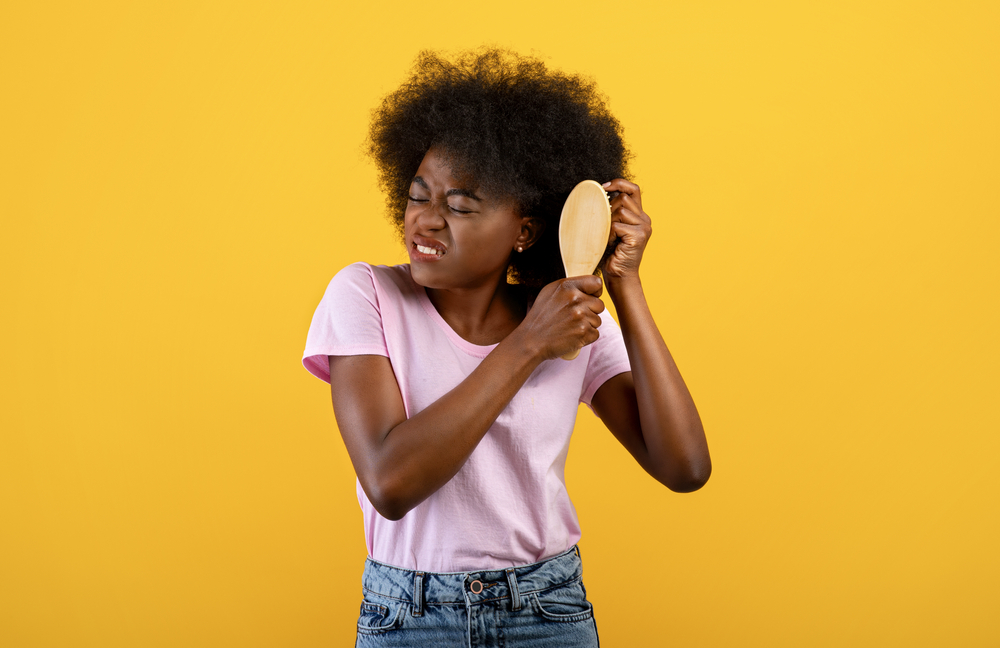




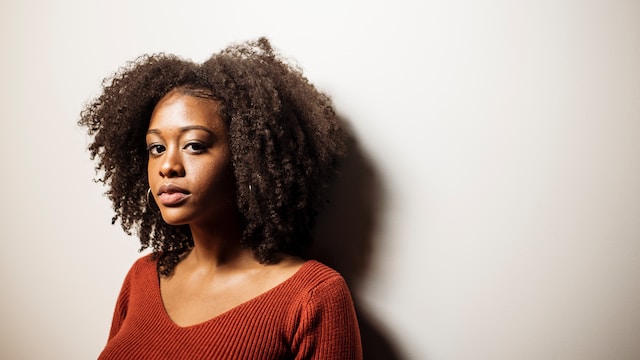
“The upkeep for my hair is so damn exhausting that if I’m being honest with myself, I really hate my hair,” reads a post from a Reddit user who describes her hair as “naturally curly type 4a” curls. “I was already emotionally drained after washing and conditioning my hair, now I had to start the worst part – combing it out…” she explains. Another confession reads, “For my whole life (28) I’ve struggled with having to keep my hair out of my face and being bothered by fringe or little frizzies around my face. I struggle with hyper fixation and perfectionist OCD but I want to be able to wear my hair down.”
Throughout Reddit’s thread titled Black women with ADHD, Black female users are sharing and describing unique experiences with Attention Deficit Hyperactivity Disorder and how its debilitating symptoms impact the capacity to maintain their natural hair. The sensory sensitivity, forgetfulness, anxiety, restlessness and difficulties with organization and time management make dealing with wash days, detangling and styling so severely difficult. It raises feelings of frustration, depression and shame. Even when compelled by the insistence of a special event, where hair is typically the focus of self-preparation, the mounting pressure often forces them to do nothing at all.
Worries about being labeled as “lazy” and as someone who “needs to try harder” are common sentiments. In a culture where centuries-old, ingrained dedication to pristine hair presentation and strength carry the day, self-image and confidence are gravely affected. ADHD can also trigger reactions and decisions that bring about poor overall health because the involvement with staying engaged in hair care routines is tedious and tiresome.
On TikTok, the hashtag #BlackWomenWithADHD sees hundreds of Black women with ADHD describing how they’ve developed a dependency on dangerous chemical relaxers because the push to spend more time than they can handle on their curls and coils is too great. For many, protective hairstyles that are designed to last for extended periods of time like braids, sew-in weaves and locs – they often eliminate the pressure to sustain general hair care routines – seem to be the only feasible and user-friendly options.

Why do Black Women with ADHD Have a Difficult Time Doing Their Hair?
While caring for natural hair can be a tall order for neurotypical individuals—it’s often overrun with time—consuming hair regimens and mounting piles of conflicting information – the demands are more distinctive for those with ADHD because their brains are wired differently. According to clinical psychologists, an ADHD brain can have executive function issues, which means that it might have a difficult time when operational tasks such as planning, organizing and prioritizing are at play. Many find it hard to begin a task because they are often unable to figure out what needs to be done first, like struggling with planning when and how to wash and style one’s hair. “The sensory experience of hair styling – the process of washing and detangling curly hair – at times it can be super uncomfortable,” Caroline Brown, a London-based integrated therapist and life coach with specialties in ADHD, neurodiversity and racial trauma, tells Refinery29. “And if you’re [someone with ADHD] dealing with emotional dysregulation, it can be additionally challenging.”
Experts say these obstacles can also be a significant factor in why some adults with ADHD struggle with proper grooming and cleanliness; they tend to think they have many other responsibilities deemed far more critical. Brown adds: “As an adult when you have a tendency to procrastinate and avoid tasks that require sustained attention, it is going to induce feelings of guilt and shame. And this can lower [one’s] self-esteem.”

Black Women With ADHD are Often Underdiagnosed
The ongoing grief of being misunderstood is a dilemma Black women with ADHD endure for years, or sometimes, throughout their lifetime because they are often misdiagnosed, if at all. While ADHD can affect anyone regardless of gender and race, the reasons why Black women’s symptoms are frequently left unidentified are varied, but studies have shown a prevailing gender and race gap relative to the different ways their symptoms are displayed and perceived.
According to Inflow – a leading science-based app created by clinicians and psychologists dedicated to supporting individuals with ADHD – the disorder affects males and females in the same amounts, but in females, it’s harder to spot, so they are less likely to be diagnosed and therefore, less likely to get the help they need. For example, as explained by the Child Mind Institute – they help children and their families struggling with mental health – girls with ADHD often have a type called ADHD-inattentive (ADHD-I). It means they have a hard time paying attention, staying organized and managing their time, but they are not hyper. They do not fit the common perceptions associated with most people who have ADHD: a young boy who can’t sit still and is “bouncing off the walls”. Even those girls who are more hyperactive and impulsive tend to be seen as pushy and overemotional, so their behavior might be seen as a personality problem instead of signs of a disorder.
Per KFF News – the Kaiser Family Foundation’s independent source for health policy research, polling and journalism—they report how it is widely accepted that white boys and men are overrepresented in the scientific literature on ADHD, and the disparity in diagnosis lends itself to minorities being less likely to receive a legitimate ADHD diagnosis. Paul Morgan, director of the Center for Educational Disparities Research at Penn State and lead author of multiple studies that show how race disparities in ADHD are clear and start early reports that Black children in the United States are 70% less likely to receive an ADHD diagnosis than otherwise similar white children.
Author Dr. Tumaini Rucker Coker, head of general pediatrics at Seattle Children’s Hospital and top researcher at its Center for Child Health Behavior and Development, said that while her study didn’t look at the underdiagnosis of Black girls, federal Education Department data shows telling signs of racial and gender discrimination in diagnosing ADHD: Black girls are six times as likely to be suspended from school as white girls. Behavior as common as talking back in class could have vastly different consequences, depending on how it’s interpreted. She explains to KFF Health News that for Black girls, it is often viewed as “intimidation” of a teacher. “When there’s bad behavior and you’re a white girl, you get all the benefit of the doubt,” she illustrates. “On the opposite side of the spectrum, you get zero benefit of the doubt as a Black girl.”
What’s more, researchers explain how the long-term exclusion of women in academic research has played a pivotal role in the underdiagnosis of females, so it becomes clear how Black women are even further marginalized. Cultural and social stigmas, the lack of mental health practitioners with knowledge of diverse ADHD symptomatology, lack of resources in the Black community and the general mistrust of mental health professionals among Black women are some of the barriers that contribute to limited studies and why Black women are egregiously underserved.

Life After Diagnosis
For those Black women fortunate enough to receive a proper ADHD diagnosis, it helps them to finally understand many of their most difficult challenges and get assistance with taking assessments to gain a greater understanding of themselves. Treatment typically starts with visits with psychotherapists and stimulant medications, but experts say while the medications do not cure symptoms, they will help with emotional regulation, which alleviates the process of tasks that felt arduous. They also add that supplementing treatment with alternative practices like proper diet and exercise, finding an understanding community, keeping abreast of reliable literature, joining up with an accountability buddy and acquiring help to develop a doable hair care routine are effective ways to navigate ADHD management.
In an interview with Inflow, Chondra Crosby, a 34-year-old pharmaceutical sales executive, digital marketer, and a Black woman living with ADHD—she was diagnosed last year – describes how although life with ADHD is a never-ending journey of experiences and growth, the relief of knowing there’s finally an explanation for all of the difficulties she faced gives her space to turn what she calls an adversary into an asset: “The bad days are absolute hell, but the good days are steps in the right direction,” she says. “The biggest thing that ADHD has given me is the gift of Grace. I am learning to give myself and everyone around me Grace.”
For additional information on ADHD in the Black community, contact the following:
Duke Center for Girls and Women with ADHD