



Close Menu
TheHub.news

    The Theology Behind Rev. Jesse Jackson Telling America’s Children to Say: “I Am Somebody”

    By Dr. Stacey Patton

    These Are The People in the Epstein Files Who Still Have Jobs

    By Pari Eve

    A Black Actor Says Harvard’s Repertory Theater Left Her With Permanent Hair Loss

    By Veronika Lleshi

    Subscribe to Updates

    Get the latest creative news from FooBar about art, design and business.

    X (Twitter) Instagram YouTube
    X (Twitter) Instagram YouTube
    TheHub.news
    Support Our Work
    • Home
    • Our Story
      • News & Views
        • Politics
        • Injustice
        • HBCUs
        • Watch
      • Food
        • Cuisine Noir
        • soulPhoodie
      • Passport Heavy
      • Travel
      • Diaspora
      • This Day
      • Entertainment
      • History
      • Art
      • Music
    • Health
    • Money
      1. Copper2Cotton
      2. View All

      How to Fight Inflation and Win

      December 9, 2025

      August 2018 Net Worth Update

      December 9, 2025

      Dividend Update: August 2018

      December 9, 2025
      Passive Income

      Be Passive About Your $

      November 17, 2025

      Economic Empowerment Has Always Been a Part of Black History

      February 12, 2026

      How to Fight Inflation and Win

      December 9, 2025

      August 2018 Net Worth Update

      December 9, 2025

      More Blacks Needed On Corporate Boards

      December 9, 2025
    • Books
    • Business
    • Sports
      1. First and Pen
      2. View All

      Cancelation of “106 & Sports” Was Expected as BET Isn’t Sports

      February 20, 2026

      Call to Investigate Bad Bunny’s Halftime Show Was Based on Hate, Not Law

      February 18, 2026

      Dawn Staley Continues Her Greatness With 500th Win at South Carolina

      February 17, 2026

      Trinidad Chambliss Gets to Play as the NCAA Takes Another “L”

      February 17, 2026

      Cancelation of “106 & Sports” Was Expected as BET Isn’t Sports

      February 20, 2026

      Call to Investigate Bad Bunny’s Halftime Show Was Based on Hate, Not Law

      February 18, 2026

      Dawn Staley Continues Her Greatness With 500th Win at South Carolina

      February 17, 2026

      Trinidad Chambliss Gets to Play as the NCAA Takes Another “L”

      February 17, 2026
    • Tech
    • Podcasts
      1. Karen Hunter is Awesome
      2. Lurie Breaks it Down
      3. Human(ing) Well with Amber Cabral
      4. Financially Speaking
      5. In Class with Carr
      6. View All

      The Theology Behind Rev. Jesse Jackson Telling America’s Children to Say: “I Am Somebody”

      February 23, 2026

      These Are The People in the Epstein Files Who Still Have Jobs

      February 23, 2026

      A Black Actor Says Harvard’s Repertory Theater Left Her With Permanent Hair Loss

      February 23, 2026

      New Exhibit Honors the Work of Political Artist Emory Douglas

      February 23, 2026

      The Theology Behind Rev. Jesse Jackson Telling America’s Children to Say: “I Am Somebody”

      February 23, 2026

      These Are The People in the Epstein Files Who Still Have Jobs

      February 23, 2026

      A Black Actor Says Harvard’s Repertory Theater Left Her With Permanent Hair Loss

      February 23, 2026

      New Exhibit Honors the Work of Political Artist Emory Douglas

      February 23, 2026

      The Theology Behind Rev. Jesse Jackson Telling America’s Children to Say: “I Am Somebody”

      February 23, 2026

      These Are The People in the Epstein Files Who Still Have Jobs

      February 23, 2026

      A Black Actor Says Harvard’s Repertory Theater Left Her With Permanent Hair Loss

      February 23, 2026

      New Exhibit Honors the Work of Political Artist Emory Douglas

      February 23, 2026

      The Theology Behind Rev. Jesse Jackson Telling America’s Children to Say: “I Am Somebody”

      February 23, 2026

      These Are The People in the Epstein Files Who Still Have Jobs

      February 23, 2026

      A Black Actor Says Harvard’s Repertory Theater Left Her With Permanent Hair Loss

      February 23, 2026

      New Exhibit Honors the Work of Political Artist Emory Douglas

      February 23, 2026

      The Theology Behind Rev. Jesse Jackson Telling America’s Children to Say: “I Am Somebody”

      February 23, 2026

      These Are The People in the Epstein Files Who Still Have Jobs

      February 23, 2026

      A Black Actor Says Harvard’s Repertory Theater Left Her With Permanent Hair Loss

      February 23, 2026

      New Exhibit Honors the Work of Political Artist Emory Douglas

      February 23, 2026

      In Class with Carr: Black History in Times of Trouble

      February 2, 2026

      The Rise of the “Righteous Whites” and the Collapse of Plausible Deniability

      January 24, 2026

      How Insurers Use Your ZIP Code and Credit Score Against You

      January 21, 2026

      In Class With Carr: New World Order

      January 19, 2026
    TheHub.news
    Diaspora

    Atlantic Archive: Political Activist, Alex Alberto, Talks Brazilian Political Reality and Black American Solidarity

    By SedMay 17, 20256 Mins Read
    Share Email Copy Link
    Alex talks with The Atlantic Archive
    Share
    Facebook Twitter LinkedIn Email Copy Link Threads

    Atlantic Archives: Tell us a little about yourself and what you represent.

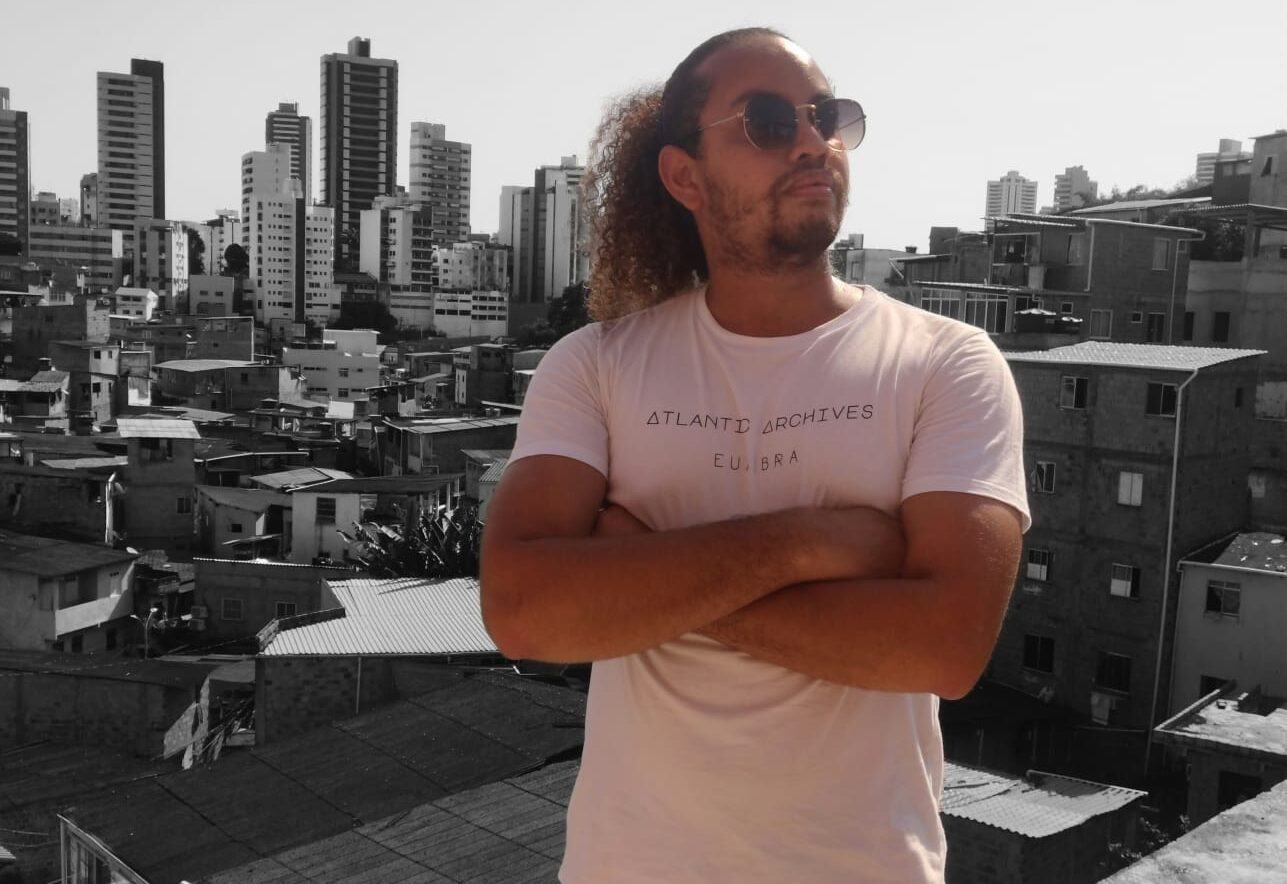
    Alex: I am Alex Alberto Santos  de Jesus  and I am 29 years old. I was born and raised in Salvador Bahia, Brazil on streets in a part of the city called, the community of Souza Ouzel known as “13th Street” by the locals.  In my community is one of the most famous Candomble houses called “Terreiro de Mae Menininha”. 

    Mãe Menininha do Gantois pic.twitter.com/xpoXdBKgSB

    — AFRO REVOLT (@afrorevolt) November 24, 2019

    I’m graduating in computer science at the Federal University of Bahia and also I’m currently Director of the Department of Policies for People with Disabilities for the city of Lauro de Freitas, which is a city that borders Salvador.

    AA: What is it like for you, to be Black in Brazil?

    AASJ: Being Black in Brazil a fight for survival in a racist, sexist and homophobic country.  It means living in a country where identifying as Black is very difficult.  Because we grow up hating our hair, hating our history. It is a place where things that are related to our race are marginalized. To be Black in Brazil is to fight to escape the terrible social statistical statistics because in Brazil despite being the largest population, Black people are usually in the worst social conditions. We are the largest number but we are denied quality education and this is reflected in us being the smallest number in universities. The smallest number in the sciences, the smallest number in prestigious propositions in private companies and also in the public sectors. Being Black in Brazil means living in a society where privilege is a word that doesn’t apply to us on a daily basis.

    On the other hand, Brazil is a pyramid-shaped society.  So the Black population is the one that suffers the most. It is the population that has the greater numbers in prisons and violence against young Black people. This is the population where our Black women are the most violated and the group with the least opportunities for social growth. So being black in Brazil is knowing that you need to look to the ancestors for the strength to fight against all discrimination and survive discount in this country who tell us that accepting our Blackness is bad.

    AA: In your work, you have met a lot of African Americans. What has that been like? And what do you think prevents Blacks in Brazil and the USA from being more united ??

    AASJ: Before my current job, I worked coordinating exchange programs in Brazil I had an opportunity to meet and make friends with many African-Americans. The difference between the relationships we managed to maintain with Black tourists and white tourists from exchange programs was remarkable. Generally, white tourists came to enjoy the country (meaning to enjoy the cultural part- samba, capoeira and also the Brazilian women). But when I connect with the African-Americans,  the conversations usually try to understand how the Black population of Brazil and the United States live. It is in this dialogue that we realize that the reality of the Black population in both countries is similar. 

    I’ve had the opportunity to talk to people from not only the United States but also from England and other European countries and we realize that the reality of the Black population in the world is similar. What that says is the Black institutions in Brazil and exchange groups from North American universities in needed to create institutional relationships.  Some of our projects brought the institutions closer to discuss the reality of the Black population, however, most of the time this relationship is configured as “the arrival”- the North Americas come to  Brazil to research and study our history and experiences and then return to their country of origin to complete their work. Generally, they don’t return to give feedback or get feedback on the research, or to create sustainable or transversal political projects for the Black population. So the realities are close… yes… but we need to unite more around political projects.

    AA: You have an intimate view of Brazilian politics from working in city government but also student organizing. What should African Americans know about the upcoming Brazilian elections?

    AASJ: I worked for a few years in the City Hall of Salvador and now I work in the City Hall of Laura de Freitas. Today this City Hall is managed by a woman from the Workers Party (The PT Party) which is a left-wing party. The city of Salvador where I live is managed by a white man, high society and he belongs to the party of the Democrats, a right-wing party in Brazil.  I can clearly see the difference between the mayors in the cities where the main issue is how to improve the lives of the people who need it most. The left-wing party tends to listen better to the population and distribute social policies for people. This is a year when the election is more complicated.

    We vote for many different positions including president, governors,  deputies, congressmen…  Brazil has experienced six years of setbacks after Dilma’s impeachment. There were the following two years of Michelle Temer and people forget about it and now we have had to experience four years of [Jair] Bolsonaro, who is really a racist, sexist, homophobic, a man who brought the extreme movement back to Brazil. 

    Bolsonaro has the support of the elite and big business, but mainly of Evangelical pastors who manage to influence and alienate their followers in such a way that poverty is associated with the lack of faith in God and then we move in the blame from a terrible president who made one of the worst administrations in the country‘s history.

    So this support from the evangelical church helped his election and the placement of his henchmen into important government positions. And if we are not careful, the expansion of the evangelical which- which became even richer in Bolsonaro’s government-  has a chance of making real action and this is bad. 

    https://www.instagram.com/p/CSx-LmNN2Ie/

    On the other hand, you have Lula, who was in the history of the country, one of the best presidents. If he’s elected he will have a very difficult task of bringing back the dignity of the poorest and most suffering population, the Black population. We have a lot of problems with Bolsonaro’s government because he removed or denied money to a lot of social programs that Lula will have to reinstitute. Along with institutions for social and cultural programming, he has to find work for people because they don’t have money to survive. If Lula is elected he will have a really difficult task in the country and that’s how it is that’s gonna be a difficult year during the elections. It’s going to be difficult to elect Lula, not only because of the money but without the support of the Evangelical church. These churches occupy the poorest communities and become richer while their devotees become poorer. So, it’s going to be a difficult year. 

    Part two of the Atlantic Archives interview with Alex Alberto arrives on TheHub.news on Friday.

    Afro Brazilians Atlantic Archives brazil Thehub.news
    Sed
    • Website
    • X (Twitter)
    • Instagram

    An expat now living in Northeast Brazil, Sed Miles works hand in hand with working-class, Afro-Brazilian artists, activists and intellectuals fighting against Brazil’s systematic racial and class barriers using a Pan-African, intersectional pedagogy. Each week they will present dispatches from the archives that will bridge communities and be a resource for the future. The mission of the Archives is to help unite the Black diaspora through documenting, preserving, and sharing stories that represent the shared themes and experiences of working class Black people. The series will focus on Brazil and the United States, societies built and held together by generations of Africa’s unshakable children.

    Related Stories

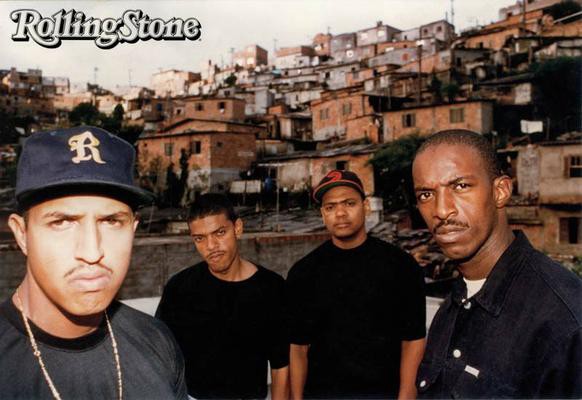
    Atlantic Archives: Brazil’s Most Dangerous Rap Group

    July 13, 2024

    Atlantic Archives: Radio Africa FM Transmitting From Brazil to the Diaspora

    March 29, 2024

    Atlantic Archives: Angela Davis Visits Brazil

    July 19, 2023

    UN Representative Visits Brazil to Investigate Indigenous and Black Genocides

    May 9, 2023

    Brazilian Wineries Practice Modern Slavery

    March 27, 2023

    Afro-Brazilians Remember the Political Assassination of Marielle Franco

    March 15, 2023
    Recent Posts
    • The Theology Behind Rev. Jesse Jackson Telling America’s Children to Say: “I Am Somebody”
    • These Are The People in the Epstein Files Who Still Have Jobs
    • A Black Actor Says Harvard’s Repertory Theater Left Her With Permanent Hair Loss
    • New Exhibit Honors the Work of Political Artist Emory Douglas
    • Heman Bekele: Saving the World One Invention at a Time

    The Theology Behind Rev. Jesse Jackson Telling America’s Children to Say: “I Am Somebody”

    By Dr. Stacey Patton

    These Are The People in the Epstein Files Who Still Have Jobs

    By Pari Eve

    A Black Actor Says Harvard’s Repertory Theater Left Her With Permanent Hair Loss

    By Veronika Lleshi

    New Exhibit Honors the Work of Political Artist Emory Douglas

    By Veronika Lleshi

    Subscribe to Updates

    A free newsletter delivering stories that matter straight to your inbox.

    About
    About

    TheHub.news is a storytelling and news platform committed to telling our stories through our lens.With unapologetic facts at the center, we document the lived reality of our experience globally—our progress, our challenges, and our impact—without distortion, dilution, or apology.

    X (Twitter) Instagram YouTube

    The Theology Behind Rev. Jesse Jackson Telling America’s Children to Say: “I Am Somebody”

    By Dr. Stacey Patton

    These Are The People in the Epstein Files Who Still Have Jobs

    By Pari Eve

    A Black Actor Says Harvard’s Repertory Theater Left Her With Permanent Hair Loss

    By Veronika Lleshi

    New Exhibit Honors the Work of Political Artist Emory Douglas

    By Veronika Lleshi

    Subscribe to Updates

    A free newsletter delivering stories that matter straight to your inbox.

    © 2026 TheHub.news A 501(c)(3) tax-exempt organization.

    Type above and press Enter to search. Press Esc to cancel.