


When Tommie Smith and John Carlos lined up on the starting blocks at the 1968 Summer Olympics in Mexico City, they knew the 200-meter sprint to the finish line would likely lead to a life-changing experience that would lift millions of Americans. It would also make them social pariahs and the target of condemnation and racism.
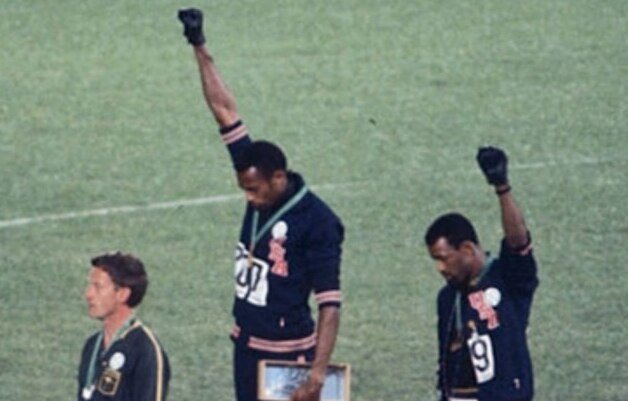
Smith won the gold medal, while Carlos earned the bronze medal. However, it was their actions after the race that sent shockwaves around the world. Both men knew they would hold some form of demonstration to protest American inequality during the medal ceremony, but were unsure exactly what they would do. Their plan began to take shape inside the well of the Olympic stadium when Smith’s wife handed the duo a pair of black gloves. Carlos’ wife supplied beads they would wear around their necks to raise awareness about lynchings. They also decided to take off their shoes to highlight the issue of poverty.
With their black-gloved fists raised and only black socks on their feet, Smith and Carlos bowed their heads as the “Star-Spangled Banner” blared throughout the stadium. Carlos says he bent his arm in hopes of shielding his face from potential sniper fire. Smith told Sports Illustrated he stood scared on the medal stand and said a prayer during the ordeal. Smith says he felt reassured in his protest as he thought back on the broken system he was fighting.
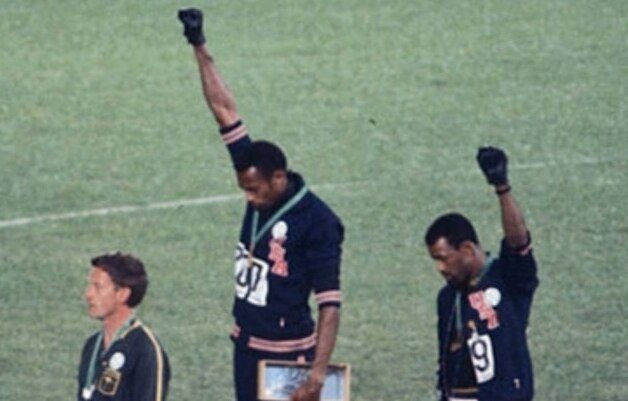
“I listened to the national anthem because that’s a powerful thing,” Smith told S.I. “Hearing that anthem knowing how many people died so that belief could remain a part of America.”
Smith and Carlos are revered by many as heroes today, but people in Mexico initially met their actions with vitriol and condemnation. The U.S. Track team stripped both men of their medals and suspended them. Upon arriving home, they faced a series of death threats. They were also attacked in the media, where articles compared them to Nazis and described them as “black-skinned storm troopers.”
As the years passed, Smith and Carlos began receiving recognition for their courage. In 2005, San Jose State University in California unveiled a statue of the men on campus. A statue also stands within the National Museum of African American History and Culture. Both men also received the Arthur Ashe Courage Award at the 2018 ESPYs.