



Humanitarian aid organizations are continuing to ring the alarm on the malnutrition levels in Somalia as the number of cases reaches a five-year high.
In a statement released late last week, the International Committee of the Red Cross reported that the number of individuals admitted to stabilization centers for immediate treatment is nearing the highest rate in nearly five years. In the first three months alone, approximately 738 children under the age of five were admitted to the Kismayo General Hospital for malnutrition. Of these children, 10 passed away due to the severity of the disease.
An estimated 1.8 million children are predicted to be admitted to these stabilization centers throughout the year. More often than not, the children who seek immediate help are placed into the ICU as their conditions involve a combination of acute severe malnutrition and related complications, including trouble breathing, vomiting and kwashiorkor.
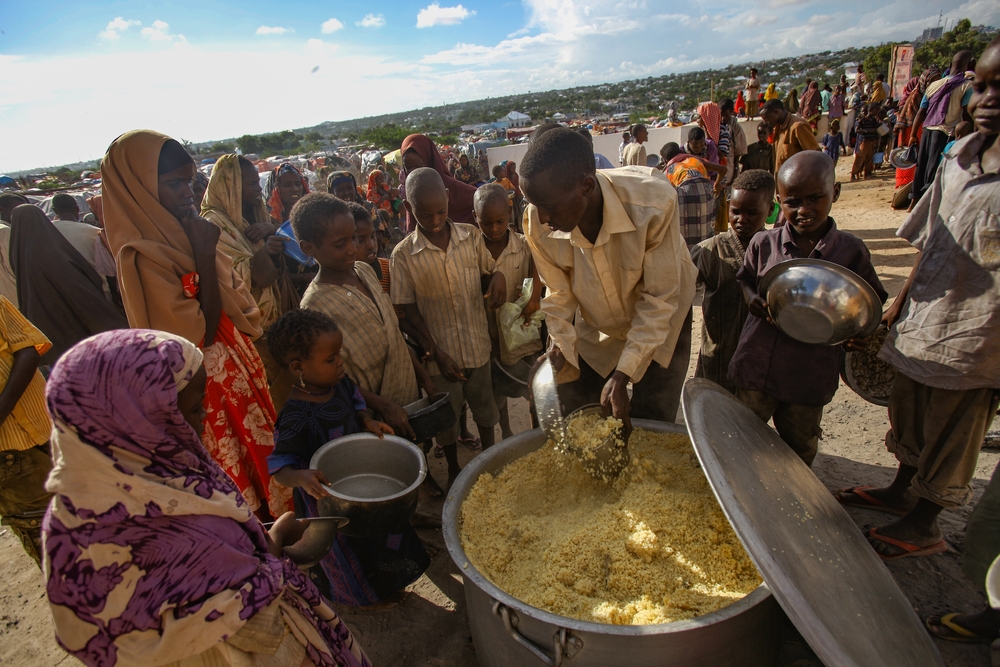
Children are not the only demographic affected. Overall, over 6.5 million people, or nearly 1 in 3 Somali citizens, face food insecurity. Over 2 million of these residents are in Phase 4 of food insecurity, recording higher rates of malnutrition and death.
“Somalia faces a really severe malnutrition crisis and is one of the biggest malnutrition hotspots in the world,” said the WFP assistant executive director for programme Operations, Matthew Hollingworth, per Reuters.
The rise in the levels of malnutrition is a direct result of an ongoing drought. Dry lowlands in areas, such as the Afder and Shebelle zones, have led to a significant lack of crops, the death of livestock and water shortages.
With limited access to sustainable water, water prices have surged to rates that are no longer affordable for families. A majority of residents have resorted to using unsafe water sources, risking the spread of waterborne diseases. These sources, however, also provide a sparse water supply as they were deemed non-functional in December 2025.
The situation is further exacerbated by an ongoing civil war. The armed groups have conducted multiple attacks, displacing millions of Somalis. Nearly 3.3 million Somalian residents have left their homes due to drought and conflict with over 50,000 people moving into Ethiopia for aid this year alone.
“We were displaced because of the drought. We do get water, but it’s not enough: two jerrycans — per day — for washing, bathing, cooking and drinking,” said Regay Ali, a displaced Somalian resident per Doctors Without Borders. “Even five would not be enough. Hunger is weighing heavily on us. We were displaced because of hunger, and where we are now, we still don’t have enough.”
As the need for aid rises, however, cuts to funding for assistance means that less and less Somalian citizens are getting help.
As of this year, according to the OCHA Financial Tracking Service, only 10% of the funds needed for the humanitarian response in Somalia have been provided. Cuts to the World Food Program also mean they can afford to help only one in 10 people in dire need of immediate assistance. Currently, just over 600,000 of the previous 2 million assisted people have access to food. As for water, only 300,000 people have access to clean water.
Meanwhile, for several districts, food assistance has been suspended altogether, while nutritional support for mothers has also been reduced.
Despite the current crisis in the country, Somalia was not included in the $2bn U.S. global humanitarian aid pledge. The country was accused of corruption, aid diversion and destroying a World Food Program warehouse. The Somali government has since denied all claims.
As a result of the lack of financial funds, just 1 in 7 Somalian citizens are receiving assistance to combat malnutrition and more than 70 health facilities in Puntland alone have shut down.
To address the lack of health facilities, 12 SRCS primary healthcare centers have been converted into nutritional centers. The staff has also received additional training on treating malnutrition, providing patients with pastes such as Plumpy’Nut to help combat the disease.
“People are arriving every day, and resources are not keeping pace,” said the MSF head of programs in Somalia, Mohammed Omar, per Doctors Without Borders. “We call on the international community and governments to urgently step up their support now, with sustained and flexible funding, before more lives are lost to entirely preventable causes.”