



There’s been a rise in autosomal DNA testing over the last decade. DNA testing companies like Ancestry, 23andMe and MyHeritage have seen their databases grow exponentially as users inquire about their origins. According to The DNA Geek, as of March 2025, more than 53 million people have tested across the four main companies. But is the question of “Who Am I?” the only reason people are testing?
That answer is layered—some users test to find out more about their ethnicity estimates, to find out who they are and where they come from. Others test to learn more about their ancestors and build their family trees. And then there are those who may initially test to find answers about their origins and end up wanting to learn more about their ancestors.
Personally, my interest has always been in building out my family tree. My introduction to DNA testing came in 2015 when I participated in a DNA project on Facebook to help me identify my Jamaican ancestors. At the time, I knew only a handful of my ancestors’ names, from a high school family tree project. That seed was planted in 1997, but didn’t start to grow until around 2013, when I went back to Ancestry to begin building out my family tree. I then joined some Jamaican genealogy groups on Facebook, including Jamaica Reunited, where I submitted a proposal to help me answer questions about ancestors I either could not find records for or to break down “brick walls”—a term used in genealogy to find unknown ancestors who are basically dead branches in your family tree. Jamaica Reunited is a Facebook group that consists of volunteers with varying experience who work together to help other members achieve the goals of their submitted proposals. Mine was to identify some of these brick walls in my tree. It was in this group that I learned about the importance of DNA testing. I was encouraged to test by one of the group administrators to confirm a hypothesis she had—that I was related to one of her cousins.
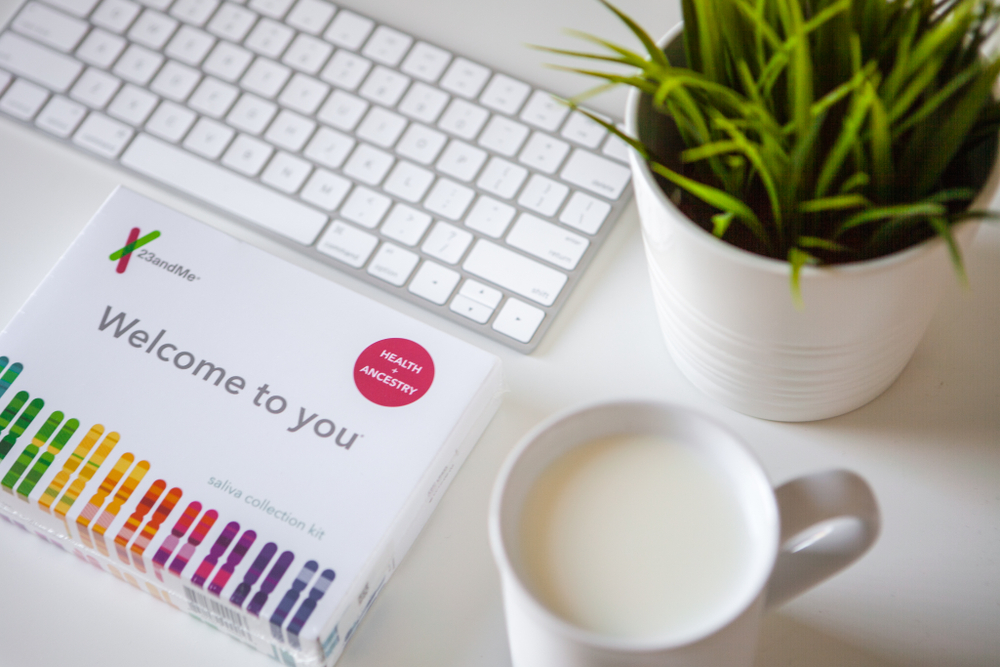
I bit the bullet and initially tested with Ancestry. Though the hypothesis wasn’t proven at the time, she also urged me to test more family members as my DNA was likely “watered-down.” She explained this meant that I may have inherited little or no DNA from actual matches and went on to inform me that elder relatives would yield better results (that is, more matches than I). Though we inherit approximately 50% of our DNA from each parent, in actuality, it looks quite different for each child. Think of it like a bowl of M&Ms: the handful you grab from the bowl will not be identical to the handful grabbed by any of your siblings.
I eventually tested a number of family members over more than 10 years since I initially tested. Testing these relatives and connecting with others to manage their DNA kits has led me on a never-ending journey, helping me connect with ancestors I never would’ve dreamed of! It’s given me a purpose: to tell my ancestors’ stories (honestly, whether they like it or not) and educate my own family members about our legacy. It has also exposed many secrets our ancestors likely thought died with them—but those are stories for another time!
Now, you may be reading this and wondering, “How does this impact me?” especially if you’re only interested in finding out your origins. Well, because users are testing for various reasons, your results may change someone’s life! Within these databases, there are adoptees, people who were abandoned as children and even some people who only find out through DNA testing that their parents aren’t who they were told. The term widely used for this phenomenon is non-parental event (NPE) and it’s typically the misidentification of the father. In these cases, the tester finds out that their presumed father isn’t their biological father. This leads to even bigger questions being raised and people trying to find more familial information that you may somehow be able to answer.
All the autosomal DNA testing companies have tools that help users contact other testers, typically via messaging. As a DNA tester, you may share a large or small amount of DNA with someone yearning for answers, and those answers can be life-altering.
For someone who has only learned through DNA testing that they are the product of an NPE, you may be the key to discovering their biological parent. So, if you’re wondering what’s next, just know that your DNA results were never just about your ethnicity estimates—they may help to unlock someone else’s story.
The question was never just “Who Am I?”—it may just answer that question for someone else!