



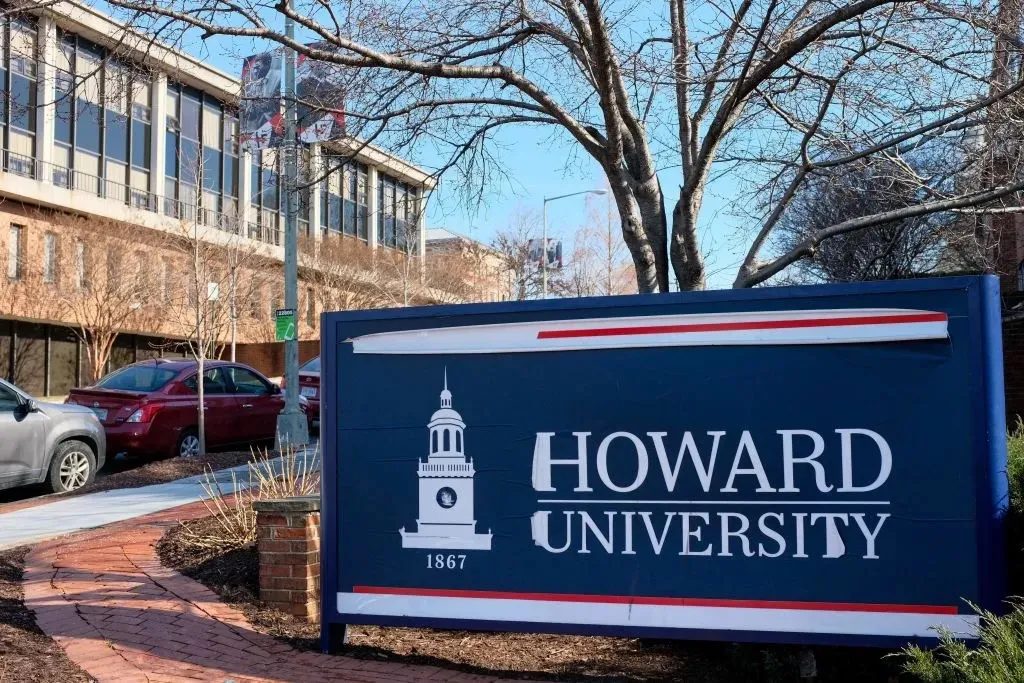
Howard University is set to lead a $4 million initiative dedicated to teaching students and faculty about artificial intelligence literacy.
Known as ASCEND-AI- Advancing Student and Collaborative Educator Network for Digital AI Integrations, the initiative is a partnership between Howard University and Bowie State University. Supported by a new grant from the U.S. Department of Education, the program is currently open to 400 undergraduate and graduate students and 50 faculty members across two campuses.
The yearly initiative will give these students and teachers skills such as how to be literate when it comes to AI, how to use it responsibly, how to detect misinformation and how to navigate AI instructions. The course will also promote AI entrepreneurship. The program will revolve around collaborative courses, encouraging problem solving, teaching and researching. Subjects discussed include natural sciences, business, health sciences, social sciences and humanities.
The announcement of the program comes days after Howard University launched a new AI course dedicated to teaching students how the technology is being implemented in real-world settings and how to use it ethically.
“Meeting the AI challenge is a national imperative, and Howard University is answering that call in partnership with Bowie State University,” said executive director of the Center for Academic Data Science and Analytics and co-chair of the AI Advisory Council at Howard, Talitha Washington, Ph.D., per a press release. “Together, we are leading with purpose by ensuring that artificial intelligence strengthens education, upholds academic integrity, and prepares our students to thrive in a rapidly changing world.”
AI is currently on a global rise as it has become embedded into daily living. Per UNCF, amongst HBCUs, 98% of students, 96% of faculty and 81% of administrators use AI tools.
Although it has been associated with increased efficiency, critics of AI emphasize that there are negatives to the new technology.
According to the United Nations, AI requires 800 kg of raw materials and thousands of gallons of water to operate, at a time when clean water is not available to everyone. The technology also emits hazardous materials, including mercury, lead and greenhouse gases.
The AI data centers are also projected to consume 12% of all U.S. electricity by 2030. These centers are increasingly situated in or near Black communities. Per Forbes, Black Americans are 75% more likely to live in facilities that produce toxic waste from AI usage, leading to increased rates of health issues such as asthma and cancer. Concerns regarding AI replacement in the workforce are also associated with Black workers as they are more likely to work in fields most susceptible to AI integration.
The implementation of AI is expected to grow, however. According to Stanford Human-Centered Artificial Intelligence, the latest data show that AI usage increased by 55% over the past year. U.S.-based institutions are currently leading in AI model development, creating 40 significant models in 2024 alone.