


Close Menu
TheHub.news

    Lessons From Prison on Media Consolidation and Censorship

    By Jeremy Busby

    “The Pivot” Moving to Netflix Shows ESPN Isn’t the Required Home It Once Was

    By FirstandPen

    ‘Eyes on Cuba’: A Conversation About Humanitarian Conditions Facing Cuba in the Midst of Crippling US Blockade

    By Insight News

    Subscribe to Updates

    Get the latest creative news from FooBar about art, design and business.

    X (Twitter) Instagram YouTube
    X (Twitter) Instagram YouTube
    TheHub.news
    Support Our Work
    • Home
    • Our Story
      • News & Views
        • Politics
        • Injustice
        • HBCUs
        • Watch
      • Food
        • Cuisine Noir
        • soulPhoodie
      • Passport Heavy
      • Travel
      • Diaspora
      • This Day
      • Entertainment
      • History
      • Art
      • Music
    • Health
    • Money

      Cashflow Coach: I Planted a Money Tree!

      August 4, 2026

      Breaking Down the 2 Different Types of Income

      July 7, 2026

      Black Americans Are Already Living Through a Recession

      July 6, 2026

      You Must Be an Owner to Win 

      June 23, 2026

      Economic Empowerment Has Always Been a Part of Black History

      February 12, 2026
    • Books
    • Business
    • Sports
      1. First and Pen
      2. View All

      “The Pivot” Moving to Netflix Shows ESPN Isn’t the Required Home It Once Was

      September 4, 2026

      Racist Who Harassed LA Sparks’ Dearica Hamby Fired by Employer

      September 3, 2026

      Stephen A. Smith Running to Fox News Exposed Bigger Issue of Black Media Disrespect

      August 24, 2026

      ESPN’s Black Talent Purge Sends Alarming Message to the Black Sports Community

      August 18, 2026

      “The Pivot” Moving to Netflix Shows ESPN Isn’t the Required Home It Once Was

      September 4, 2026

      Racist Who Harassed LA Sparks’ Dearica Hamby Fired by Employer

      September 3, 2026

      Stephen A. Smith Running to Fox News Exposed Bigger Issue of Black Media Disrespect

      August 24, 2026
      Wilt Chamberlain Portrait.

      This Day in History: The Legacy of Basketball Superstar, Wilt Chamberlain

      August 21, 2026
    • Tech
    • Podcasts
      1. Karen Hunter is Awesome
      2. Lurie Breaks it Down
      3. Human(ing) Well with Amber Cabral
      4. Financially Speaking
      5. In Class with Carr
      6. View All

      Lessons From Prison on Media Consolidation and Censorship

      September 4, 2026

      “The Pivot” Moving to Netflix Shows ESPN Isn’t the Required Home It Once Was

      September 4, 2026

      ‘Eyes on Cuba’: A Conversation About Humanitarian Conditions Facing Cuba in the Midst of Crippling US Blockade

      September 4, 2026

      This Day in History: September 4th

      September 4, 2026

      Lessons From Prison on Media Consolidation and Censorship

      September 4, 2026

      “The Pivot” Moving to Netflix Shows ESPN Isn’t the Required Home It Once Was

      September 4, 2026

      ‘Eyes on Cuba’: A Conversation About Humanitarian Conditions Facing Cuba in the Midst of Crippling US Blockade

      September 4, 2026

      This Day in History: September 4th

      September 4, 2026

      Lessons From Prison on Media Consolidation and Censorship

      September 4, 2026

      “The Pivot” Moving to Netflix Shows ESPN Isn’t the Required Home It Once Was

      September 4, 2026

      ‘Eyes on Cuba’: A Conversation About Humanitarian Conditions Facing Cuba in the Midst of Crippling US Blockade

      September 4, 2026

      This Day in History: September 4th

      September 4, 2026

      Lessons From Prison on Media Consolidation and Censorship

      September 4, 2026

      “The Pivot” Moving to Netflix Shows ESPN Isn’t the Required Home It Once Was

      September 4, 2026

      ‘Eyes on Cuba’: A Conversation About Humanitarian Conditions Facing Cuba in the Midst of Crippling US Blockade

      September 4, 2026

      This Day in History: September 4th

      September 4, 2026

      Lessons From Prison on Media Consolidation and Censorship

      September 4, 2026

      “The Pivot” Moving to Netflix Shows ESPN Isn’t the Required Home It Once Was

      September 4, 2026

      ‘Eyes on Cuba’: A Conversation About Humanitarian Conditions Facing Cuba in the Midst of Crippling US Blockade

      September 4, 2026

      This Day in History: September 4th

      September 4, 2026

      In Class with Carr: King Me: Africana Governance and Purpose in a Changing World

      August 31, 2026

      In Class with Carr: Beginning Black August

      August 3, 2026

      In Class with Carr: “Rock the Vote!”

      July 21, 2026

      In Class with Carr: “Odds and Ends”

      July 13, 2026
    TheHub.news
    Diaspora

    Brazilian Carnival 2024: A Look Inside of The Sons of Gandhi

    By SedFebruary 19, 20244 Mins Read
    Share Email Copy Link
    Share
    Facebook Twitter LinkedIn Email Copy Link Threads

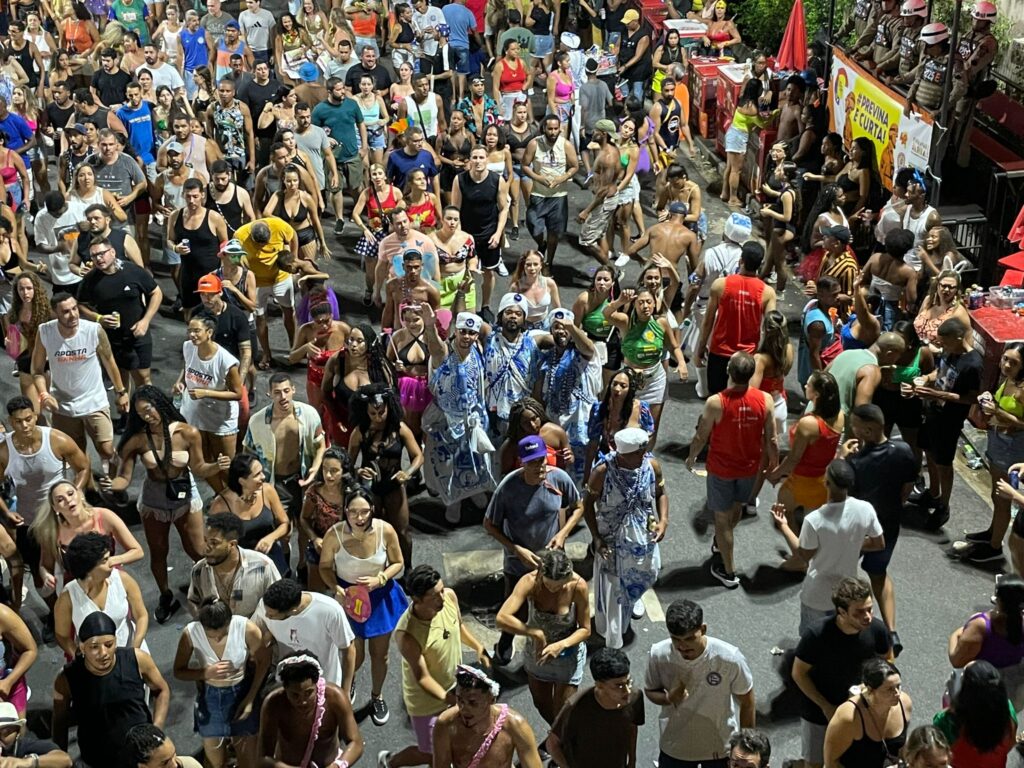
    Carnival in Brazil has just ended and I’d like to share a unique look inside the internationally popular festival. For the second year in a row, I traveled through the carnival festivities with the famous carnival group Filhos de Ghandy (Sons of Ghandi). 

    In the mid-20th century, the Afro bloco (group) phenomenon in the Brazilian carnival, particularly prominent in Salvador Bahia, emerged as a pivotal chapter in the nation’s racial history. Beginning in the 1940s and gaining momentum during the 1960s, these blocos became a crucial element in the fight against racial oppression.

    Influential figures like Mãe Hilda Jitolu, a Candomblé priestess, played a vital role in incorporating Afro-Brazilian religious and cultural practices into the carnival festivities.

    https://www.instagram.com/p/C2iQdDave0k/?igsh=MWZ4eHc2cGs4eWNmZQ==

    During the 1970s, iconic groups like Ilê Aiyê and Olodum took center stage, infusing Carnival with Afro-centric rhythms and imagery. Ilê Aiyê, founded in 1974, was a trailblazer, celebrating African heritage and confronting racial inequalities through music and dance.

    É festa? É o Bloco Ilê Aiyê comemorando seus 50 anos!#CarnavaisDoBrasil #OCanalDoCarnaval pic.twitter.com/OWuOKXMA7l

    — TV Brasil (@TVBrasil) February 13, 2024

    Against the backdrop of Brazil’s complex racial history, marked by slavery’s enduring legacy, Salvador’s Carnival became a platform for social and political activism. These Afro blocos challenged racism.

    The cultural and social consciousness within these blocos not only transformed Carnival into a vibrant celebration but also created a dynamic arena for social change. 

    Se você pudesse definir o cinquentenário do mais belo dos belos numa só palavra, qual seria? Nesta terça (13), o @BlocoIleAiye desfila na avenida com seu charme para mostrar a energia ancestral que emana no #CarnavaldaBahia. Viva o primeiro bloco afro do Brasil, viva o Ilê!❤️???????? pic.twitter.com/s8sOd34qKq

    — Bahia Notícias (@BahiaNoticias) February 13, 2024

    The Filhos de Gandhy, founded in 1949 by Black dock workers in Salvador, Brazil, has evolved into the largest group of the Carnival of Salvador, with approximately 10,000 members. Inspired by Mahatma Gandhi’s principles of non-violence, this all-male group celebrates African spirituality emphasizing Yoruba rhythm and language.

    ????História do Carnaval de Salvador:
    Filhos de Gandhy lotando um bonde na cidade baixa para ir ao desfile do Carnaval. pic.twitter.com/LWmrMC3jdg

    — Jorge França ????ECV⭐ (@JorgeFrancaAlme) January 31, 2024

    Originally named “Sons of Gandhy” by founder Durval Marques da Silva, the group faced financial challenges in its early years due to post-war economic difficulties due to government intervention in unions. 

    The name “Sons of Gandhy” pays homage to Gandhi but creatively alters the spelling to avoid potential reprisals. In subsequent years, the group incorporated allegories representing Gandhi’s ideals, such as the goat symbolizing life and the camel representing resistance.

    The afoxé officially adopted Afro songs and Candomblé as religious elements in 1951, expanding its cultural significance.

    https://www.instagram.com/p/CSt83B6F8BI/?igsh=ZW1iYzMwY2RsdzZz

    Despite facing administrative and financial challenges in 1974, the Filhos de Gandhy’s resilience prevailed.

    Support from influential figures like Gilberto Gil contributed to the group’s revival. The group returned in 1976 with about 80 men, gradually growing to over a thousand members by 1978 and reaching a remarkable 14,000 participants in 1999 on its 50th anniversary.

    The distinctive white garb and turbans, along with blue and white bead necklaces symbolizing peace and luck, have become iconic. The necklaces, traditionally exchanged for kisses during Carnival, contribute to the street party with an air of romance.

    Every Son of Gandhy accessorizes their fit to reflect their style, message, and often personal dedications.

    Along with the various jewelry and beads, I wore a vintage ankh that belonged to my brother, who passed back in the day. And if you look closely, you can see the iconic Crown Royal bag. It brings a splash of color and a little bit of home to the party.

    https://www.instagram.com/p/C3NA1nEurJP/?igsh=MXRmbms0dG85cHVzMQ==

    Each year, we visit a seamstress in the neighborhood in Liberdade to have my turban, made from an embroidered white and blue towel, fitted and adorned with faux jewels and beads. 

    https://www.instagram.com/p/C3MfV_5M_Wr/?igsh=MWI4dG0yd2RjeTh1cA==

    Once we hit the streets with the bloco, the parades last for another three days. It’s a unique carnival experience, but also very familiar to Mardi Gras and Caribean Carnivals. Everyone in the street is following the music from the giant trucks.

    Limitless drinks, dancing, and celebrating life. Of course, the military police make their presence explicit, but everyone knows that the cops want to celebrate too.

    https://www.instagram.com/reel/C3QgPG5LJ-j/?igsh=aXVpc21yNG45Mm00

    My favorite part is always seeing the elders and the babies dressed down and looking magical. In my view, they truly are who set the pace for the parades. They represent the past and the future, both beautiful, tender and mysterious.

    https://www.instagram.com/reel/C3SRAwLscyv/?igsh=azY4d3RraXhjNTNv
    Brazilian Carnival Gandhi Sons of Gandhi Thehub.news
    Sed
    • Website
    • X (Twitter)
    • Instagram

    An expat now living in Northeast Brazil, Sed Miles works hand in hand with working-class, Afro-Brazilian artists, activists and intellectuals fighting against Brazil’s systematic racial and class barriers using a Pan-African, intersectional pedagogy. Each week they will present dispatches from the archives that will bridge communities and be a resource for the future. The mission of the Archives is to help unite the Black diaspora through documenting, preserving, and sharing stories that represent the shared themes and experiences of working class Black people. The series will focus on Brazil and the United States, societies built and held together by generations of Africa’s unshakable children.

    Related Stories

    What You Need to Know About What Is Happening in Sudan

    July 10, 2024

    Eritrean Biniam Girmay Makes History As First Black African Cyclist to Win At the Tour de France

    July 5, 2024

    Afro Brazilians You Should Know: Physicist Sonia Guimarães

    May 6, 2024

    UK Temporarily Returns Ghana’s Looted Crown Jewels

    April 12, 2024

    Brazilian President Lula Makes Clear Diplomatic Statement, Recalling Ambassador Amid Israel-Brazil Tensions

    February 26, 2024

    Brazilian Festival Season Begins With “George Floyd” Style Killing of Edmar Santos Costa

    January 30, 2024
    Recent Posts
    • Lessons From Prison on Media Consolidation and Censorship
    • “The Pivot” Moving to Netflix Shows ESPN Isn’t the Required Home It Once Was
    • ‘Eyes on Cuba’: A Conversation About Humanitarian Conditions Facing Cuba in the Midst of Crippling US Blockade
    • This Day in History: September 4th
    • Racist Who Harassed LA Sparks’ Dearica Hamby Fired by Employer

    Lessons From Prison on Media Consolidation and Censorship

    By Jeremy Busby

    “The Pivot” Moving to Netflix Shows ESPN Isn’t the Required Home It Once Was

    By FirstandPen

    ‘Eyes on Cuba’: A Conversation About Humanitarian Conditions Facing Cuba in the Midst of Crippling US Blockade

    By Insight News

    This Day in History: September 4th

    By TheHub.news Staff

    Subscribe to Updates

    A free newsletter delivering stories that matter straight to your inbox.

    About
    About

    TheHub.news is a storytelling and news platform committed to telling our stories through our lens. With facts at the center, we document the lived reality of our experience globally—our progress, our challenges, and our impact—without distortion, dilution, or apology.

    X (Twitter) Instagram YouTube

    Lessons From Prison on Media Consolidation and Censorship

    By Jeremy Busby

    “The Pivot” Moving to Netflix Shows ESPN Isn’t the Required Home It Once Was

    By FirstandPen

    ‘Eyes on Cuba’: A Conversation About Humanitarian Conditions Facing Cuba in the Midst of Crippling US Blockade

    By Insight News

    This Day in History: September 4th

    By TheHub.news Staff

    Subscribe to Updates

    A free newsletter delivering stories that matter straight to your inbox.

    © 2026 TheHub.news A 501(c)(3) tax-exempt organization.

    Type above and press Enter to search. Press Esc to cancel.