



With the close of May comes the end of Mental Health Awareness Month.
Celebrated annually, the month’s purpose is to strengthen communities and to remind those who struggle with mental health that they are not alone. Mental Health Awareness Month also works to remove stigmas that surround several mental health issues.
In honor of the month, here are five Black figures who helped revolutionize mental health services.
Dr. Francis Sumner
Born in Arkansas in 1895, Dr. Sumner is known as the “Father of Black Psychology.” Although he had no high school education, at age 15 he passed an entrance exam to Lincoln University. While there, he graduated magna cum laude with honors in Greek, Latin, Philosophy, English and Modern Languages. After receiving another B.A. and an M.A. at Lincoln University, he became the first Black American to obtain a Ph.D. degree in psychology. With his degree, he became a professor at multiple educational institutions and published several papers, even though he was unable to secure funding because of his race. Topics he studied included psychoanalysis as well as the psychology of race such as the mental health of Black and white Americans. He is considered a pioneer in race psychology and is one of the founders of the psychology department at Howard University.
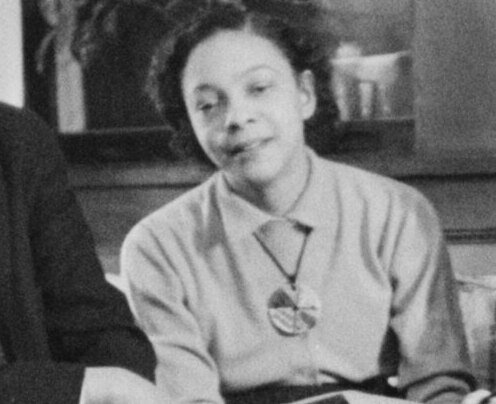
Dr. Mamie Phipps Clark
Born in 1917 in Hot Springs, Arkansas, Dr. Clark is notable for her work helping children. At the age of 17, she graduated from high school and was offered multiple scholarships from HBCUs. In 1938, she graduated magna cum laude with a B.A. in Psychology at Howard University on a merit scholarship.
While in school, she met Kenneth Clark, her future husband and a psychology student who helped her realize her passion. While working on her Master’s, she worked at the office of NAACP lawyer, Charles Hamilton Houston, where she was inspired to begin her work surveying 150 Black children from a nursery to analyze race and child development. Through her thesis work, she published three papers.
At Columbia University, where she studied for her Ph.D., she and Kenneth became the only Black American students at the university; they went on to receive the Julius Rosenwald Fellowships three years in a row to study race identity amongst children. In 1943, Clark became the first Black woman to get a Ph.D. at Columbia University.
After her education, she and her husband eventually opened up the Northside Center for Child Development. Opened in 1946, it was the one and only organization in the city that offered mental health services to Black children through psychiatric help, psychological testing, social services and American services.
Dr. Maxie Clarence Maultsby Jr.
Dr. Maxie Clarence Maultsby Jr. first earned an M.D. from Case Western Reserve University in 1957. After graduating, he held positions at the Philadelphia General Hospital, the US Air Force, and the University of Wisconsin, where he had a residency and eventually joined full-time as medical faculty in 1970. While there, he created Rational Behavior Therapy, which focuses on teaching clients on how to treat themselves through techniques such as visualization practices, and opened up the Training and Treatment Center for Rational Behavior Therapy. Maultsby is also credited with the self-help technique Rational Self-Counseling and the New Self-Help Alcoholics’ Relapse Prevention Treatment Method. He was also previously the Chair of Howard’s Department of Psychiatry. For his work, he was awarded a number of honors, including the Lifetime Achievement Award from the National Association of Cognitive-Behavioral Therapists and the Distinguished Life Fellow of the American Psychiatric Association.
Bebe Moore Campbell
An author, journalist, and teacher, Campbell is heralded for her work as a mental health advocate for Black communities and other underrepresented communities. A majority of her literary works discussed the impact of mental health issues and racism, as well as the strength of community. Campbell is also credited with founding NAMI Urban Los Angeles. The grassroots organization was founded in 2003 and is considered to be the largest mental health organization in the U.S. dedicated to supporting those affected by mental illness. Along with educational opportunities to teach those interested in mental health, NAMI advocates for health insurance, housing rehabilitation and finding jobs for those who struggle with their mental health.
Dr. Solomon Carter Fuller
Born in Liberia, Dr. Fuller made history as the U.S.’ first Black psychiatrist. He attended Livingstone College in North Carolina, where he earned his B.A. before studying medicine at the Boston University School of Medicine. Fuller began working as a pathologist at Westborough State Hospital in Boston, eventually joining the staff at Boston University. Although he was discriminated against and was undercelebrated for his work at the time, he revolutionized science and medicine by researching “presenile dementia,” an illness now known as Alzheimer’s disease.