


When Jacqueline Bouvier married John F. Kennedy in 1953, she wore a stunning ivory silk taffeta bridal gown that defined a generation of fashion. But as the press praised the gown, the designer—a Black woman named Ann Lowe—was working in obscurity, her name largely left out of the headlines by a racist, segregated industry.
Actually, Lowe’s contributions extended far beyond this iconic gown. Her exquisite designs became staples in high society as she dressed elite clients and left an enduring mark on American fashion.
In celebration of Women’s History Month, this is her story.
Take a look at the history of American fashion. It’s filled with beautiful imagery, but sometimes, what you don’t see is more telling than what you do. Behind the extravagant debutante balls of the 1930s and the socialites of the 1950s was a singular, brilliant hand—a hand that belonged to Ann Lowe. She was a master of intricate fabric flowers, an expert in elegant silhouettes and arguably one of the most talented designers of the 20th century.
She was born in Clayton, Alabama, in 1898, into a family of talented dressmakers, which set the stage for her incredible journey in fashion. Her grandmother, Georgia Thompkins, and mother, Janie Cole, had both been enslaved until 1860 when Lowe’s grandfather purchased their freedom. With a spirit of resilience and creativity, the two women established a thriving dressmaking business in Montgomery, catering to a clientele that included prominent figures like the governor’s wife during the 1910s.
Growing up surrounded by this legacy, Lowe learned the art of sewing, pattern-making and design at an early age. She even began to express her creativity by crafting unique floral decorations, using leftover fabric to create flowers inspired by her garden.
She married Lee Cohen at a very young age. They had a son, Arthur Lee, and stopped making dresses because her husband insisted she do so. But when her mother died unexpectedly in 1914, she took charge and completed a big order for New Year’s gowns for a group of wealthy women, rediscovering her love for design in the process. Soon after, she was hired by Josephine Lee, the wife of a Florida citrus farmer. Lee loved a stylish outfit she saw in an Alabama department store and when she learned that Lowe had designed it, she invited her to be the family’s live-in dressmaker. In 1916, Lowe made the bold decision to leave her husband and moved with her son to Lake Thonotosassa near Tampa. Her impressive design skills and talent in dressmaking opened many doors for her, a rarity for a Black woman in the early 20th-century Jim Crow South.
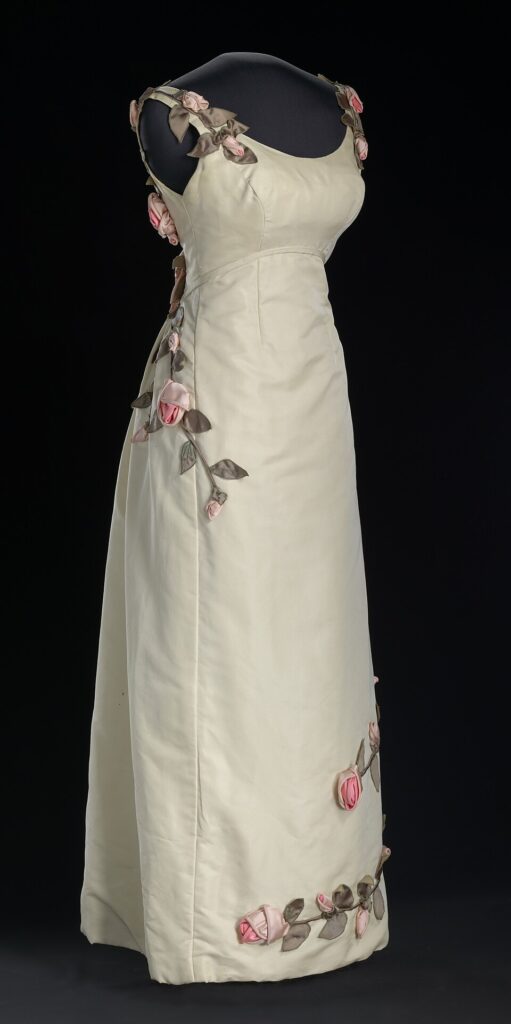
Description
Dress worn by Barbara Baldwin Dowd, American
She created stunning and stylish clothing for Lee and her four daughters, which included everything from elegant suits to charming afternoon dresses and exquisite wedding gowns as they stepped into matrimony. In 1917, she traveled to New York City to attend fashion school, and although she was segregated from her classmates because she was Black, her undeniable talent shone through, allowing her to earn her degree ahead of schedule. Returning to Florida, she wasted no time in revitalizing her business and by around 1920, after remarrying Caleb West and adopting a daughter, Ruth Alexander (that marriage would also end because of the demands of her work), she set up a workshop in her new home in Tampa. By then, her reputation had blossomed and her clientele had expanded well beyond the Lee family. She became known as one of the top designers in the city, particularly for her wedding dresses, which were hailed for their elegance and craftsmanship.
In Tampa, there were only a few seamstresses who could meet Lowe’s high standards so she trained assistants, most of them Black women, in her workshop. This initiative not only allowed her to maintain the quality of her designs but it also created a safe and supportive space for other Black women to find work and develop new skills in a challenging economic landscape.
Like many Black Americans during the Great Migration, Lowe sought better opportunities and a more respectable life, leading her to New York City in 1928 with the dream of opening her own custom design salon. However, the onset of the Great Depression quickly derailed those plans. To survive, she adapted by working for larger fashion houses like Hattie Carnegie and Sonia Gowns, where she honed her craft while also selling her designs on commission. Despite the challenges, she managed to retain a small group of private clients, including some who had followed her from Tampa.
The 1950s were the peak of her career. She ran several salons on Madison and Lexington Avenues with the help of white investors. Without this support, it would have been nearly impossible for a Black woman to rent a place on the well-to-do Upper East Side, but the location was important for attracting high-profile clients who wore her designs. Some of these clients included well-known American women like Marjorie Merriweather Post and Janet Auchincloss (the mother of Jacqueline Bouvier), along with many others listed in the Social Register.
Still, Lowe’s most well-known dress is the wedding gown worn by Jacqueline Bouvier Kennedy in 1953. Janet Auchincloss brought her daughters to Lowe for their debutante dresses and returned for her oldest daughter’s wedding party dresses. Although this project was meant to greatly enhance Lowe’s reputation nationwide, it faced many problems. A water pipe burst in her studio just ten days before the wedding, forcing Lowe to take a massive loss to remake ten dresses, including the bride’s. And on top of that, she was not recognized in the media as the designer at that time.
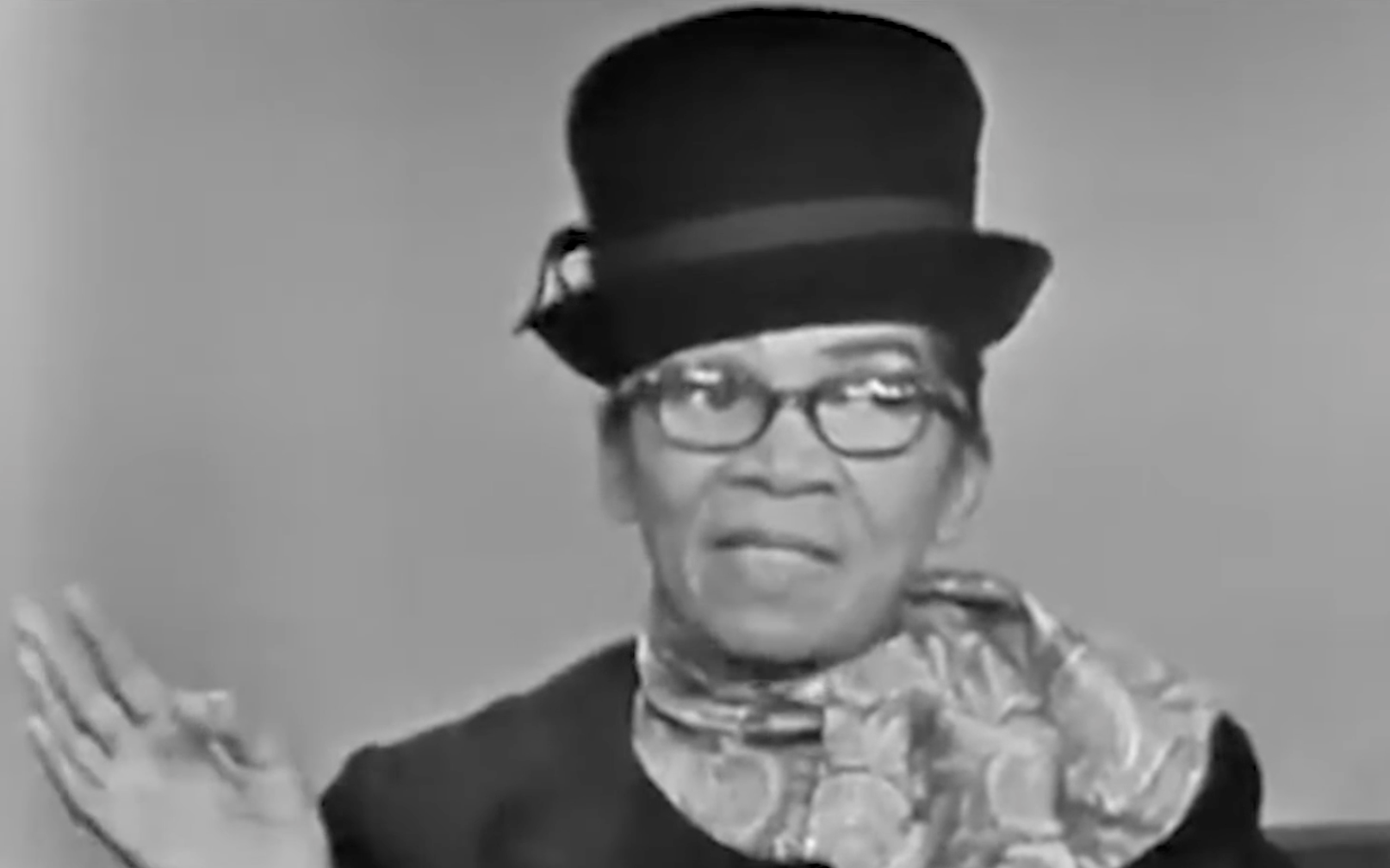
Sadly, her life and career would take a serious hit when her son died in a car accident in 1958. She also started to suffer from glaucoma in her right eye, which caused her pain and disrupted her work. She fell behind on her tax payments and had to close her shop in 1960 because of debt but would later take a job leading the custom salon, the Adam Room, at Saks Fifth Avenue. Even though her name wasn’t on the labels of the dresses she made there, her unique design and sewing style made them easy to recognize.
She eventually opened her own dress shop with her partner, Ida Mitchel, and her career took a positive turn when she worked at Madeleine Couture until 1965. Later, she collaborated with the innovative designer Florence Cowell to establish A. F. Chantilly, a venture that quickly became renowned for its beautiful debutante gowns, and continued to accept orders for elegant wedding dresses. The following year was a significant milestone in Lowe’s career too, as she was featured in Ebony magazine, further cementing her reputation as a respected designer in the fashion industry.
In the 1960s, fashion took on a more relaxed vibe, but Lowe’s creations remained in high demand. By 1967, she had the honor of dressing eighty-five debutantes but unfortunately, at this point, her eyesight was almost entirely gone, prompting her to step back from the industry in 1972.
She passed away on February 25, 1981.
Although Ann Lowe didn’t receive widespread acclaim as a prominent American fashion designer during her lifetime, the exceptional quality of her garments earned her gowns a place in museum exhibitions. Recently, there has been a growing recognition among fashion scholars of the importance of her work and its lasting impact.