

Close Menu
TheHub.news

    Bad Bunny Gave Us All a Musical Lesson to Enjoy And Learn From

    By FirstandPen

    From Trailblazers to Blockbusters: A 5-Film Evolution of Black Cinema

    By Danielle Bennett

    Economic Empowerment Has Always Been a Part of Black History

    By Insight News

    Subscribe to Updates

    Get the latest creative news from FooBar about art, design and business.

    X (Twitter) Instagram YouTube
    X (Twitter) Instagram YouTube
    TheHub.news
    Support Our Work
    • Home
    • Our Story
      • News & Views
        • Politics
        • Injustice
        • HBCUs
        • Watch
      • Food
        • Cuisine Noir
        • soulPhoodie
      • Passport Heavy
      • Travel
      • Diaspora
      • This Day
      • Entertainment
      • History
      • Art
      • Music
    • Health
    • Money
      1. Copper2Cotton
      2. View All

      Dividend Update: August 2018

      December 9, 2025

      How to Fight Inflation and Win

      December 9, 2025

      August 2018 Net Worth Update

      December 9, 2025
      Passive Income

      Be Passive About Your $

      November 17, 2025

      Economic Empowerment Has Always Been a Part of Black History

      February 12, 2026

      August 2018 Net Worth Update

      December 9, 2025

      More Blacks Needed On Corporate Boards

      December 9, 2025

      How to Fight Inflation and Win

      December 9, 2025
    • Books
    • Business
    • Sports
      1. First and Pen
      2. View All

      Bad Bunny Gave Us All a Musical Lesson to Enjoy And Learn From

      February 12, 2026

      Brian Flores Was Right But the Issue Is Not for Black Coaches to Fix

      February 3, 2026

      Fritz Pollard Alliance Issues Statement on ICE in Minnesota

      January 28, 2026

      Where Is the Black Athlete Anger for Lane Kiffin’s “Make Baton Rouge Great” Post?

      January 28, 2026

      Bad Bunny Gave Us All a Musical Lesson to Enjoy And Learn From

      February 12, 2026

      Brian Flores Was Right But the Issue Is Not for Black Coaches to Fix

      February 3, 2026

      Sandra Idehen Named League One Volleyball’s First Commissioner

      February 2, 2026

      To Protect and Serve…I Guess?!?

      January 30, 2026
    • Tech
    • Podcasts
      1. Karen Hunter is Awesome
      2. Lurie Breaks it Down
      3. Human(ing) Well with Amber Cabral
      4. Financially Speaking
      5. In Class with Carr
      6. View All

      Bad Bunny Gave Us All a Musical Lesson to Enjoy And Learn From

      February 12, 2026

      From Trailblazers to Blockbusters: A 5-Film Evolution of Black Cinema

      February 12, 2026

      Economic Empowerment Has Always Been a Part of Black History

      February 12, 2026

      The Daly Family: Scientific Lineage and the Genius of Dr. Marie Maynard

      February 12, 2026

      Bad Bunny Gave Us All a Musical Lesson to Enjoy And Learn From

      February 12, 2026

      From Trailblazers to Blockbusters: A 5-Film Evolution of Black Cinema

      February 12, 2026

      Economic Empowerment Has Always Been a Part of Black History

      February 12, 2026

      The Daly Family: Scientific Lineage and the Genius of Dr. Marie Maynard

      February 12, 2026

      Bad Bunny Gave Us All a Musical Lesson to Enjoy And Learn From

      February 12, 2026

      From Trailblazers to Blockbusters: A 5-Film Evolution of Black Cinema

      February 12, 2026

      Economic Empowerment Has Always Been a Part of Black History

      February 12, 2026

      The Daly Family: Scientific Lineage and the Genius of Dr. Marie Maynard

      February 12, 2026

      Bad Bunny Gave Us All a Musical Lesson to Enjoy And Learn From

      February 12, 2026

      From Trailblazers to Blockbusters: A 5-Film Evolution of Black Cinema

      February 12, 2026

      Economic Empowerment Has Always Been a Part of Black History

      February 12, 2026

      The Daly Family: Scientific Lineage and the Genius of Dr. Marie Maynard

      February 12, 2026

      Bad Bunny Gave Us All a Musical Lesson to Enjoy And Learn From

      February 12, 2026

      From Trailblazers to Blockbusters: A 5-Film Evolution of Black Cinema

      February 12, 2026

      Economic Empowerment Has Always Been a Part of Black History

      February 12, 2026

      The Daly Family: Scientific Lineage and the Genius of Dr. Marie Maynard

      February 12, 2026

      In Class with Carr: Black History in Times of Trouble

      February 2, 2026

      The Rise of the “Righteous Whites” and the Collapse of Plausible Deniability

      January 24, 2026

      How Insurers Use Your ZIP Code and Credit Score Against You

      January 21, 2026

      In Class With Carr: New World Order

      January 19, 2026
    TheHub.news
    Beauty

    Why Hair Salons Are Still One of the Most Segregated Spaces in America

    By Danielle BennettDecember 8, 20225 Mins Read
    Share Email Copy Link
    Image Credit: ShutterStock
    Share
    Facebook Twitter LinkedIn Email Copy Link Threads

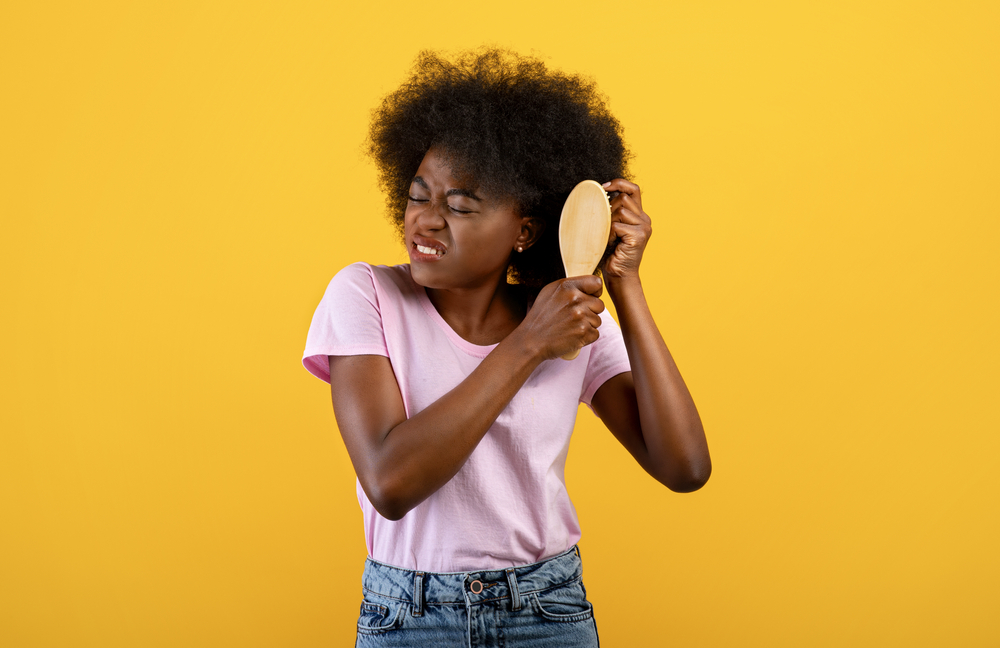
    Although the beauty industry claims it’s one of diversity and inclusion, salon segregation is a skeleton in the closet no one talks about. 

    Unless you’ve experienced it firsthand, you might not realize it actually exists by design. After all, most of us take our hair care needs seriously and we know the consequences of a salon experience gone horribly wrong. So for good reason, we tend to stick with what and who we know. 

    We don’t always discuss the reasons why we choose our salons or hair stylists. And when we do, most pertain to central criteria like technical skills and dependability. But, those surrounding race are often left out of the discussion. 

    Perhaps it’s because race is already a given.    

    Next to churches, hair salons and barbershops are arguably two of the remaining establishments that are separated by race. Institutional racism is so deeply ingrained in the hair care industry it’s often missed. Unless we witness clear inflammatory language or are overtly mistreated, we don’t always think to consider (or share) why it’s okay for some hair care professionals to have no experience or knowledge about certain hair types, particularly textured hair. However, I believe the why is important to understand because it is a significant part of American history-a byproduct of the abolishment of slavery; and the establishment of the Jim Crow era.

    Colonial Roots

    When it comes to white ancestral benefits from free Black labor, hair care is also included. According to historian Nic Butler, Ph.D., as shared during his Soundcloud podcast, “The Colonial Roots of Black Barbers and Hairdressers” for the Charleston Time Machine, he discusses how, for centuries, slave owners depended on the enslaved to tailor, dress and style their hair. As the number of “free persons of color” increased in the late eighteenth century, those with hairdressing skills opened segregated barbershops and salons, primarily catering to white patrons. 

    As a result, generations of Black hair technicians dominated the trade well into the middle of the twentieth century, but the politics of desegregation birthed two ironic, contrasting shifts: scores of legitimately Black-owned, thriving entities and, unfortunately, a strengthened imposition of Eurocentric beauty standards.

    White mainstream society upheld its hierarchy that places people with European features (straight hair) above those with African features (textured hair). The “it” hairstyles of the time were those like the pompadour, the Gibson Girl and Marcel Waves – all named after white people. It forced Black hair professionals (mostly Black women) to emulate these hairstyles by straightening and manipulating their hair in order to maintain professional relevance and avoid damaging societal disadvantages. By way of the intense pressure, parallel industries emerged; and salons separately serviced clients of European and African descent.

    Beauty Schools are Complicit in the Bias

    Today, racism continues to be a driving force in the hair salon industry because when white hair was set as the standard of beauty, it was also set as the standard for education.

    For me, a now 20-year hair professional, the disparity was obvious in cosmetology school. Back then, the curriculum was devoid of teachings for all hair textures, so my initial accredited training and testing was primarily based on the understanding and mastery of European hair. Any stint of time spent on less-straight textures was minuscule at best, often backed with instructions on how to make it straight. Consequently, the impact disproportionately affected myself, among countless Black individuals, whether as hair professionals or as paying customers. When I graduated from cosmetology school and decided the cultivation of diverse hair types would best serve my ambitions, I had to spend countless hours (and money) seeking out continuing education for all things textured hair on my own.    

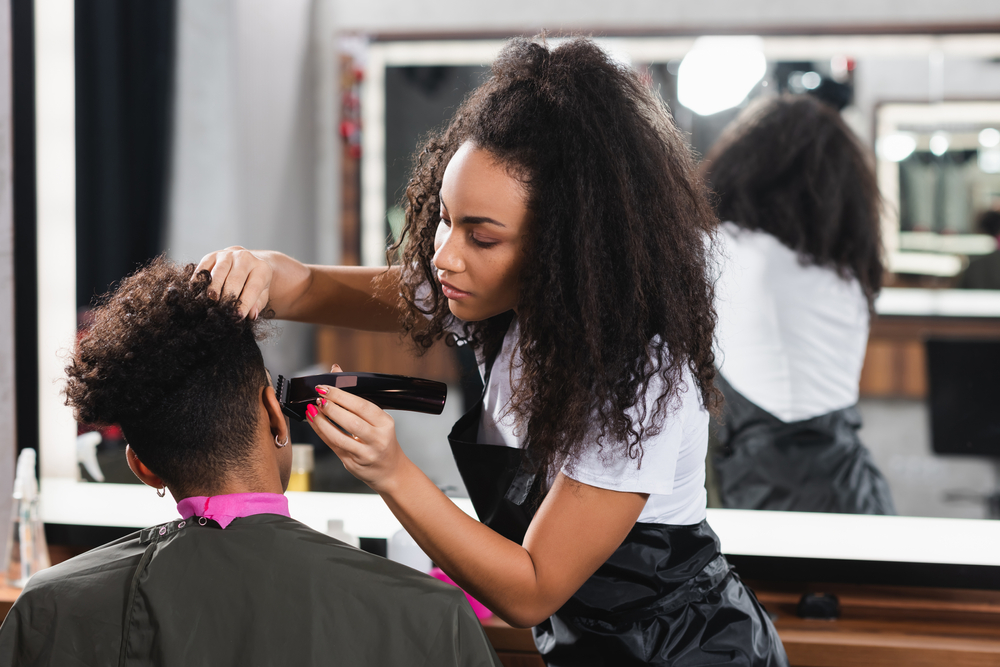
    Sadly, racial inequalities don’t end with education. The ideology filters into all branches of the hairdressing industry, including the salon system, where in predominantly white spaces, Black customers often don’t receive the same relaxing experiences as whites; and where only Black hairdressers are often required to service clients with wavy, curly or coily hair, imposing more labor. Editorial sets and backstage hair styling at fashion shows (where service rates are typically more lucrative and high-profile) are mostly influenced by Eurocentric representation and, in turn, favor white hairstylists. 
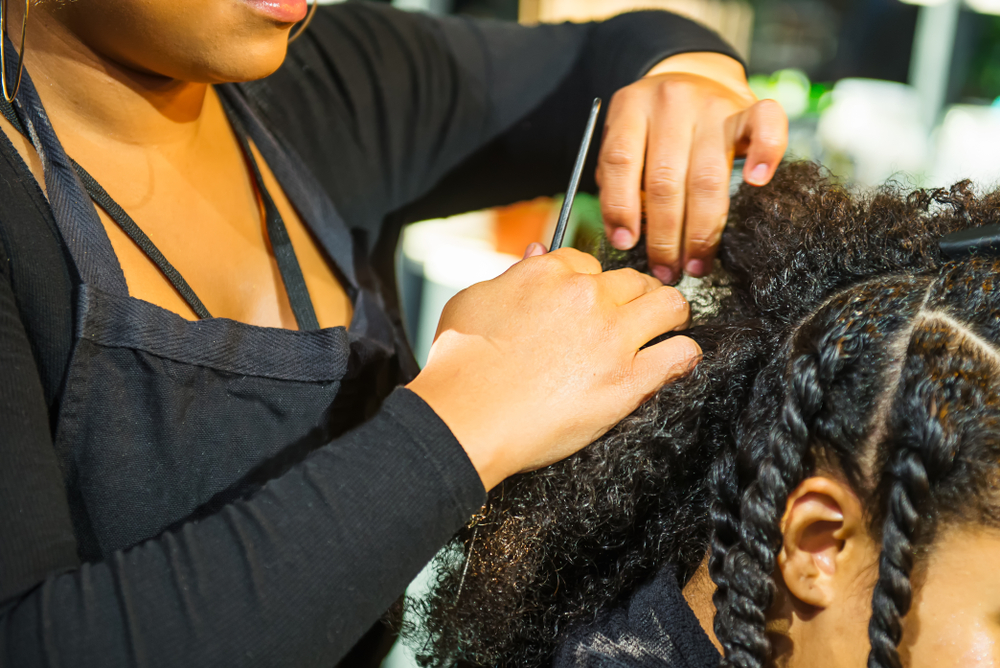
    Image Credit: ShutterStock

    A Brighter Future

    Today, Black hair care titans like Tippi Shorter are leading the charge to break down race barriers by highlighting an awareness that supports a diverse hair society. Through initiatives such as her Texpert Collective (an organization that connects aspiring hairstylists of all races with education and training in textured hair) and beauty schools like the Beautiful Luxe School of Cosmetology in Michigan (where proper styling techniques of textured hair are a priority in their curricula), we get to finally see hairdressing for what it should be: a common, all-embracing, human experience.   

    For an old hair dog like myself, it’s nice to finally watch the hairdressing industry evolve a bit. I believe a broader exposure to the concept of hair texture is important to work, one that will continue to introduce and implement it as a standard, not as a specialty or ethnicity. 

    HAIR SALON Segregation Thehub.news
    Danielle Bennett

    Danielle Bennett, a hairstylist of 20 years, is the owner of The Executive Lounge, a hair salon that caters to businesswomen, located in the Chelsea neighborhood of New York City. She specializes in natural hair care, haircuts, color, hair weaving and is certified in non-surgical hair replacement. Danielle partners with her clients to provide customized services, while she pampers them with luxury products and professional, private accommodations. “The Executive Lounge is your home away from home; it is a tranquil, modern sanctuary where you matter. Your time is valued and your opinion counts. Why? Because you deserve it.” - Danielle Bennett

    Related Stories

    5 Reasons Why A-Beauty Is the Next Big Thing

    September 5, 2024

    Meet the Black Pediatrician Who Started Inclusive Hair Care Kits for Young Patients With Textured Hair

    August 31, 2023

    How to Eat Your Way to Healthy, Shiny Hair

    July 26, 2023

    Dermatology Has a Race Gap: We Need More Black Doctors to Fill It

    May 25, 2023

    P&G Acquires Black-owned Haircare Company, Mielle Organics

    January 12, 2023

    Beauty Is Never Skin Deep: Why Texturism Continues to Assign Privilege

    November 17, 2022
    Recent Posts
    • Bad Bunny Gave Us All a Musical Lesson to Enjoy And Learn From
    • From Trailblazers to Blockbusters: A 5-Film Evolution of Black Cinema
    • Economic Empowerment Has Always Been a Part of Black History
    • The Daly Family: Scientific Lineage and the Genius of Dr. Marie Maynard
    • This Day in History: February 16th

    Bad Bunny Gave Us All a Musical Lesson to Enjoy And Learn From

    By FirstandPen

    From Trailblazers to Blockbusters: A 5-Film Evolution of Black Cinema

    By Danielle Bennett

    Economic Empowerment Has Always Been a Part of Black History

    By Insight News

    The Daly Family: Scientific Lineage and the Genius of Dr. Marie Maynard

    By Dr. Rev Otis Moss III

    Subscribe to Updates

    A free newsletter delivering stories that matter straight to your inbox.

    About
    About

    TheHub.news is a storytelling and news platform committed to telling our stories through our lens.With unapologetic facts at the center, we document the lived reality of our experience globally—our progress, our challenges, and our impact—without distortion, dilution, or apology.

    X (Twitter) Instagram YouTube

    Bad Bunny Gave Us All a Musical Lesson to Enjoy And Learn From

    By FirstandPen

    From Trailblazers to Blockbusters: A 5-Film Evolution of Black Cinema

    By Danielle Bennett

    Economic Empowerment Has Always Been a Part of Black History

    By Insight News

    The Daly Family: Scientific Lineage and the Genius of Dr. Marie Maynard

    By Dr. Rev Otis Moss III

    Subscribe to Updates

    A free newsletter delivering stories that matter straight to your inbox.

    © 2026 TheHub.news A 501(c)(3) tax-exempt organization.

    Type above and press Enter to search. Press Esc to cancel.