
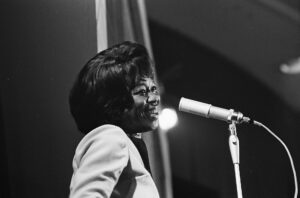


On March 27, 1924, Sarah Vaughan, a jazz singer whose voice came to be regarded as one of the most distinctive in American music, was welcomed into the world.
Born in Newark, N.J., Vaughan was raised in a musical household and began studying piano as a child. She sang in her church choir and, as a teenager, started performing in local clubs. In 1942, she entered and won an amateur competition at the Apollo Theater in Harlem, a victory that led to professional engagements and introduced her to prominent musicians of the day.
Soon after, she joined the bands of Earl Hines and Billy Eckstine, placing her among a group of young artists who would help define the emerging bebop style. Working alongside musicians such as Dizzy Gillespie and Charlie Parker, Vaughan developed an approach characterized by fluid phrasing and an ability to helm complex harmonies.
By the mid-1940s, she had begun a solo career, recording songs that brought her wider recognition. Tracks such as “Lover Man” and “Tenderly” established her reputation, while later recordings including “Black Coffee” and “It’s Magic” found success with broader audiences. During this period, she also appeared regularly on radio and performed in major venues across the United States.
In the 1950s, Vaughan’s career expanded internationally. She toured extensively and recorded commercially successful songs, including “Make Yourself Comfortable” and “Broken Hearted Melody,” which became her first gold record. At the same time, she continued to record jazz material, maintaining a balance between popular appeal and artistic credibility.
Vaughan was married three times, first to manager George Treadwell from 1946 to 1958, then to Clyde Atkins from 1958 to 1961, and later to trumpeter Waymon Reed, whom she married in 1978. Unable to have children, she adopted a daughter, Debra Lois, in 1961; Debra later worked as an actress under the name Paris Vaughan and, through marriage, connected Vaughan to professional hockey player Russ Courtnall. Vaughan ended a long personal and professional relationship with Marshall Fisher in 1977 before beginning her relationship with Reed, who joined her ensemble as musical director.
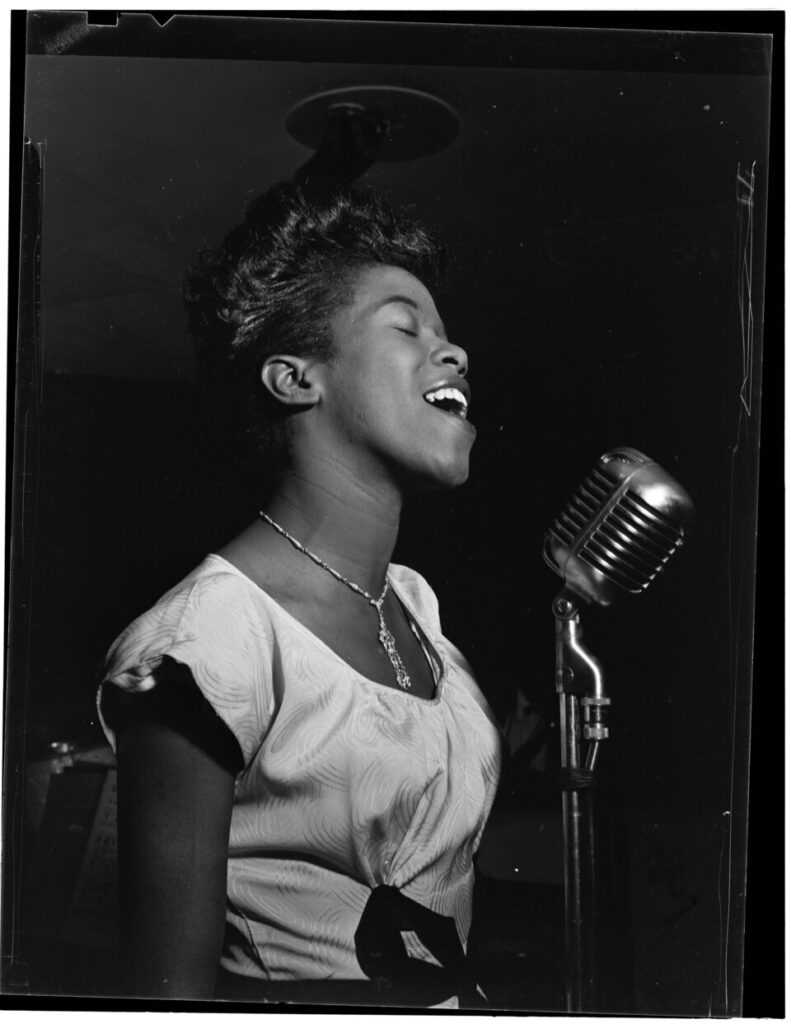
Over time, Vaughan also received wide recognition for her work, including inductions into the Grammy Hall of Fame and the American Jazz Hall of Fame, a star on the Hollywood Walk of Fame, and honorary doctorates from Berklee College of Music and Howard University. Her legacy continued to be honored after her death, with her induction into the New Jersey Hall of Fame and civic tributes such as the designation of March 27 as Sarah Lois Vaughan Day in San Francisco and Berkeley.
Her honors also included multiple Grammy Awards and designation as a National Endowment for the Arts Jazz Master in 1989.
Vaughan died in 1990 at 66 after a lengthy battle with lung cancer.