


Close Menu
TheHub.news

    The Guinea-Bissau Vaccine Study Fits a Long History of US Medical Racism

    By TheHub.news Staff

    “History Had Me Glued to the Seat”: Unsung Civil Rights Trailblazer, Claudette Colvin, Dies at 86

    By Danielle Bennett

    At Davos, Trump Lays Out Nationalist Agenda With Greenland Bid and Migrant Attacks

    By TheHub.news Staff

    Subscribe to Updates

    Get the latest creative news from FooBar about art, design and business.

    X (Twitter) Instagram YouTube
    X (Twitter) Instagram YouTube
    TheHub.news
    Support Our Work
    • Home
    • Our Story
      • News & Views
        • Politics
        • Injustice
        • HBCUs
        • Watch
      • Food
        • Cuisine Noir
        • soulPhoodie
      • Passport Heavy
      • Travel
      • Diaspora
      • This Day
      • Entertainment
      • History
      • Art
      • Music
    • Health
    • Money
      1. Copper2Cotton
      2. View All

      Dividend Update: August 2018

      December 9, 2025

      How to Fight Inflation and Win

      December 9, 2025

      August 2018 Net Worth Update

      December 9, 2025
      Passive Income

      Be Passive About Your $

      November 17, 2025

      August 2018 Net Worth Update

      December 9, 2025

      More Blacks Needed On Corporate Boards

      December 9, 2025

      How to Fight Inflation and Win

      December 9, 2025
      Passive Income

      Be Passive About Your $

      November 17, 2025
    • Books
    • Business
    • Sports
      1. First and Pen
      2. View All

      So Where Do Black NFL Head Coaches Stand in 2026?

      January 20, 2026

      Thank You Mike Tomlin, You Deserved Better Than Some Gave You

      January 19, 2026

      If You’re Mad at Lynn Jones-Turpin’s Kindness, That’s Your Issue

      January 14, 2026

      Doc Rivers Calls Shooting of Renee Nicole Good “Straight Up Murder”

      January 13, 2026

      So Where Do Black NFL Head Coaches Stand in 2026?

      January 20, 2026

      Thank You Mike Tomlin, You Deserved Better Than Some Gave You

      January 19, 2026

      If You’re Mad at Lynn Jones-Turpin’s Kindness, That’s Your Issue

      January 14, 2026

      Doc Rivers Calls Shooting of Renee Nicole Good “Straight Up Murder”

      January 13, 2026
    • Tech
    • Podcasts
      1. Karen Hunter is Awesome
      2. Lurie Breaks it Down
      3. Human(ing) Well with Amber Cabral
      4. Financially Speaking
      5. In Class with Carr
      6. View All

      The Guinea-Bissau Vaccine Study Fits a Long History of US Medical Racism

      January 22, 2026

      “History Had Me Glued to the Seat”: Unsung Civil Rights Trailblazer, Claudette Colvin, Dies at 86

      January 22, 2026

      At Davos, Trump Lays Out Nationalist Agenda With Greenland Bid and Migrant Attacks

      January 22, 2026

      Touadéra Secures Third Term

      January 22, 2026

      The Guinea-Bissau Vaccine Study Fits a Long History of US Medical Racism

      January 22, 2026

      “History Had Me Glued to the Seat”: Unsung Civil Rights Trailblazer, Claudette Colvin, Dies at 86

      January 22, 2026

      At Davos, Trump Lays Out Nationalist Agenda With Greenland Bid and Migrant Attacks

      January 22, 2026

      Touadéra Secures Third Term

      January 22, 2026

      The Guinea-Bissau Vaccine Study Fits a Long History of US Medical Racism

      January 22, 2026

      “History Had Me Glued to the Seat”: Unsung Civil Rights Trailblazer, Claudette Colvin, Dies at 86

      January 22, 2026

      At Davos, Trump Lays Out Nationalist Agenda With Greenland Bid and Migrant Attacks

      January 22, 2026

      Touadéra Secures Third Term

      January 22, 2026

      The Guinea-Bissau Vaccine Study Fits a Long History of US Medical Racism

      January 22, 2026

      “History Had Me Glued to the Seat”: Unsung Civil Rights Trailblazer, Claudette Colvin, Dies at 86

      January 22, 2026

      At Davos, Trump Lays Out Nationalist Agenda With Greenland Bid and Migrant Attacks

      January 22, 2026

      Touadéra Secures Third Term

      January 22, 2026

      The Guinea-Bissau Vaccine Study Fits a Long History of US Medical Racism

      January 22, 2026

      “History Had Me Glued to the Seat”: Unsung Civil Rights Trailblazer, Claudette Colvin, Dies at 86

      January 22, 2026

      At Davos, Trump Lays Out Nationalist Agenda With Greenland Bid and Migrant Attacks

      January 22, 2026

      Touadéra Secures Third Term

      January 22, 2026

      How Insurers Use Your ZIP Code and Credit Score Against You

      January 21, 2026

      In Class With Carr: New World Order

      January 19, 2026

      Will Democrats Vote to Fund Slave Catchers?

      January 17, 2026

      Iran’s Uprising Collides With Trump’s Foreign Policy

      January 16, 2026
    TheHub.news
    Diaspora

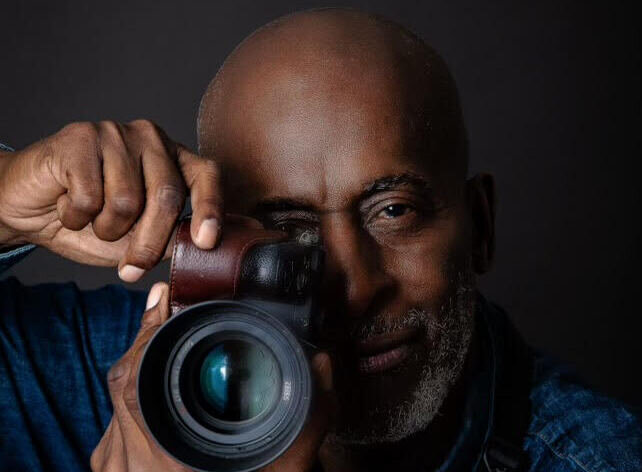
    This Black Jazz Photographer Is Preserving the Intimacy Behind Jazz’s Rich History

    By Danielle BennettOctober 5, 202306 Mins Read
    Facebook Twitter LinkedIn Email Copy Link
    Picture credit: Kelvin Slade
    Share
    Facebook Twitter LinkedIn Email Copy Link

    In an interview with TheHub.news, jazz lensman Kelvin Slade shares stories of his childhood, his celebration of jazz’s contribution to the Diaspora, and his entry into the world of photographing some of today’s jazz greats. 

    Much has been said and written that jazz is America’s only true art form. That’s because, just like so many other things, its heritage is rooted in the African-American experience. It began in the fields of America’s south, as early as the 1500s, where enslaved Africans would compose improvisational polyrhythms and response vocals — upholding virtuous traditions of their homelands — all while “passing the time.” 

    https://www.instagram.com/p/CVbcS0aAMBT/?igshid=MzRlODBiNWFlZA==

    The impressions possessed open and natural tones, serving functional roles (not artistic inspiration) in healing and spirituality. America hadn’t yet bestowed the moniker at that time (the genre would receive the slang term in early 1900s New Orleans), but the sounds were new and quite special to those who had never before heard them.

    While the novel category emerged as an art form in the early 20th Century, so did its budding affair with photography. At a time when, despite slavery’s abolishment (African Americans continued to face unequal liberties), the two mediums were simultaneously cultivating a subculture that honored the truest expressions of Black America’s enduring sense of identity and originality. Proud images of music masterminds Eubie Blake and Duke Ellington, for example, were some of the first to help frame a cultural backdrop that supported the inventiveness, self-respect and social solidarity among Black musicians and the Black community at large. 

    https://www.instagram.com/p/Bp3sWPKjVtQ/?igshid=MzRlODBiNWFlZA==

    When these jazz artists voiced their most soulful, innovative perspectives of both freedom and oppression, photographers were there to document every visual and aural nuance. The insights one would obtain from observing jazz musicians in these photographs were often amplified by the autobiographical reflections of photographers, a notion contemporary jazz photographer Kelvin Slade knows well.

    Scroll through Slade’s Instagram feed and you’ll instantly understand how his candid shots of today’s euphonious bandsmen and vocalists exhibit a collected improvisation, innately connecting him to the musicians he depicts. He has an uncanny way of blending into the background, becoming an invisible onlooker of sorts, as he seizes his subjects’ most decisive moments in order to convey what he describes as an “ingrained honesty, joy and pain behind the stories of the Black journey.”    

    At six years old, the southern native and his three sisters moved up north with their mother to Newark, New Jersey, during The Great Migration, searching for better economic and educational opportunities and to secure freedom from the oppression of Jim Crow — a voyage “akin to many jazz musicians whose trains converged upon Washington’s (District of Columbia) Union Station and boarded the Pennsylvania Railroad; and feet landed in Philadelphia, Newark or Harlem,” he correlates. “The year was 1966, months before the country was beset with civil unrest, or what I phrase as state-sponsored violence.”

    Slade’s introduction to jazz was at the age of fourteen. He’d immerse himself in recordings of many contemporary jazz musicians of the day, including West Montgomery, Bob James, Idris Muhammad and Grover Washington, Jr., all housed by record label CTI (Creed Taylor Incorporated, founded by producer Creed Taylor). Armed with an education that grew exponentially (he has an encyclopedic knowledge of jazz history), he would pick up the camera as a professional later in life. 

    “I delved into jazz photography, arguably, serendipitously, as a result of life’s vicissitudes – needing a recourse or an outlet. There were photos and art of the likes of Miles Davis, Thelonious Monk, Duke Ellington and many others, which were brimming with pride and dignity. And those photos countered many of the less dignified images I was subjected to as a kid of color”.

    Completely self-taught, Slade honed his craft for decades, but his lack of formal training did not curtail his passion for jazz or photography. It set the stage, actually, for a remarkable journey where he’d not only meet and shoot some of jazz’s elite but also establish close friendships with some of the genre’s greats, like the legendary bassist John Lee, who wholeheartedly embraced Slade’s great reverence for jazz and, in turn, sanctioned his access to many other musicians.  

    https://www.instagram.com/p/Bv51nFLDDQ4/?igshid=MzRlODBiNWFlZA==

    “I’ve had the fortune to meet many musicians and some have become my friends. Master bassist John Lee is one. In his company, I have heard wonderful stories about fellow musicians such as his one-time boss Dizzy Gillespie, who I understand was a very kind being. But one of my favorite Lee stories is from a night when he and I were headed to the Blue Note {jazz club in New York City’s West Village}. He was performing with the Gillespie Big Band {a legacy band}. We were talking about our favorite pianists. I said Chucho Valdés was a favorite of mine. John’s only response was, ‘Chuco is great’. Well, about a month goes by and I get a call from John, asking if I wanted to join him and his wife for lunch. Within a half hour, I arrive at his house and upon walking in the door, the first person I see is Chucho! I was thrilled to meet this musical genius. That very meeting resulted in a gathering of several musicians meeting at John’s home that afternoon to complete what would become a Grammy Award-winning album, Chucho Valdés: Jazz Bata 2.”

    https://www.instagram.com/p/CV75ZL3rL7I/?igshid=MzRlODBiNWFlZA==

    Slade’s genuine connection to the musicians he photographs allows him to capture their most candid and improvised moments as incidental storytellers, even in performance shots. His images weren’t just about documenting the familiar faces of musicians. His deep respect and understanding for jazz’s unsullied spirit and for artists like trumpeter Wallace Rooney (a mentee of Miles Davis – fellow photographers told Slade he did not like having his picture taken — but he welcomed Slade’s work, personally inviting him to shoot a future performance), trombonist Delfayo Marsalis, and the late Roy Hargrove, a Grammy Award-winning trumpeter — one of the brightest of his generation, whose introspection Slade accurately likens to “the result of creative genius” after having chatted with him about his music — artists who’ve dedicated so much of their lives, yet receiving little in return — are distinctly conveyed in his work. 

    “America has always found a way of commodifying Black output. Black photographers have an obligation to at least control or contribute to this high artform’s presentation, visually.“

    As he looks toward the future of jazz — the emergence of new artists and how the genre as a movement will evolve specifically — Slade is confident its assumption in the role of Truthful and Open Illustrator for the Black perspective will continue. 

    https://www.instagram.com/p/B7PoCOLg6M2/?igshid=MzRlODBiNWFlZA==

    “As people of color demand the right to tell their stories socially and politically on a global scale, all subset definitions on a micro level will follow suit. In order to reflect the African American experience, jazz will continue to express our political, social and artistic aspirations; and my photography must express these aspirations and determination of the Black masses.” 

    Black Musicians Black photographers Jazz Kelvin Slade Music
    Danielle Bennett

    Danielle Bennett, a hairstylist of 20 years, is the owner of The Executive Lounge, a hair salon that caters to businesswomen, located in the Chelsea neighborhood of New York City. She specializes in natural hair care, haircuts, color, hair weaving and is certified in non-surgical hair replacement. Danielle partners with her clients to provide customized services, while she pampers them with luxury products and professional, private accommodations. “The Executive Lounge is your home away from home; it is a tranquil, modern sanctuary where you matter. Your time is valued and your opinion counts. Why? Because you deserve it.” - Danielle Bennett

    Related Posts

    The Guinea-Bissau Vaccine Study Fits a Long History of US Medical Racism

    January 22, 2026

    Touadéra Secures Third Term

    January 22, 2026

    Dining in Nova Scotia: Restaurants Give Diners a Taste of Africa and the Caribbean

    January 9, 2026
    Add A Comment

    Comments are closed.

    Recent Posts
    • The Guinea-Bissau Vaccine Study Fits a Long History of US Medical Racism
    • “History Had Me Glued to the Seat”: Unsung Civil Rights Trailblazer, Claudette Colvin, Dies at 86
    • At Davos, Trump Lays Out Nationalist Agenda With Greenland Bid and Migrant Attacks
    • Touadéra Secures Third Term
    • This Day in History: January 22nd

    Michael B. Jordan Apologizes for New Rum Venture Amid Accusations of Culture Appropriation

    By TheHub.news Staff
    Terminated

    Black Officer Terminated for Using the ‘N-Word’

    By Ayara Pommells

    The Cultural Significance and Origins of Waist Beads

    By Jonah

    Director of Smithsonian’s Black History Museum Reportedly Benched Indefinitely

    By Veronika Lleshi

    Subscribe to Updates

    A free newsletter delivering stories that matter straight to your inbox.

    About
    About

    Celebrating US from one end of the land to the other. We record our acts, our accomplishments, our sufferings, and our temporary defeats throughout the diaspora. We bring content that is both unique and focused on showing the world our best unapologetically.

    X (Twitter) Instagram YouTube

    The Guinea-Bissau Vaccine Study Fits a Long History of US Medical Racism

    By TheHub.news Staff

    “History Had Me Glued to the Seat”: Unsung Civil Rights Trailblazer, Claudette Colvin, Dies at 86

    By Danielle Bennett

    At Davos, Trump Lays Out Nationalist Agenda With Greenland Bid and Migrant Attacks

    By TheHub.news Staff

    Touadéra Secures Third Term

    By Veronika Lleshi

    Subscribe to Updates

    A free newsletter delivering stories that matter straight to your inbox.

    © 2026 TheHub.news A 501(c)(3) tax-exempt organization.

    Type above and press Enter to search. Press Esc to cancel.