

Close Menu
TheHub.news

    This Day in History: March 29th

    By TheHub.news Staff

    Why Electing a Black President Didn’t Change the System

    By TheHub.news Staff

    This Day in History: March 28th

    By Shayla Farrow

    Subscribe to Updates

    Get the latest creative news from FooBar about art, design and business.

    X (Twitter) Instagram YouTube
    X (Twitter) Instagram YouTube
    TheHub.news
    Support Our Work
    • Home
    • Our Story
      • News & Views
        • Politics
        • Injustice
        • HBCUs
        • Watch
      • Food
        • Cuisine Noir
        • soulPhoodie
      • Passport Heavy
      • Travel
      • Diaspora
      • This Day
      • Entertainment
      • History
      • Art
      • Music
    • Health
    • Money
      1. Copper2Cotton
      2. View All

      How to Fight Inflation and Win

      December 9, 2025

      August 2018 Net Worth Update

      December 9, 2025

      Dividend Update: August 2018

      December 9, 2025
      Passive Income

      Be Passive About Your $

      November 17, 2025

      Economic Empowerment Has Always Been a Part of Black History

      February 12, 2026

      How to Fight Inflation and Win

      December 9, 2025

      August 2018 Net Worth Update

      December 9, 2025

      More Blacks Needed On Corporate Boards

      December 9, 2025
    • Books
    • Business
    • Sports
      1. First and Pen
      2. View All

      The 60th Anniversary of Texas Western’s Title Reminds Us That Black History Must Be Protected, Learned and Taught

      March 25, 2026

      All The Smoke Productions Launches “All The Smoke Baseball”

      March 24, 2026

      Justin Fields Deserves His Baker Mayfield, Sam Darnold Moment

      March 19, 2026

      NY Point Gods Are Now Successfully Leading DI Basketball Programs

      March 18, 2026

      The 60th Anniversary of Texas Western’s Title Reminds Us That Black History Must Be Protected, Learned and Taught

      March 25, 2026

      All The Smoke Productions Launches “All The Smoke Baseball”

      March 24, 2026

      Justin Fields Deserves His Baker Mayfield, Sam Darnold Moment

      March 19, 2026

      NY Point Gods Are Now Successfully Leading DI Basketball Programs

      March 18, 2026
    • Tech
    • Podcasts
      1. Karen Hunter is Awesome
      2. Lurie Breaks it Down
      3. Human(ing) Well with Amber Cabral
      4. Financially Speaking
      5. In Class with Carr
      6. View All

      This Day in History: March 29th

      March 29, 2026

      Why Electing a Black President Didn’t Change the System

      March 28, 2026

      This Day in History: March 28th

      March 28, 2026

      An Emergency Syllabus for White People Who Keep Asking: “Where Do I Start?”

      March 27, 2026

      This Day in History: March 29th

      March 29, 2026

      Why Electing a Black President Didn’t Change the System

      March 28, 2026

      This Day in History: March 28th

      March 28, 2026

      An Emergency Syllabus for White People Who Keep Asking: “Where Do I Start?”

      March 27, 2026

      This Day in History: March 29th

      March 29, 2026

      Why Electing a Black President Didn’t Change the System

      March 28, 2026

      This Day in History: March 28th

      March 28, 2026

      An Emergency Syllabus for White People Who Keep Asking: “Where Do I Start?”

      March 27, 2026

      This Day in History: March 29th

      March 29, 2026

      Why Electing a Black President Didn’t Change the System

      March 28, 2026

      This Day in History: March 28th

      March 28, 2026

      An Emergency Syllabus for White People Who Keep Asking: “Where Do I Start?”

      March 27, 2026

      This Day in History: March 29th

      March 29, 2026

      Why Electing a Black President Didn’t Change the System

      March 28, 2026

      This Day in History: March 28th

      March 28, 2026

      An Emergency Syllabus for White People Who Keep Asking: “Where Do I Start?”

      March 27, 2026

      In Class with Carr: “Slavemasters Without Slaves”

      March 2, 2026

      Karen Hunter Questions Why BAFTA Let the Slur Air

      February 26, 2026

      In Class with Carr: Black History in Times of Trouble

      February 2, 2026

      The Rise of the “Righteous Whites” and the Collapse of Plausible Deniability

      January 24, 2026
    TheHub.news
    Featured

    The True Cost of Freedom: the Extraordinary Life of Fashion Designer Elizabeth Keckley

    By Danielle BennettMarch 30, 20236 Mins Read
    Share Email Copy Link
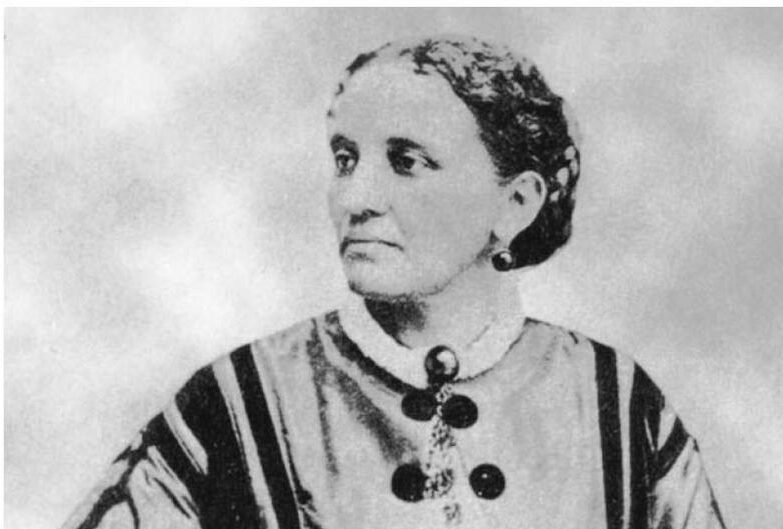
    Elizabeth Keckley Image Credit: Wikimedia.
    Share
    Facebook Twitter LinkedIn Email Copy Link Threads

    As we near the end of Women’s History Month and reflect on so many amazing women, it is befitting also to recognize their courage of self-expression. Throughout history, the language women chose to describe their experiences and themselves as they saw fit – Black women especially – has always been a weighted one.

    For centuries, society overshadowed Black women, leaving their voices undetected and unheard, a practice so common that most are conditioned to both consciously and unconsciously participate in it. But, sometimes, even in the most impenetrable of silences, the most resounding power can be made.

    Entrepreneur,Elizabeth Keckley born enslaved made dresses to buy her freedom.She moved to DC where she opened a shop. pic.twitter.com/wJTuFLhDBw

    — The Gist Of Freedom (@Gistoffreedom) July 23, 2018

    That is the case for Elizabeth Keckley, an African American seamstress, activist and author whose remarkable life story is an illuminating example of a woman whose talents and audacity gave her license to use her voice outside of servitude to white people in the 18th century. Not only was she one of the most sought-after dressmakers of the time, but she bought her own way out of enslavement and published one of the most controversial and bluntest autobiographies, exposing the secrets of the highest-profiled political family of the era. 

    Born into slavery in 1818, in Dinwiddie County, Virginia, Keckley’s mother taught her how to sew when she was a child so she could help to mend and make clothes for the family that owned them both. While she proved to have a natural aptitude for needlework and tailoring and was well-liked by the slave owner’s children (they allowed her to learn how to read and write), her life was an arduous one. She endured whippings and other forms of abuse and as a young woman, was raped by her owner and bore his child, her only son, George. 

    Eventually, the family moved to Missouri and took Elizabeth and George along with them. They had financial issues, so she supported them by making dresses for St. Louis socialites. In doing so, she acquired a favorable reputation and a large clientele of her own.

    In 1855, while committed to sovereignty for herself and her son, Keckley asked to purchase their freedom. Her owner intentionally proposed $1200.00, an amount he thought impossible for a Black woman to achieve at the time. With the money she had earned and saved, along with loans she raised from the connections she built within the free Black community and from her white patrons, the talented dressmaker proved him wrong.

    After having worked in Missouri for five years or so to repay the loans, Keckley moved to Washington, D.C. to start a life free of debt and slavery.

    Soon after, she became the go-to dressmaker for Mary Todd Lincoln, wife of U.S. President Abraham Lincoln and for many of D.C.’s political and social elite. By the early 1860s, she was managing around twenty seamstresses and selling gowns to the wives of politicians like Robert E. Lee and Stephen A. Douglas. Known as a fashion maker, Keckley gained enormous power in the nation’s capital: white women wore what she told them to.

    Keckley was also Mary Lincoln’s confidant, but the relationship would end a few years after President Lincoln was assassinated when Keckley wrote and published a revealing memoir that was met with overwhelming disapproval, especially by the First Lady .

    The historical work, Behind the Scenes: Or, Thirty Years a Slave, and Four Years in the White House (first published in 1868) is considered one of the most poignant, candid, yet controversial narratives of the period. Whites turned on Keckley because they felt the 166-page publication violated social norms of Victorian boundaries, race, class and gender. Unlike the “slave narratives” that came before, she used language in a different way – one that represented upward mobility, possibilities for post-slavery African Americans and a new, emancipated Black self. 

    Keckley detailed her life in her own way, recounting untold hardships of mistreatment, violence, unwelcome sexual advances and rape by white men, as well as private moments about her close relationships with the Lincolns – astonishing language from the often ignored voice of a household laborer. She did not intend to slander anyone; she only wanted to speak her truth and to portray Mary Lincoln as a real person who, just like her, struggled emotionally and endured severe hardship. Still, Mary expressed a sense of betrayal (letters she wrote to Keckley were published in the book’s appendix), so she felt her private life – intimate moments in the White House with her husband and children – were now out there for the world to see.

    https://twitter.com/piperhuguley/status/1521847859951329281?s=20

    The decision to write about her enslavers and employers also enraged outside audiences because, in addition to her fearless representation as a former slave, Keckley was an influential, confident Black woman with financial success, perhaps greater than white readers. They labeled her an “angry negro servant” who had “forgotten her place” and waged a barrage of vicious attacks on her, along with vulgar responses and reviews, many of which included parodies littered with racial slurs. As a result, she lost most of her clientele and faced anger from other Black people, as they felt her actions jeopardized and targeted them, too.

    Fully aware she would likely ruffle feathers, in the preface to her memoir, Keckley upheld her “secret history” as a thoughtful act of truth-telling and offered context into Mary Lincoln’s life: “It may be charged that I have written too freely on some questions, especially in regard to Mrs. Lincoln. I do not think so.”

    After the book was published, Mary Lincoln and Keckley never spoke again. Keckley went on to establish Wilberforce University, the nation’s first college founded and owned by Black educators (she led their dress department). She was also a social activist, having raised awareness and resources for newly freed people and Civil War veterans. 

    Facing financial troubles of her own, Keckley eventually died of a stroke in 1907 at the Home for Destitute Women and Children – an organization she helped to create – in Washington, D.C.

    Although the American public was not prepared for a free, Black woman assuming control over her own life at the time, however, more than a century later, Elizabeth Keckley is recognized and hailed as one of the greatest pioneers in fashion and in American history at large. 

    She deserves it.  

    Elizabeth Keckley Fashion Designer Fashion. Thehub.news
    Danielle Bennett

    Danielle Bennett, a hairstylist of 20 years, is the owner of The Executive Lounge, a hair salon that caters to businesswomen, located in the Chelsea neighborhood of New York City. She specializes in natural hair care, haircuts, color, hair weaving and is certified in non-surgical hair replacement. Danielle partners with her clients to provide customized services, while she pampers them with luxury products and professional, private accommodations. “The Executive Lounge is your home away from home; it is a tranquil, modern sanctuary where you matter. Your time is valued and your opinion counts. Why? Because you deserve it.” - Danielle Bennett

    Related Stories

    Target CEO Reaches Out to Rev. Al Sharpton to Talk About DEI Backlash

    April 20, 2025

    Fox News’ Host Gives Dumbest Excuse for Hegseth’s Leaked Group Chat

    March 29, 2025

    These 10 Democrats Voted to Censure Al Green

    March 8, 2025

    The Grim History of ‘Australia Day’

    January 26, 2025

    This Is Lurie Favor Daniels: Talia Young on Importance of Newark Symphony Hall

    November 17, 2023

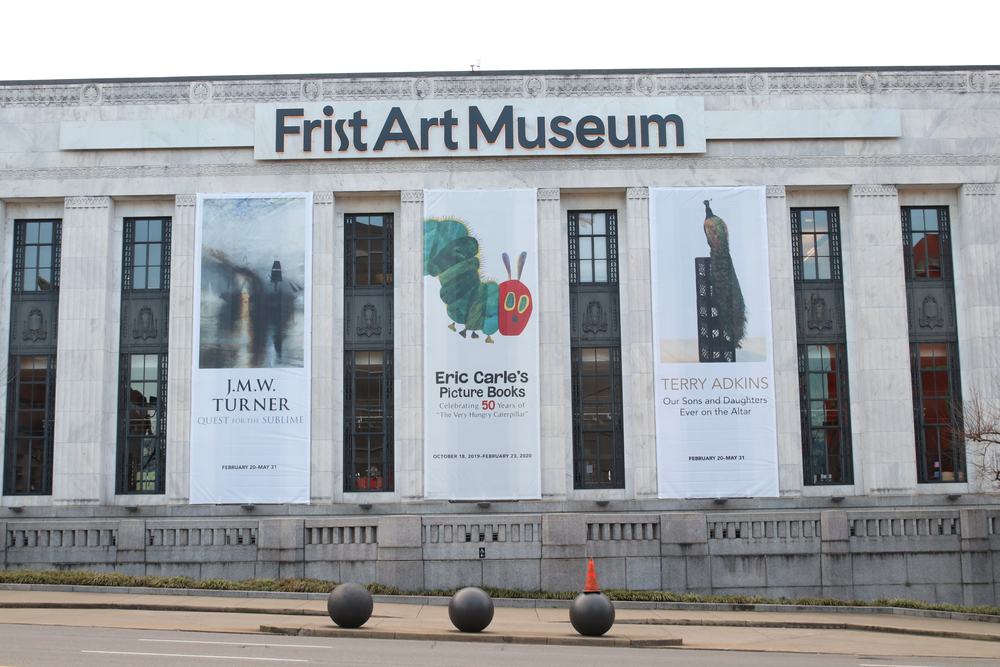
    New Exhibit on Black American Identity in the US to Be Featured In Tennessee Museum

    August 21, 2023
    Recent Posts
    • This Day in History: March 29th
    • Why Electing a Black President Didn’t Change the System
    • This Day in History: March 28th
    • An Emergency Syllabus for White People Who Keep Asking: “Where Do I Start?”
    • How Republicans Are Using AI to Put Women Back in Their Place

    This Day in History: March 29th

    By TheHub.news Staff

    Why Electing a Black President Didn’t Change the System

    By TheHub.news Staff

    This Day in History: March 28th

    By Shayla Farrow

    An Emergency Syllabus for White People Who Keep Asking: “Where Do I Start?”

    By Dr. Stacey Patton

    Subscribe to Updates

    A free newsletter delivering stories that matter straight to your inbox.

    About
    About

    TheHub.news is a storytelling and news platform committed to telling our stories through our lens.With unapologetic facts at the center, we document the lived reality of our experience globally—our progress, our challenges, and our impact—without distortion, dilution, or apology.

    X (Twitter) Instagram YouTube

    This Day in History: March 29th

    By TheHub.news Staff

    Why Electing a Black President Didn’t Change the System

    By TheHub.news Staff

    This Day in History: March 28th

    By Shayla Farrow

    An Emergency Syllabus for White People Who Keep Asking: “Where Do I Start?”

    By Dr. Stacey Patton

    Subscribe to Updates

    A free newsletter delivering stories that matter straight to your inbox.

    © 2026 TheHub.news A 501(c)(3) tax-exempt organization.

    Type above and press Enter to search. Press Esc to cancel.