

For more than a hundred years, Black women artists and creators have long been the driving force behind many of the most unforgettable milestones and transformations in fashion.
From breathtaking designs of early 20th-century fashion houses to cutting-edge looks that dominate today’s catwalks, these pioneers have consistently pushed boundaries in a field that frequently overlooks their contributions.
As we kick off the 39th anniversary of Women’s History Month, it’s the perfect time to honor those who have set the pace and redefined what fashion can be. Among the many influential figures in this space, we are shining a light on four extraordinary Black women designers whose work has not only influenced iconic couture but has also made waves in mainstream fashion. They have crafted spectacular pieces, challenged societal expectations and championed representation, ensuring that their influence will inspire generations to come.
Let’s take a moment to acknowledge and celebrate the extraordinary creativity of designer-to-the-stars, Zelda Wynn Valdes.
Zelda Wynn Valdes’s journey is one of remarkable rise, overcoming towering barriers of racism that permeated the United States during the mid-20th century. As a highly skilled costume designer, she not only established her own prominent place in the fashion industry but also transformed it with her innovative designs. While she is perhaps best known for creating the original Playboy Bunny costume – a piece that remains widely recognized today – this was just one chapter in a storied career that spanned decades.
Her influence began in 1948, when she became the first Black designer to open a boutique on Broadway in Manhattan, New York City, operating on that prominent street during a period of widespread segregation and limited opportunities for Black folk. The specialty shop had become highly popular, not only for being the first Black-owned bridal and evening wear shop in the area, it was also known for crafting exquisitely tailored, figure-hugging gowns that were highly sought after, with prices sometimes nearing $1,000 at that time. This success also cemented her reputation as a leading designer for many of the most distinguished female celebrities of the era.
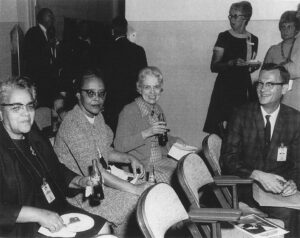
In 1949, recognizing the need for increased representation of Black creatives in fashion, Wynn Valdes became the president of the New York Chapter of NAFAD, the National Association of Fashion and Accessory Designers. This organization, founded by Mary McLeod Bethune-Cookman and Jeanetta Welch Brown, provided a professional network for Black fashion designers, stylists and manufacturers who were excluded from the mainstream industry. NAFAD acted as a link between Black artists and fashion’s “gatekeepers”, such as Vogue magazine, the Costume Institute at the Metropolitan Museum of Art and Seventh Avenue manufacturers. Under her leadership, the organization fostered mentorship, visibility and created structured opportunities for emerging Black talent to develop, helping them achieve the economic independence necessary to start and manage their own successful businesses.
In 1960, she was commissioned by Hugh Hefner to design the original Playboy Bunny costume. And by 1963, she made history by hosting the very first fashion show at a New York club, an event that led to a series of events known as “Zelda at the Playboy.” But even more impressively, she established herself as a force to be reckoned with in Hollywood as well as on the east coast.
Stemming from her boutique, that she later relocated to West 57th Street to better accommodate her high-profile clients, Wynn Valdes crafted flawless intricate gowns for a host of celebrated figures, including Dorothy Dandridge, Mae West, Joyce Bryant, Ella Fitzgerald, Eartha Kitt, Marlene Dietrich and Josephine Baker. Each piece was a testament to her craftsmanship; as she explained in an interview, “I created the designs for the beading, and I had an Italian woman in the Bronx who did the beading for me. At one time, I had nine dressmakers working on my designs.” This dedication continued throughout her impressive 30-year tenure as the head designer and costume director at the Dance Theatre of Harlem, a position she was appointed to by the legendary dancer, choreographer and educator Arthur Mitchell in 1970. In this role, she managed the costume department, collaborated with the staff to teach and train in sewing and oversaw the production of costumes for 82 ballets.
Yet, a turning point in her career arrived with a particular phone call.
“[Ella] called me from Russia,” Wynn Valdes recalled during a 1999 interview with the Metropolitan Museum of Art, just days before her retirement. “‘Hello, you don’t know me, but I’m Ella Fitzgerald. I’ve heard so much about you… I’m opening at the Mocambo in Hollywood in five days, and I need four gowns. Can you make them and send them to [Los Angeles] by plane?’”
The long-distance designs were for Fitzgerald’s renowned appearance at the trendy Hollywood nightclub, a rare opportunity for a jazz singer in early 1955. Notable Black American performers like Kitt, Dandridge and Bryant had previously graced the Mocambo stage to great acclaim.
Although Fitzgerald possessed incredible vocal talent, her fuller figure did not align with the typical image of the slender, glamorous beauty that the club favored. However, the assurance that the legendary Marilyn Monroe would attend every show of her favorite singer helped Fitzgerald secure this esteemed engagement.
Wynn Valdes’s dresses helped the audience imagine a more elegant version of Fitzgerald. A few months later, the singer released the first of her famous Songbook albums, which continue to be celebrated today.
In the famous photos of Ella sitting with Marilyn at the Mocambo, she is wearing a gown designed by Wynn Valdes, a silhouette she would continue to wear for many years.
Born Zelda Christian Barbour in 1905 in Chambersburg, Pennsylvania, Wynn Valdes learned the art of sewing from her mother and grandmother, honing her skills in her uncle’s tailor shop in White Plains, New York. She quickly rose to prominence as the sole Black clerk and later a tailor at a high-end boutique, where she began to make a name for herself in a predominantly white industry. In 1935, she opened her first shop, attracting a diverse clientele that included socialites and celebrities, like Edna Mae Robinson and singer Maria Ellington, the latter of whom she dressed for her lavish wedding to Nat King Cole in 1948. That same year marked a historic milestone with the launch of Zelda Wynn, recognized as the first Black-owned business on Broadway.
Still, it would be her collaboration with entertainer Joyce Bryant from 1951 to 1955 that, arguably, transformed the career opportunities for both women.
“Eartha was a dancer, so she had very definite restrictions about how she needed to move and everything,” Wynn Valdes reminisced. “But Joyce told me ‘I don’t know what I want or need.’ So, I told her to just leave it up to me!”
The partnership helped turn Bryant’s early nightclub career into one of the most exciting in the early 1950s. This was partly because she gave the talented designer the freedom to create her most daring and charming designs!
According to the Metropolitan Museum of Art, in the spring of 1951, Bryant made her first significant appearance on the East Coast at Bill Miller’s Riviera, a popular venue on the cliffs of Fort Lee, New Jersey, which had a short-lived success as a top spot in New York’s club scene after World War II. The well-known entertainment reporter Walter Winchell even described Bryant as “The Voice You’ll Always Remember.” Following this buzz, Wynn Valdes attended the show and noticed that Bryant’s simple appearance was a sharp contrast to her powerful and captivating voice. Bryant remembered that the designer came back to the Riviera the next day and said, “I want to work with you,” while giving her a beautiful gown as a gift. Although it wasn’t her size, she appreciated the gesture more than anything else. From that point on, she only wore gowns designed by Wynn Valdes.
Bryant’s slim yet curvy figure became the perfect model for Wynn Valdes’s bold designs. In a 2001 interview, Bryant said, “[the gowns] were very tight. They really showed everything. If I had a pimple… you’d see it.”
In the summer of 1953, Bryant made a stunning debut at the famous Copacabana nightclub in Manhattan. During this time, photographer Philippe Halsman took striking photos of her for a five-page spread in LIFE magazine, which noted that her body was so tightly fitted in a coral pink silk dress by Wynn Valdes that she could barely move. Ironically, these limitations actually made her movements more focused and intense which elevated her performances.
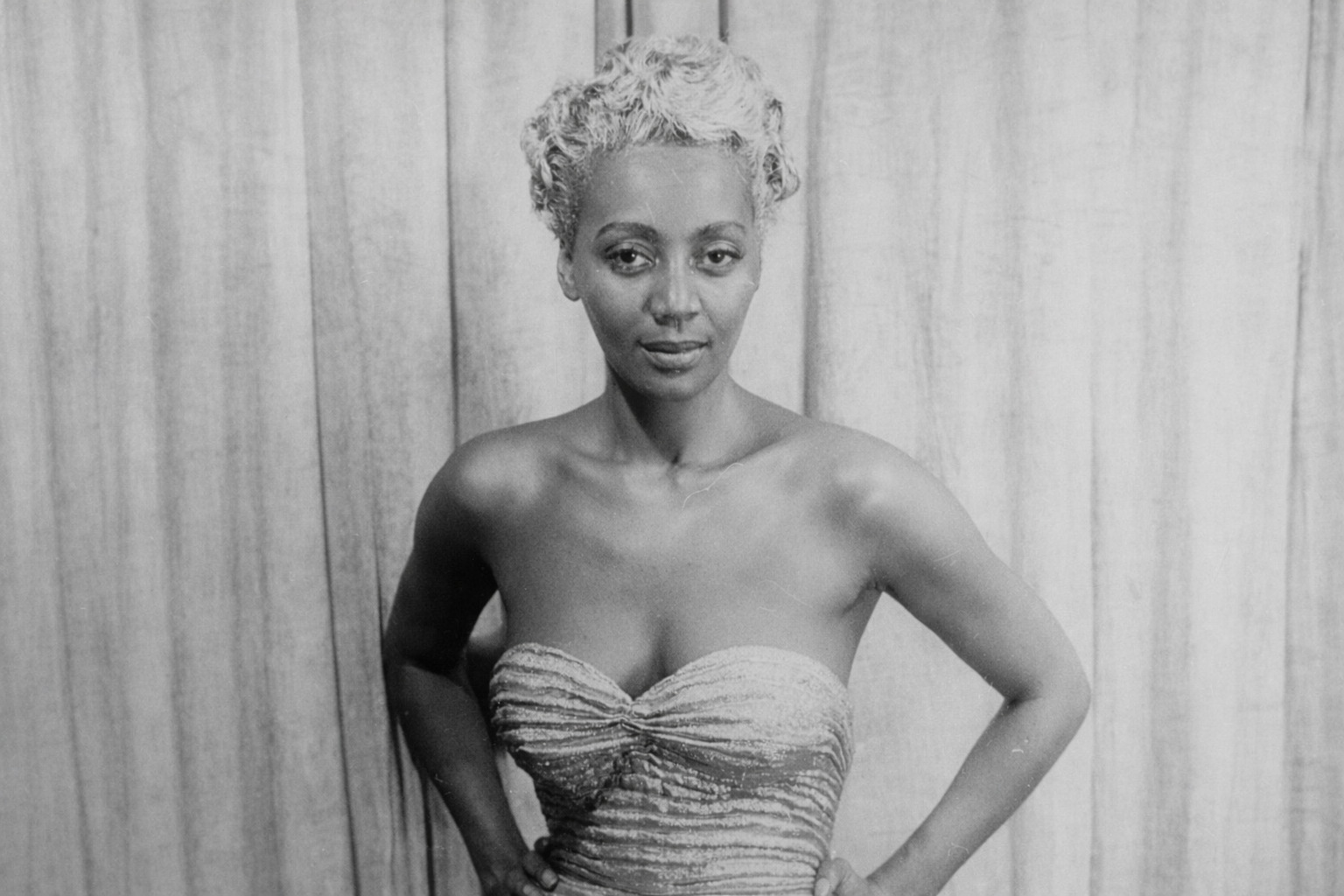
Wynn Valdes designed some of the first strapless and backless gowns for Bryant. Unlike typical strapless dresses that sit high on the back, Bryant’s gowns had a deep plunge that showcased her lower back. They featured complex boning and elastic in the bodice, which helped the front of the dress push against her ribs, allowing it to stand up on its own and maintain a dramatic backless look. This innovative style brought a new level of glamour that broke new ground for Black women entertainers.
Unfortunately, only a few of Wynn Valdes’s designs from that time still exist, with one notable piece being a costume for Eartha Kitt that’s now showcased at the Smithsonian’s National Museum of African American History and Culture in Washington, D.C. However, the creative spark ignited by the collaboration between these two groundbreaking women lives on, leaving a lasting impact on the world of dance and fashion. In addition, the stunning costumes worn by the Dance Theater of Harlem continue to captivate dance enthusiasts around the globe, evidence of how Wynn Valdes’s visionary work has inspired generations of artists.
Despite the limited number of surviving pieces, the essence of Wynn Valdes’s designs and the boldness of performances by titans like Kitt, Dandridge and Bryant remind us of the powerful intersection between art and culture, celebrating the legacies of these remarkable women.