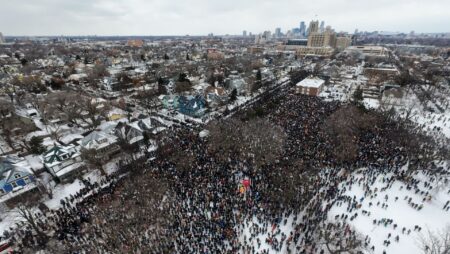




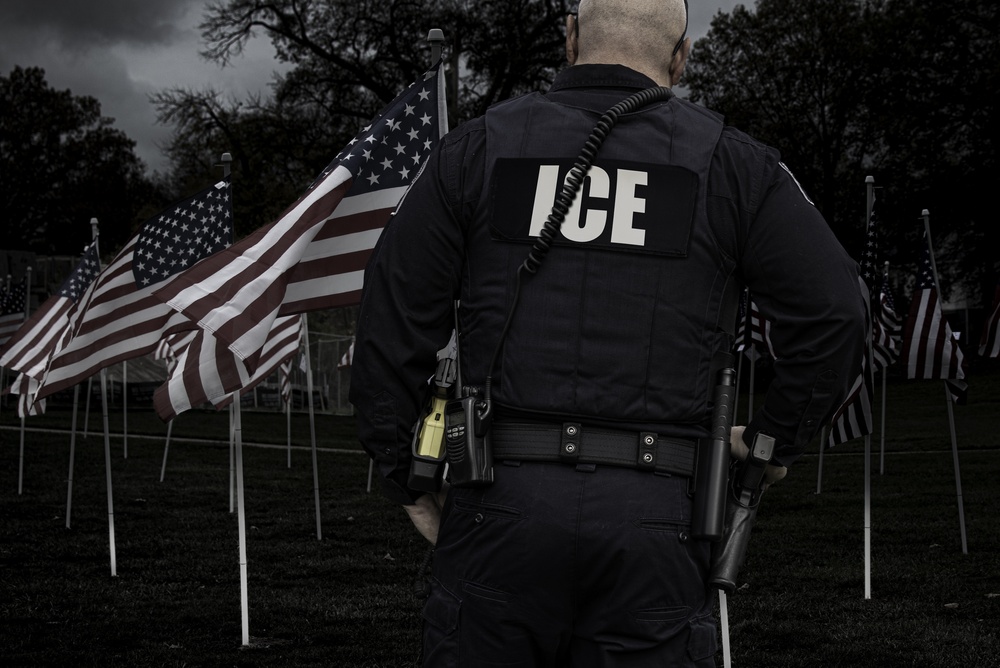
A wave of righteous fury from white folks has rippled across social media in recent weeks after the deaths of Renee Good and now Alex Pretti, at the hands of federal immigration agents during a sweeping enforcement operation in Minneapolis.
Good was killed by an ICE agent on January 7, and less than three weeks later, 37-year-old ICU nurse Pretti was shot and killed by Border Patrol agents amid protests over that operation. These back-to-back killings have ignited outrage, protests and urgent calls for accountability from local leaders, human-rights advocates and everyday citizens disturbed by what they’re watching unfold in real time.
For many white folks, the fury is visceral and deeply personal. They are venting online because watching ordinary people being gunned down by heavily armed agents is something they were taught should never happen in the United States. They are rightly suspicious of official narratives, distrustful of government statements, and watching viral videos with shock as state power unfolds before their eyes without obvious constraint or accountability.
But what they are saying, and how they are saying it, is quite telling.
Nowhere is that clearer than in one widely shared clip, in which a white man who identifies himself as a former sniper records a video in that familiar Instagram-and-TikTok style, pausing, zooming, slowing the footage, narrating frame by frame, as he analyzes the shooting of Alex Pretti.
“Right here,” he says. “Look right here.”
The frame freezes on a blur of bodies and uniforms. A hand in gray reaches into Pretti’s waistband. The hand takes a gun. A legal gun. A licensed gun. And then, panic. A sudden discharge. A split second of confusion detonates into bullets. And within moments, a life is gone.
The narrator’s rage isn’t performative, it’s forensic. He is watching the official story collapse and the state continue to lie while the video tells the truth. He is watching a life be taken and then posthumously put on trial. And when he hears the government claim that the victim “approached officers with a 9mm,” that he “violently resisted,” then ventriloquize the deceased by saying that he “intended to inflict maximum harm,” the narrator explodes!
He calls it “propaganda.” He calls it “authoritarian.” He compares it to Iran, to regimes that kill and then rewrite reality to justify it. His voice rises when he says “AMERICAN CITIZEN,” as if those words should function like some kind of armor that should have stopped the bullets and should now stop the lies.
In that same register, he uses language that leans hard as hell on betrayal and a broken social contract. He talks about “a police state,” “a totalitarian playbook,” “state-sanctioned murder,” “a government narrative machine,” “cover-up,” “information control,” “the regime,” “their script,” “their talking points,” “their lie,” “their version of reality.” He frames it as “this is what authoritarian governments do,” “this is how dictators operate,” “this is how they justify executions,” “this is how they manufacture consent.”
And he keeps circling the same moral rupture: “This is not how a free country acts.” “This is not democracy.” “This is not due process.” “This is what happens when the state decides you are disposable.”
Listen to him, Y’all. The language is all about crossing a line from republic to regime, from law enforcement to occupation, and from governance to domination.
What makes this moment so revealing is not just the brutality. It’s the shock and disbelief. The dawning realization that the American story has always been this dirty, the script always been this cynical, and the machinery has always been this willing to kill first and lie later. What we are seeing all over social media right now are white folks encountering, often for the first time, the architecture of a police state and reacting as though it has just been built, when in fact it has been standing for generations.
For Black people, this scene is devastatingly familiar. The freeze-frame. The grainy zoom. The hand placement analyzed like the famous Zapruder film that analyzed the assassination of John F. Kennedy.
Black folks know well the insistence: no, watch closely. That’s not what they said happened. The weapon was legal. The movement was misread. The “threat” was constructed after the fact.
We already know that the state’s language always arrives preloaded with criminality. Always arranges the dead body into a narrative that makes the killing seem inevitable, necessary, tragic but justified. And when it is a Black body on the ground, the public is trained to accept that narrative as the default. There’s no mass epiphany about authoritarianism, no widespread talk of propaganda, no collective sense that something fundamentally un-American has occurred. All we hear and see is loud-ass procedural noise and moral numbness.
What these viral videos are exposing is not just collective anger, but also the racial threshold for recognizing tyranny. Read that sentence again.
For many white Americans, the system becomes “authoritarian” only when it behaves toward them the way it has always behaved toward Black, Brown, and Indigenous people. Only when they see a legal gun rebranded as a “threat.” Only when they hear a dead citizen described as a violent aggressor to sanitize state violence. Only when they realize that bodycam footage, press releases and official statements can function not as transparency but as theater.
This narrator’s constant emphasis on “AMERICAN CITIZEN” is especially telling, and it isn’t just him. You see the phrase echoed across videos and posts all over social media repeated like an incantation, with a kind of astonishment, as though people are still trying to process that the status they were taught conferred safety, rights, and presumption of innocence did not, in fact, stop the state from pulling the trigger or from rewriting what happened afterward.
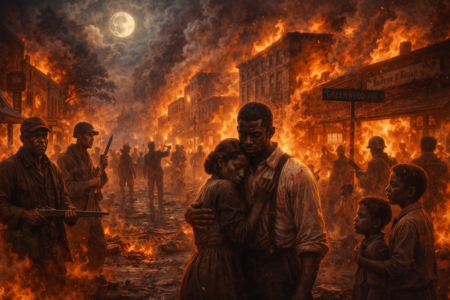
It reveals an unspoken hierarchy of whose death is presumed to be a constitutional crisis and whose death is treated as routine collateral. Black people have been citizens on paper and subjects in practice. Our killings have been framed as law enforcement, not as political violence. Our terror has been individualized, not named as structural.
So when white people now say, in horror, “they killed an AMERICAN,” what they are really confronting is the collapse of a myth that citizenship has ever been an equal shield, that the state’s monopoly on violence has ever been racially neutral, that propaganda is something that happens only in foreign dictatorships and not in the daily briefings of a democratic empire.
These videos are not just documentation. They are initiation rituals. They are showing a new audience what Black communities have long known, which is that the state will take a life and then take the story too. That it will pathologize the victim, sanctify the uniform, and demand that the public accept a narrative over their own eyes.
And the collective gasp you’re hearing online: the “this is authoritarian,” the “this is what police states do,” the “this is propaganda,” all that is the sound of white folks finally realizing that America has always rehearsed these techniques. The only difference now is that the lens has widened, and the illusion of who is safe inside the frame is starting to crack.
This is where whiteness, even liberal whiteness, is laid bare. Liberal whiteness has long been organized around the belief that the system is fundamentally good but merely flawed in its application. That racism is a malfunction, not a design principle. That democracy may wobble, but it ultimately self-corrects. That rights are real because they are written. That citizenship is a shield. So when the state behaves toward a white body the way it has always behaved toward Black and Brown ones, seizing, panicking, killing, and then rewriting the story, the response is shock because the ground of political innocence gives way.
The language reveals it.
“This is what dictatorships do.” “This is authoritarian.” “This is Nazism.” “This is propaganda.”
Those phrases locate tyranny somewhere else. In foreign regimes, in history books, in places and peoples imagined as fundamentally different from “us.” They reveal how whiteness, even in its liberal form, has been able to critique injustice while still assuming that the core of the system would ultimately side with it. That the state’s violence is a deviation, not a method. That the police state is a future risk, not a present reality.
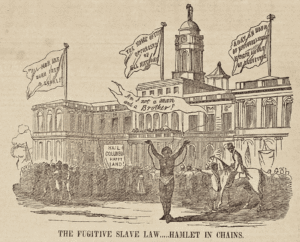
For Black folks, there has never been such insulation. Surveillance, militarized raids, lethal encounters, narrative laundering, and impunity have been the everyday grammar of governance. We do not need to borrow the language of authoritarianism to recognize domination. We have been living its techniques for centuries. What these viral videos are doing is initiating a wider audience into that knowledge. They are showing, in real time, how quickly the mask of democracy can slip, how seamlessly force is paired with fiction, and how easily a life can be taken and then re-scripted as a criminal.
So what is being revealed is not only the brutality of the state. It is the fragility of white political innocence. The racial threshold for recognizing tyranny. The fact that something becomes “authoritarian” in the public imagination only when it crosses into bodies that were once assumed to be buffered from the full weight of state power.
These posts are not just expressions of white outrage. They are moments of awakening. They expose how long Black people have been living under conditions that others are only now beginning to name, and how deeply whiteness, even the liberal kind, has depended on the illusion that democracy was designed to protect it first.
In the wake of the Alex Pretti shooting, several typically conservative and pro-Second Amendment voices have broken ranks with the official federal narrative that justified the killing based on his possession of a firearm. The National Rifle Association and other gun-rights advocates criticized comments by a Trump-appointed federal prosecutor suggesting that anyone who approaches law enforcement armed is “likely” to be legally justified in being shot, calling that sentiment “dangerous and wrong” and urging a full investigation instead of broad generalizations about law-abiding citizens.
That response from the NRA, an organization typically aligned with conservative law enforcement stances and supportive of Trump-era officials, is strikingly ironic. An association built on protecting individual rights and resisting government overreach is publicly rejecting the government’s characterization of what happened, precisely because it appears to undermine constitutional protections it has long championed.
And so here are the questions this moment begs, and these are questions that should occupy the minds of anybody paying attention, especially Black, Indigenous, and Brown communities who have lived with this reality far longer than newly outraged white audiences.
Do white people believe us now? Maybe. Maybe not. What will they do with this knowledge and outrage?
Is true solidarity possible now? Solidarity that doesn’t evaporate when the headlines move on? Can this outrage be trusted? Or will it curdle into self-preservation, into a frantic circling of wagons, into a determination to make sure they are never the ones in the crosshairs again?
Will the powers that be finally yield because it is dead white bodies in the street, because even institutions like the NRA which have long been silent when Black people were gunned down by the state, are now questioning the official story and defending the right to not be executed for legally carrying a firearm?
And for Black, Brown, and Indigenous people watching all of this, the harder question lingers: what do we do with this surge of white outrage?
Do we mistake recognition for commitment? Do we confuse shock for transformation? Do we allow ourselves to hope that the moral circle has finally widened, that the line between “their terror” and “our terror” has finally dissolved?
Or do we remember what history has taught us, again and again, which is that awareness is fleeting, that empathy is conditional, that solidarity often collapses the moment white people’s safety can be re-negotiated.
Do white folks believe us now?
Some of them do. In this moment. In this flare of horror. In this sudden recognition.
But history whispers a colder answer: No.
Thanks for reading. If this piece resonated with you, then please consider becoming a paid subscriber. Paid subscriptions help keep my Substack unfiltered and ad free. They also help me raise money for HBCU journalism students who need laptops, DSLR cameras, tripods, mics, lights, software, travel funds for conferences and reporting trips, and food from our pantry. You can also follow me on Facebook!
We appreciate you!