




The greatest danger of distraction culture is that it trains the public to live emotionally instead of historically.
Now, after a few days of folks arguing about monkeys, Bad Bunny and the Super Bowl halftime show, migrant fear cycles, and whatever fresh campus free-speech moral panic cable news is reheating this week, I want to revisit Trump’s call to nationalize voting.
Because this is how distraction always works in this country. Noise up here while structural power moves down there. And by the time folks get tired of arguing about pop culture, outrage bait, and algorithm-fed nonsense, the real story is already halfway locked in place.
Distraction is not accidental, Y’all. Distraction is governance strategy. It’s how power buys time and how policy gets rewritten while the public is busy arguing about symbols, celebrities, and viral nonsense that won’t matter in six weeks.
So, if you study American history long enough, you learn to recognize voter suppression before it introduces itself. You also start to notice when the national conversation suddenly fills with emotionally charged noise at the exact same moment structural shifts are happening quietly, bureaucratically, and permanently. That is where we are at right now.
Let’s go back to January 28.
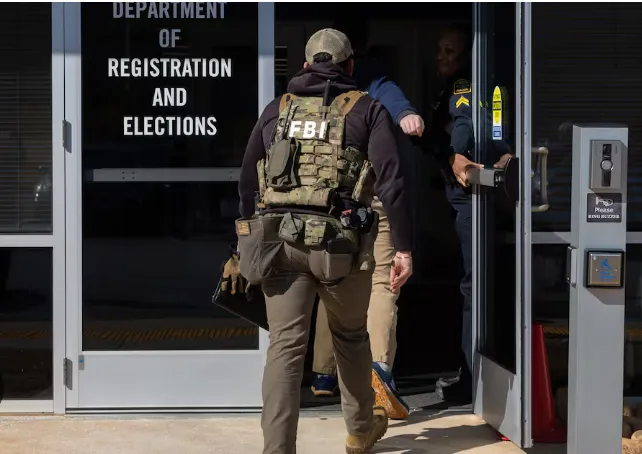
Remember when federal agents executed that search warrant at the Fulton County Elections Hub in Georgia? They seized hundreds of boxes of ballots and materials connected to the 2020 election. Fulton County is not just any county. It is majority Black. And in modern American elections, it is one of the places where Black voters don’t just participate, they determine outcomes. So no wonder it’s a target.
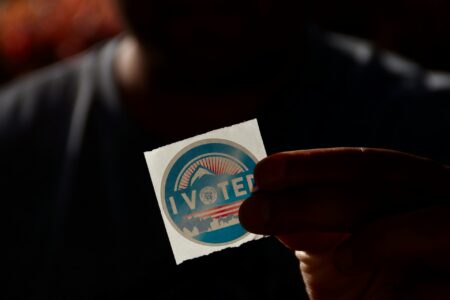
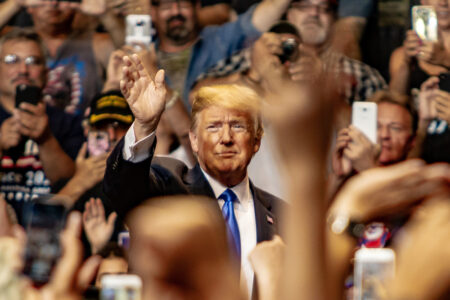
Just days later, Trump publicly called for Republicans to “nationalize voting” in at least 15 unspecified locations, repeating unfounded claims of widespread election fraud and suggesting that federal control is necessary to ensure election integrity. Nationalize voting? Let’s not play dumb about this, Y’all What in the hell kind of authoritarian boolshit is that supposed to mean in a country that claims to be a democracy?
Nationalizing elections in a stable democracy would already be controversial. But nationalizing elections in an authoritarian-leaning political climate is something else entirely.
It means one center of power controls how voting happens everywhere in the country. It means one administration sets the rules, enforces the rules, interprets the rules, and decides when those rules suddenly need “adjustment.” It means local resistance will become symbolic instead of functional. And it means local protections can disappear overnight.
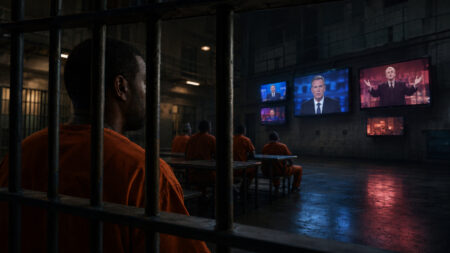
And if a federal government decides certain voters are suspicious, inconvenient, or politically dangerous, there is nowhere left to run. Black folks know this pattern in our bones because we spent 150 years fighting to get access to the ballot. Then another 150 fighting to keep it. Think poll taxes. Think literacy tests. Think terror campaigns. Church burnings. Voter roll purges. Precinct closures. ID laws designed to sound neutral and operate surgically.
If we zoom out for like five quiet, historically literate seconds, the pattern becomes impossible to miss. These events are not isolated. That Fulton County raid did not happen in a vacuum. And the nationalization rhetoric didn’t just appear out of thin air. The timing and sequence of events matter. You’ve got pressure + narrative + enforcement as the formula for how power is actually consolidating.
Now, roughly a month before this nationalization push, Trump told Republicans out loud and in public, that voting needed to become harder or they risked losing the midterm elections and he’ll be impeached. He tied that loss of power directly to his own political survival. Because apparently, in this political philosophy, the point of elections is not to reflect the will of the people, it’s to protect the career stability of whoever happens to be in charge.
That ain’t coded or subtle, people! That is a political leader openly linking access to the ballot with maintaining power. And historically, whenever American leadership starts talking about tightening voting rules during moments of demographic transition, Black communities always become the testing ground. Always.
And our corporate media, Black Jesus bless they souls, keeps covering this like it’s just legal debate or constitutional chess. But they keep refusing to say the racial mechanics out loud. They can’t fix their lips to call a thing a thing.
Because if they say this is about Black political power, then they have to admit that what we’re seeing ain’t new. They’d have to connect these latest disenfranchisement efforts to poll taxes. Literacy tests. The Mississippi Plan. Ballot purges. Precinct closures. These are all the administrative ways America has learned to say Black votes are dangerous.
Trump and his ilk will say this is about election integrity. They always do. Because “election integrity” has been the polite, bureaucratic translation of we cannot afford to let certain people vote for more than a century.
They said it in 1890, when white lawmakers engineered literacy tests and so-called “understanding clauses” designed to make Black voting technically legal and practically impossible. Those laws were written so that a white registrar could decide, on any given Tuesday, that a Black person was suddenly too dumb to participate in democracy.
They said it during the Grandfather Clause era, when voting rights magically applied only if your grandfather could vote. Of course, this conveniently excluded the grandchildren of enslaved people while allowing illiterate white men to walk straight into polling places without a single question asked.
They said it when Black Americans had to build a whole Civil Rights Movement just to force this country to honor a Constitution it had already written, ratified, and already sworn was the law of the land.
And every single time, the lie was the same. Not we are afraid of losing power. Not we built a system that only works if certain people stay politically invisible.
No. It was always dressed up in some moral language about order, standards, security, integrity, confidence in the system. Because American voter suppression has never introduced itself as suppression but as reform and protection.
And what they are betting on, what they have always bet on, is historical amnesia. They are betting that Americans will not remember that every major expansion of democracy in this country was immediately followed by some new “crisis” that just so happened to require making voting harder for Black folks. They are betting people will forget that Black voters have been the testing ground for every major voter suppression technology this country has ever invented. Test it on Black communities first, perfect the language, and then scale it to other groups later.
Because the most dangerous lie in American political history was never that Black people were unfit to vote. The most dangerous lie was the performance, the pageantry, and the national theater pretending voter suppression was about protecting democracy instead of protecting white political dominance.
Civil rights organizations are already sounding alarms because they recognize historical rhythm. They have seen this movie before. Just with worse technology and slower communication. And Black communities, already fighting purges, closures, and intimidation, would be facing that pressure from the highest level of government simultaneously.
And yes, this would affect Latino voters. Indigenous voters. Asian American voters. Immigrant communities. Young voters. Poor voters. Disabled voters. So when people say, “This is just politics,” what they really mean is, “I have not studied enough history to be scared yet.”
People need to be paying attention right now, not just emotionally reacting, not just sharing outrage posts, not just arguing about whatever cultural distraction is trending this week. People need to be studying patterns. Following policy moves. Watching who is gaining power while everybody else is arguing about spectacles. Because voter suppression doesn’t wear a hood anymore. It arrives in legal language, administrative policy, and “reform” bills that sound reasonable until you look at who they actually impact.
And while everybody is still arguing about halftime shows and viral outrage and whatever the algorithm decides we should be mad about tomorrow, the machinery keeps moving. That is why distraction is policy cover. And history is very clear about what happens when people notice too late.
Thanks for reading. If this piece resonated with you, then please consider becoming a paid subscriber. Paid subscriptions help keep my Substack unfiltered and ad free. They also help me raise money for HBCU journalism students who need laptops, DSLR cameras, tripods, mics, lights, software, travel funds for conferences and reporting trips, and food from our pantry. You can also follow me on Facebook!
We appreciate you!