




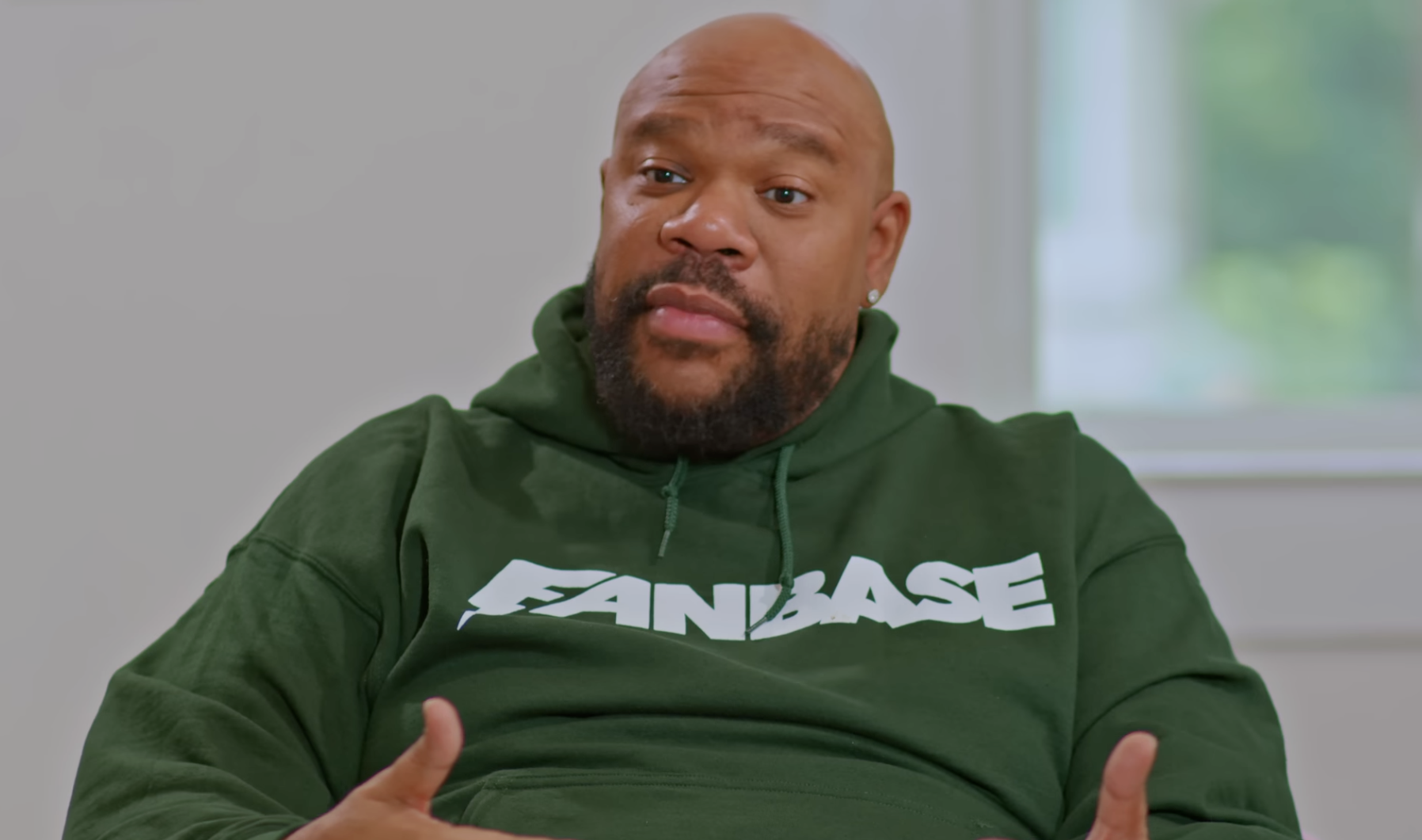
While others were counting down the clock to ring in the new year, on January 1, 2026, Isaac Hayes III’s was focused on another clock: the copyright transfer termination deadline for copyrighted works created in 1991. Hayes III, son of soul legend Isaac Hayes and founder of the Fanbase social media app, urged hip-hop and R&B creators in a now-viral public warning via X/Twitter to reclaim their publishing and master rights—or risk losing them permanently. This call-to-action struck a cultural nerve because the stakes are generational. And the clock? Unforgiving.
Hayes III is uniquely positioned to sound this alarm. As the steward of his father’s estate and head of Isaac Hayes Enterprises, he has spent years navigating the complex process of reclaiming ownership of works his father created. The elder Hayes co-wrote iconic songs like “Hold On, I’m Comin'” and “Soul Man” with David Porter during their legendary partnership as staff songwriters at Stax Records. Like many artists and writers at Stax (including Richard Pryor), Hayes did not retain ownership of publishing rights; the label and its affiliates held those. When Stax collapsed into involuntary bankruptcy in 1975, Union Planters Bank took control of the label’s assets and sold the Stax name, master tapes, and publishing rights to Fantasy Records in early 1977.
Separately, Hayes himself filed for personal bankruptcy in 1976, owing over $6 million. A federal court ordered the sale of his future royalty rights, including his writer’s share of songs he had composed. Those rights sold for approximately $30,000 and have since generated millions in revenue for other parties. Lance Freed, president of Rondor Music (one of the companies that acquired portions of Hayes’ publishing) confirmed that Hayes lost rights to many of his compositions through this forced sale, as reported by Synctank.
It’s 2026
— Isaac Hayes III (@IsaacHayes3) January 1, 2026
This year, a massive number of rap and R&B records become eligible for termination.
That means songwriters and artists finally have the legal right to reclaim their publishing and their masters.
If you know any of these songwriters or artists, tag them in this post.… pic.twitter.com/NFb5cPxDvH
But the story doesn’t end there. Hayes III prioritized reclaiming his father’s rights through copyright termination under the Copyright Act of 1976. The estate exercised termination rights on post-1978 compositions around 2014 (aka 203 rights), with pre-1978 works (aka 304 rights), including “Hold On, I’m Comin'” and “Soul Man”, terminating the original transfer of rights and reverting ownership to the estate in the following years. These terminations were filed with the U.S. Copyright Office and are part of the public record.
The legal effectiveness of those terminations was confirmed in February 2025, when a federal judge ruled that the estate had met its burden of proving ownership in a lawsuit against Donald Trump for unauthorized use of “Hold On, I’m Comin'” at campaign rallies. Trump’s legal team had challenged the validity of the termination, claiming insufficient documentation. The court disagreed, allowing the copyright infringement case to proceed.
That painful history of loss, followed by successful reclamation, makes Hayes III’s advocacy deeply personal and poignant. His message to artists? This is “the largest transfer of wealth to Black people in the history of the music industry.” The time to act is now.
What Copyright Is—and Isn’t
Before diving into termination rights, it is critical to understand what copyright actually protects. Copyright is a form of intellectual property law that gives creators exclusive rights to their original literary or artistic works—whether musical compositions, sound recordings, books or other creative expressions. These rights include the ability to reproduce the work (copy), create derivative works (adapt), distribute copies (publish) and perform or display it publicly.
What copyright doesn’t do is protect ideas themselves, only the specific expression of those ideas. And crucially, copyright is transferable. Creators can sell, license or assign their rights to others—which is exactly what most artists did when they signed their first record deals.
This is distinct from other types of intellectual property. Trademarks protect the use of a word, phrase, symbol, or other “device” in commerce to help identify and distinguish the source of goods and services (think McDonald’s, not McDowells). Patent law protects inventors by granting owners exclusive rights for a limited period of time.
How Copyright Termination Works
Congress recognized decades ago that creators, especially early in their careers, can’t possibly assess the long-term value of their work. That song you signed away for a few thousand dollars in 1991? It might have generated millions in streaming revenue, sync licensing and catalog sales since then. Most artists were never told, believing that once they signed their contract, they irrevocably transferred their rights.
However, the 1976 Copyright Act (still largely enforce today) created termination rights under Section 203 as a “second bite at the apple”—a non-waivable right to reclaim ownership 35 years after signing away your work. The idea was straightforward: let the market speak first, then give creators a chance to renegotiate from a position of knowledge rather than desperation.
But here’s the catch that Hayes is warning artists about: you must file your termination notice between two and ten years before the termination date. Miss that window, and the right disappears forever. No extensions. No exceptions. No second bite.
The potential gain—much like the original losses—is incalculable. However, as I argued in De-Gentrified Black Genius, the underlying dynamic is well-documented: Black artists were disproportionately locked into exploitative deals when they had the least access to legal counsel and the least bargaining power.
Black artists were disproportionately subjected to exploitative deals during eras when access to legal counsel and bargaining power was minimal. The standard industry playbook often included mislabeled “work for hire” arrangements that stripped rights entirely, contracts signed without independent legal review, and advances that looked generous but represented pennies on the dollar of actual value. And, as I explained in Statutory Heirs Apparent?: Reclaiming Copyright in the Age of Author-Controlled, Author-Benefiting Transfers, this reality caused economic harm not only during the artist’s lifetime but compounded the harm to their family after their death.
The list of 1991 works Hayes highlighted are songs that defined hip-hop and R&B’s global rise, underscoring an all-too costly and painful pattern. Black music often achieves massive cultural influence before it receives corresponding economic recognition. By the time the industry acknowledges a work’s value, ownership has already been transferred away from its creator.
Ownership Is the Gateway to Generational Wealth
This isn’t just about getting a bigger royalty check. Reclaimed copyrights are property transferable, licensable, and inheritable assets that can anchor generational wealth.
For example, When Victor Willis, co-creator of Village People hits like “Y.M.C.A.,” became the first living artist to successfully terminate a post-1977 copyright transfer under Section 203, he didn’t just improve his income. He reentered the economic center of his own creative work. The same applies to artists like Prince, who, after an 18-year rights battle, reclaimed his catalog from Warner Brothers and monetized his “second bite”.
Terminating ownership transfers to reclaim one’s copyright means the original creator decides who can sample the work, which films and commercials can use it, and on what terms streaming platforms can distribute it. That’s not just money, that’s agency. That’s real power.
The System’s Quiet Failures
Since January 1, 2013 (the first date creators could begin terminating post-1977 grants), termination windows have opened and closed every year. For artists who were never informed of this right, who misunderstood its procedural demands, or who lacked resources to act with precision, those windows passed silently.
That quiet forfeiture isn’t accidental. A right that only works for people who know it exists, can afford the right lawyer, and can navigate a maze of procedural traps isn’t a neutral right. It’s a trapdoor dressed up as an open door.
“Use it or lose it” sounds fair until you remember who’s been systematically denied legal access, information, and bargaining power for generations. For those communities, the rule doesn’t correct the imbalance. It cements it. And missing a termination window doesn’t delay justice. It cancels it. Permanently.
What Needs to Change
Hayes III’s intervention matters because it breaks the information barrier—at least temporarily. He’s playing educator, broadcasting knowledge the system itself doesn’t provide. But even with the alarm sounded, the burden still falls on individual artists to execute flawlessly within a framework built for industry, not creators.
As I argue in Statutory Heirs Apparent, real reform would look like automated notice systems that alert artists when their windows approach, transparent registries that make it easier to track who controls what rights, streamlined procedures that don’t require a specialized attorney, and affirmative outreach to artists who may not know these rights exist.
Without structural change, termination rights will keep doing what they’ve always done: reward the industry and the most resourced creators while leaving everyone else behind.
The Urgency of Now
Isaac Hayes III didn’t create this moment; he illuminated it. The wealth shift he describes isn’t accidental. It’s the delayed consequence of a right that has always held transformative potential for Black artists but was never designed to be easily accessible. The statutory friction is a feature, not a bug.
For artists who released work in the early 1990s, the clock is ticking. The termination window for 1991 works is now open. Waiting means risking permanent forfeiture of rights to songs that may be worth far more than anyone imagined three decades ago.
Copyright termination isn’t just about reclaiming songs. It’s about reclaiming ownership and economic agency in an industry built on extracting creativity from all creatives, especially the most vulnerable and influential on music and culture. Until the system itself is redesigned to protect those interests proactively, moments like this will remain rare, urgent, and unequal.
Black genius doesn’t need permission to exist. It needs structures that stop gentrifying it once its value becomes undeniable.