



The frontline of community resilience
The loss of funding for a long-running youth HIV and sexually transmitted infection prevention initiative has raised new concerns about the future of culturally responsive health education in Black communities. The disclosure emerged during the August 4 episode of The Conversation with Al McFarlane, where community leaders examined persistent HIV stigma, uneven public attention, and the role grassroots organizations continue to play in prevention and care.
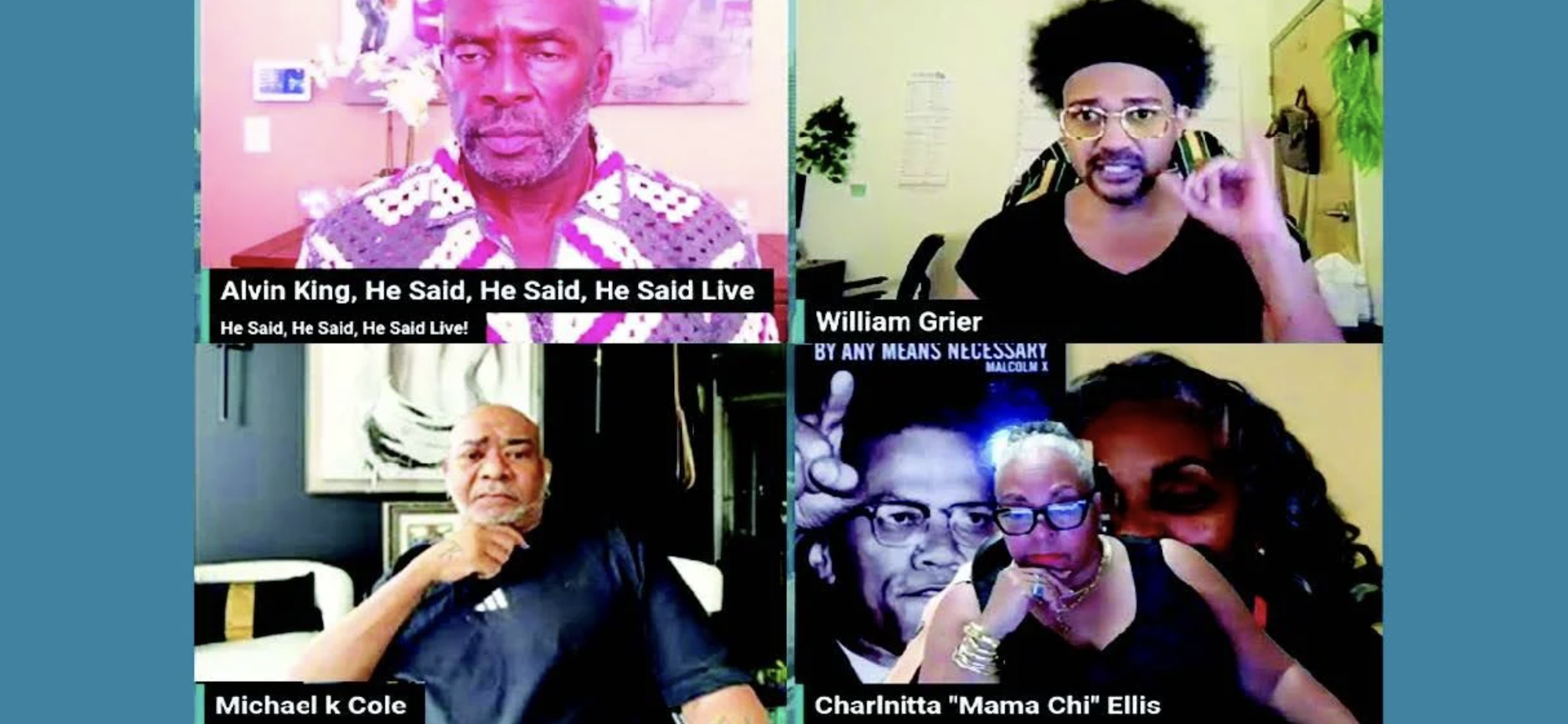
Host Al McFarlane convened Alvin King, Michael Cole, Charlnitta “Mama Chi” Ellis, and William Grier to discuss whether public institutions and government leaders have turned their attention away from HIV/AIDS and other health disparities, and what it will take to rebuild a culture of education, prevention, and community accountability.
Funding loss and community impact
Charlnitta “Mama Chi” Ellis, director of the Check Yo’ Self Health & Wellness Center, said funding for her youth HIV/STI prevention work had concluded, with June marking the final month supported by that funding stream.
Ellis said the program was funded beginning in February 1992 and has provided culturally responsive education, prevention, testing support, and other resources for Black and urban youth. The discussion did not identify the funding source, amount, decision-maker, or whether replacement funding is available. Further reporting is needed to determine the specific program funding and the likely impact on future services.
“That’s them taking their funding,” Ellis said. “You can’t take a ministry. You can’t take what God gives me. And more funding will come.”
The funding loss places a concrete public-interest question at the center of the broader discussion: what happens when trusted community-based prevention programs lose institutional support while the need for education, testing, and navigation remains.
“Life does not end with a positive test. Believe it or not, for some people, it’s the start of life.” — Michael Cole
The lingering stigma and generational trauma
For many who lived through the height of the epidemic, memories of loss and uncertainty remain vivid.
“When AIDS came on the scene, it rocked the whole gay community to the point where the amount of fear that we lived in was unreal,” said entrepreneur and community advocate Michael Cole. “It was unprecedented, because the thing about it is they had no answers for us. And like Alvin said, you’d find out that one of your friends was dealing with it, and the next week they were gone.”
Cole said the uncertainty extended to the most basic questions about transmission. “They didn’t know if it was in the saliva. They didn’t know if it was in our tears. They didn’t know if it was in the blood. They didn’t know if it was riding on the surface of the skin. They had nothing.”
That trauma continues to shape perceptions of HIV/AIDS. Despite major medical advances, including PrEP and antiretroviral therapies that allow many people living with HIV to lead long and healthy lives, stigma remains a barrier to testing and prevention.
“The fear is still there,” Cole said. “Even though they’re out here acting and doing all willy-nilly, the fear is still there. But if I can tell anybody anything: get tested. Get tested as often as you can.”
He said the deepest barrier is what people imagine a positive result would mean. “Some of them feel like your life is over. I’m here to tell you, life does not end with a positive test,” Cole said. “Believe it or not, for some people, it’s the start of life.”
“That’s them taking their funding. You can’t take a ministry. You can’t take what God gives me.” — Charlnitta “Mama Chi” Ellis
Bridging the prevention gap
Health advocates said the challenge is not simply the availability of medical tools, but whether younger generations understand how and why to use them.
William Grier, a medical case manager with the University of Minnesota, said younger people have grown up in a different environment from those who witnessed the epidemic’s deadliest years.
“I don’t know what it’s like growing up in community where half of my cohort dies because of an illness. That was never my experience,” Grier said. “My nephew, for example, he will now know what it’s like to come of sexual age in a world where there is PrEP — in a world where you can prevent HIV with something outside of condoms and prayers.”
Grier said each generation develops its own understanding of risk, making it essential for public health messaging to evolve with changing realities.
“In a world where you can prevent HIV with something outside of condoms and prayers.” — William Grier
Community education beyond funding
Ellis said community education cannot stop when institutional funding ends.
“We gotta realize we can’t attach the education of our children and our community to funding,” Ellis said. “If we’re getting out on the corner with a sign that says I’m going to have a free class — come in, because one of the things I promise you when I finish with you, you’ll know what HIV is. You’ll know what AIDS is. You’ll know how you become infected, how you don’t become infected, and you will know about prevention.”
Politics, policy, and health equity
The panel also examined the political environment surrounding healthcare, LGBTQ+ rights, and HIV/AIDS policy.
Alvin King, Washington, D.C.-based co-host of He Said, He Said, He Said Live on Black Press USA, argued that current policy decisions threaten gains achieved through decades of advocacy.
“What do we have to worry about right now? It is everything that this administration is doing to take away from not only Black people, but let me hone in on the LGBTQIA+ community, from marriage equality to trying to destroy decades and decades of advancement in HIV and AIDS that they’re trying to strip away that’s helping people live longer,” King said.
Grier connected healthcare access to broader social determinants, including housing, transportation, and food security.
“If I don’t know where my food is coming from, I’m not thinking about taking a pill. If I’ve been couch-hopping for the last three years, I’m not thinking about going to the doctor,” Grier said. “It’s the things outside of the actual virus that I think have the most impact.”
Grier said that when he worked in rural Georgia, transportation and housing were the two largest barriers to care, and that the erosion of one support tends to precede the erosion of others.
Unfinished work
As the discussion concluded, panelists called for removing shame from the conversation, supporting evidence-based prevention and treatment, demanding accountability from public institutions, and engaging families, faith communities, and neighborhood organizations in open discussions about sexual health.
Medical science has transformed HIV from a near-certain death sentence into a manageable health condition for many people. The work of education, advocacy, and community responsibility, however, remains unfinished.
INSIGHT NEWS PERSPECTIVE
Grassroots organizations are public health infrastructure
The following is the editorial position of Insight News. It is not reported from the conversation above.
Grassroots organizations remain central to HIV/AIDS prevention, education, and care in Black communities. Long before major institutions fully recognized the epidemic’s impact on Black America, neighborhood advocates, church leaders, community health workers, and peer educators stepped into the gap.
These organizations operate from a position of trust. They are frequently led by people who live in the communities they serve, who understand local cultural dynamics, and who have navigated the same challenges residents face. That proximity allows them to communicate in ways larger institutions often cannot.
Whether working from church basements, community centers, beauty salons, barbershops, or neighborhood storefronts, they create spaces where conversations about HIV, sexuality, prevention, and treatment can happen without judgment.
Amid shifting political priorities and reductions in social support, they become the safety net beneath the safety net — connecting residents to testing, case management, transportation, housing support, mental health resources, food assistance, peer mentoring, and support for people living with HIV. When their funding is withdrawn, what is lost is not a program line. It is infrastructure.
COLUMN — AL McFARLANE
Reclaiming the narrative
The following is commentary by Al McFarlane, Editor-in-Chief of Insight News. It is not reported from the conversation above.
When HIV/AIDS first emerged as a global story, the narrative pointed at Black people and laid blame for its creation and spread at our doorstep. That disinformation built a stigma that made people hide rather than seek help. Some in power cultivated an insidious calculation — that the epidemic might solve a problem for them, the problem being us.
Then the pandemic reached white communities, and the story changed.
Two things have to happen. Number one: don’t blame us. Patient zero is not an African person. Number two: if the problem exists, then we deserve every resource available in science, in health, and in practice — and the money has to follow the problem. That began to happen once it was understood as a white problem. The question now is whether advanced medicine, having removed the imminent threat, has left our community holding a different disadvantage: the lack of information.
— Al McFarlane, Editor-in-Chief, Insight News
Where to get tested, treated, and supported
All listings below were confirmed live on August 4, 2026.
Red Door Clinic — Hennepin County Public Health
525 Portland Ave. S., 4th Floor, Minneapolis, MN 55415 • 612-543-5555 • reddoorclinic.org
HIV and STI testing and treatment for everyone age 12 and older, PrEP, PEP, Doxy PEP, family planning and syringe exchange. Walk-ins are taken first-come, first-served. Monday, Tuesday, Wednesday and Friday 8 a.m. to 4 p.m.; Thursday 10 a.m. to 4 p.m. PrEP information: reddoorclinic.org/prep
The Aliveness Project
3808 Nicollet Ave., Minneapolis, MN 55409 • 612-822-7946 • aliveness.org
Free HIV testing, PrEP, PEP, Doxy PEP, STI testing and treatment, on-site pharmacy, food and nutrition, housing support, transportation, benefits counseling, legal support and medical case management.
Minnesota AIDSLine
612-373-2437 • AIDSLine@aliveness.org • aliveness.org/aids-line
Minnesota’s statewide information and referral service for HIV. Monday through Friday, 9 a.m. to 4 p.m. The AIDSLine is now operated by The Aliveness Project, which took it on after Rainbow Health closed in July 2024.
NorthPoint Health & Wellness Center
2220 Plymouth Ave. N., Minneapolis, MN 55411 • 612-543-2500 • northpointhealth.org
Medical, dental, behavioral health and human services in North Minneapolis since 1968, including harm reduction and testing services.
Minnesota Sexual Health Hotline
Metro 612-645-9630 • Statewide 1-800-783-2287 • sexualhealthmn.org
Find testing anywhere in the country
CDC GetTested — gettested.cdc.gov • Minnesota Department of Health HIV testing sites and PrEP information — health.state.mn.us/diseases/hiv