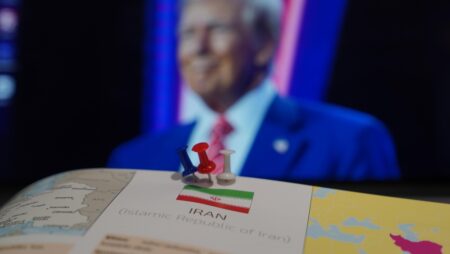




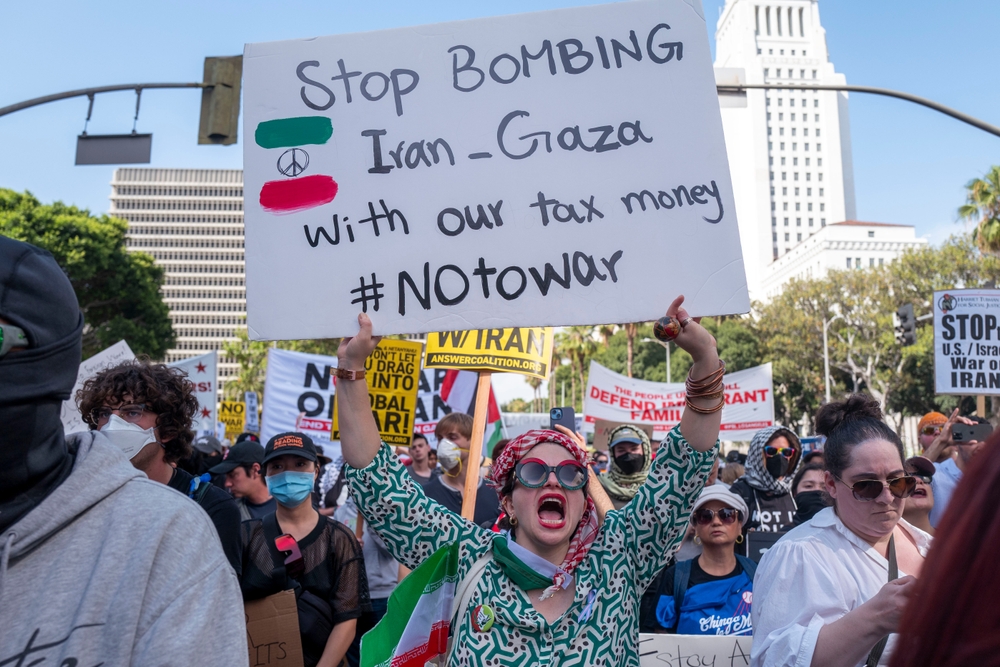
Explosions echoed across the Gulf on Monday as the conflict between the United States, Israel and Iran deepened, days after a coordinated U.S. and Israeli assault on Iranian targets triggered the most serious regional escalation in years.
Last week, U.S. forces joined Israeli strikes on military and nuclear-linked sites inside Iran, hitting facilities in and around Tehran as well as command centers tied to Iran’s missile program, according to U.S. officials. The White House said the operation was intended to degrade Iran’s ability to arm proxy groups and advance weapons capabilities. Iranian authorities said residential areas were also struck and reported hundreds of deaths nationwide.
Tehran has since launched waves of missiles and drones toward Israel and U.S. installations in the Gulf. Gulf states, including Qatar and the United Arab Emirates, reported impacts near energy and industrial sites. QatarEnergy said it temporarily halted liquefied natural gas production at Ras Laffan after a drone strike, raising concerns about global supply.
Qatar is one of the world’s largest LNG exporters.
In Kuwait, three U.S. service members were killed in what officials described as a suspected Iranian attack. President Donald Trump said additional casualties were possible as operations continue. The U.S. military also confirmed that Kuwaiti air defenses mistakenly shot down three American fighter jets amid the heightened alert, with all crew members rescued safely.
The conflict is beginning to reverberate inside the U.S. Oil prices have risen sharply amid fears of disruption to shipping routes through the Strait of Hormuz, a critical pathway for global crude exports. Airlines have rerouted or canceled flights across parts of the Middle East, complicating evacuation efforts for American citizens.
On Capitol Hill, lawmakers from both parties questioned the president’s authority to carry out strikes on Iran without explicit congressional approval. Several members of Congress said the action required authorization under the Constitution and the War Powers Resolution.
Senate Majority Leader John Thune echoed that support and welcomed further briefings, even as some Republicans press for more detailed intelligence on the evolving campaign.
Many Democrats have taken a sharply different view, arguing the assault amounts to an unconstitutional “war of choice” because the Constitution assigns to Congress the power to authorize hostilities, and they have demanded an immediate vote under the War Powers Resolution to stop or limit further operations.
Leaders such as Sen. Chris Van Hollen have said the president’s course “is not making us safer,” and others like Sen. Chuck Schumer have pressed for transparent briefings on both the legal rationale and strategic goals.
Republican leaders have broadly rallied behind the administration’s actions, with House Speaker Mike Johnson calling Iran’s strikes “the severe consequences of its evil actions” and saying lawmakers were briefed in advance on potential military moves to protect U.S. troops and citizens.