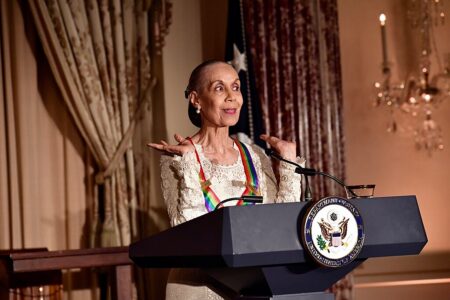


If you ever needed proof that Black girls can do literally anything, look no further than the incomparable Martina Arroyo.
From the streets of Harlem to the pinnacle of international opera, she didn’t just break the mold; she smashed it while wearing haute couture.
As one of the very first Black opera singers to achieve massive global stardom, she took the classical world by storm and made sure everyone knew that Harlem was in the building. As the world says goodbye to this powerhouse soprano after her passing, she died at her Manhattan home on Tuesday, October 12, at age 90; the barrier-breaking, roof-raising magic she blessed us with isn’t going anywhere.
And we’re choosing to turn up the volume on her incredible life story and celebrate the absolute blueprint of grace, grit and generational talent.
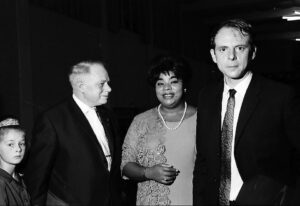
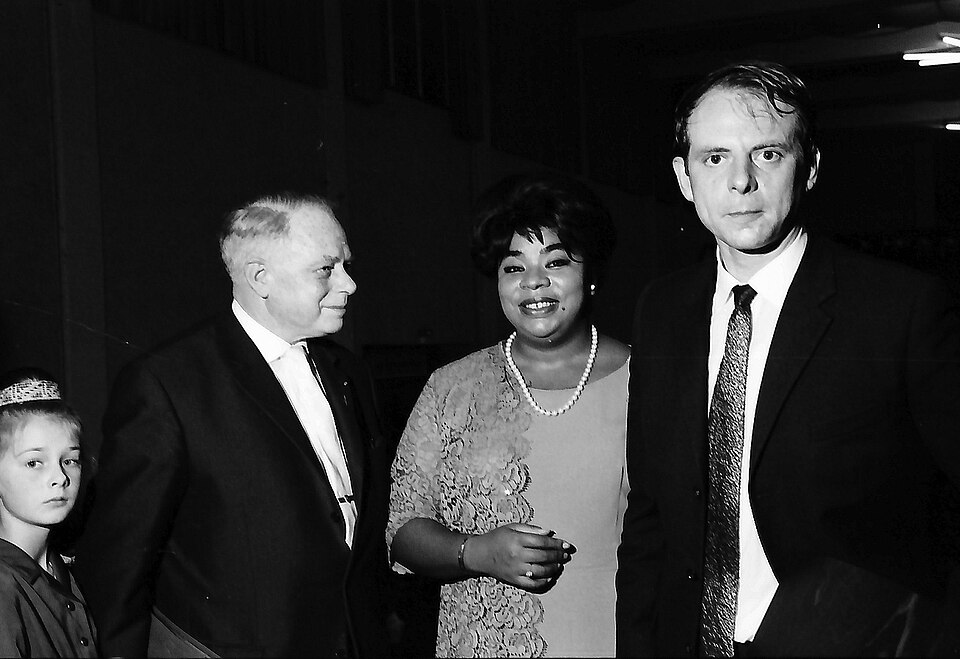
Ms. Arroyo stood shoulder-to-shoulder with other greats like Leontyne Price, Grace Bumbry, Shirley Verrett and George Shirley, all of whom shattered racial barriers in the opera world during the 1950s and 1960s. As one of the first Black singers to carve out a prominent career in this traditionally white field, Ms. Arroyo became a major star in major opera companies, proving that artistry knows no color.
According to The New York Times, she began her career in a minor role at the Metropolitan Opera in 1959. However, her major opportunity came six years later when Rudolf Bing, the company’s general manager, called her to step in for a sick colleague and perform Aida in Verdi’s opera.
At the time, she had been gradually building her career in Europe and, initially, thought the call was a joke. However, the evening proved a great success. She received a contract and later that year performed as Elisabetta in Verdi’s Don Carlo, Leonora in Il Trovatore and Cio-Cio-San in Puccini’s Madama Butterfly. She also starred in three opening nights of the season in the early 1970s.
Ms. Arroyo was also a beloved fixture on Johnny Carson’s Tonight Show, but before stepping onto the world’s grand stages, she dedicated herself to social work and teaching in New York City. With her relatable charm and infectious humor, she often reflected on her early days, including a lighthearted anecdote about her debut at the Metropolitan Opera, where she played a minor role as the Celestial Voice in Don Carlo. She quipped that her mother missed her performance because she had taken a bathroom break at the worst possible moment.
Beyond her inaugural appearance at the Met, she also graced prestigious venues like Teatro alla Scala in Milan, the Lyric Opera of Chicago and the Royal Opera in London, earning widespread acclaim for her performances. While she was particularly renowned for her interpretations of Verdi’s works, her versatility as a singer allowed her to explore a wide repertoire, ranging from Mozart’s classics to contemporary pieces by 20th-century composers like Stockhausen and Schoenberg and even premiering new works such as Samuel Barber’s Andromache’s Farewell.
“If people think a kind of magic happens onstage, they ought to know that what they’re seeing is a lot of work,” she said in a 1972 interview with The Times. “To me, ‘charisma’ is just a fancy word for rehearsals. And if I catch you using the word ‘effortless’ about me, I’ll laugh in your face.”
Ms. Arroyo was born on February 2, 1936, in Harlem, New York City. Her father, Demetrio Arroyo, was a mechanical engineer from Puerto Rico and her mother, Lucille Washington, was an amateur pianist from South Carolina.
The family, which also included an older son, highly valued culture. Ms. Arroyo participated in church choirs and ballet classes, and her parents often took her to museums, concerts, plays, movies, and musicals.
Although she didn’t grow up with opera, she attended an opera workshop at Hunter College High School and auditioned for vocal coach Marinka Gurewich. Gurewich later mentioned to The Times that she was impressed not only by Ms. Arroyo’s voice but also her character.
Gurewich taught Ms. Arroyo for the next 40 years.
“To be a great singer means more than just a voice,” Gurewich said. “What struck me was this personality of straightforward determination without any of the unkindness that is so often included.”
Still, when Ms. Arroyo was starting her career, the idea of working in music felt unlikely, mainly because there weren’t many role models to look up to. It wasn’t until 1955 that contralto Marian Anderson became the first Black artist to perform a major role at the Metropolitan Opera.
Even after her parents began supporting her passion for music, they urged her to keep a more stable job as a backup. She earned a bachelor’s degree in Romance languages from Hunter College, then got a teaching license and studied literature at New York University. In the mid-to-late 1950s, she worked as a welfare caseworker in New York City and as a high school teacher.
She would go on to win the title Auditions of the Air by performing O patria mia from Verdi’s Aida, a performance that marked a turning point in her career. Afterward, she returned to her regular job while making her debut at the Metropolitan Opera and performing at opera houses and concert venues across the country. Her talent soon took her to Europe, where she garnered positive reviews for her lieder recitals and became a valued member of the resident group at the Zurich Opera. In 1961, she married Italian violist Emilio Poggioni, although their marriage ended in divorce. She later found love again with banker Michel Maurel, who sadly passed away in 2011.
She performed in Aida for her final Met performances in 1986. After she retired from performing in the early 1990s, she focused on teaching. In 2010, she received the National Endowment for the Arts Opera Honor and in 2013, she was awarded the Kennedy Center Honor.
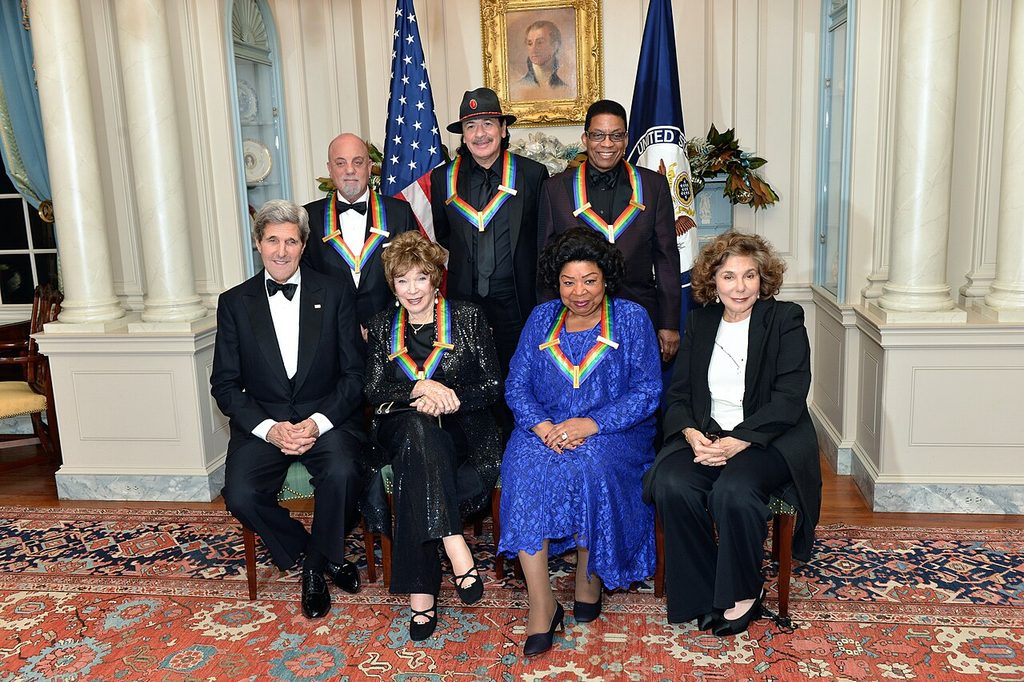
While teaching a role-preparation course at Indiana University, she founded the Martina Arroyo Foundation in 2003.
The foundation ran a six-week summer program called Prelude to Performance, which ended with a fully staged opera at Hunter. Rather than concentrating on technical skills, the program aimed to help young singers truly connect with their roles. Ms. Arroyo believed this kind of acting training was something she missed in her own early education, which had left her to rely on her instincts.
Martina Arroyo didn’t just sing opera; she claimed it, shook it up and left it better than she found it. From a Harlem kid who thought opera was just people kicking their legs to a global powerhouse who shattered the Met’s color barriers, she spent 90 years living out loud.
Yeah, the house lights have dimmed on an absolute legend, but the standing ovation? That’s never going to stop. Every time a young artist steps onto the stage because of her foundation, Martina’s voice is right there, hitting the highest note.
So don’t mourn the silence. Blast her Aida and toast to a spectacular, glass-shattering run.