



Close Menu
TheHub.news

    US and WHO Monitor Russia After Anti-Plague Lab Worker Dies

    By Veronika Lleshi

    This Day in History: October 7th

    By TheHub.news Staff

    Where Are All the Black Play-By-Play “A-Team” Broadcasters?

    By FirstandPen

    Subscribe to Updates

    Get the latest creative news from FooBar about art, design and business.

    X (Twitter) Instagram YouTube
    X (Twitter) Instagram YouTube
    TheHub.news
    Support Our Work
    • Home
    • Our Story
      • News & Views
        • Politics
        • Injustice
        • HBCUs
        • Watch
      • Food
        • Cuisine Noir
        • soulPhoodie
      • Passport Heavy
      • Travel
      • Diaspora
      • This Day
      • Entertainment
      • History
      • Art
      • Music
    • Health
    • Money

      Cashflow Coach: I Planted a Money Tree!

      August 4, 2026

      Breaking Down the 2 Different Types of Income

      July 7, 2026

      Black Americans Are Already Living Through a Recession

      July 6, 2026

      You Must Be an Owner to Win 

      June 23, 2026

      Economic Empowerment Has Always Been a Part of Black History

      February 12, 2026
    • Books
    • Business
    • Sports
      1. First and Pen
      2. View All

      Where Are All the Black Play-By-Play “A-Team” Broadcasters?

      October 6, 2026

      “We Belong Here” Is a Reminder That Black Women Excel in Volleyball

      October 5, 2026

      DHS Shamelessly Uses Brian Dawkins Footage Without Permission to Tout Fear

      September 30, 2026

      Carlan Gay Traveled the World to Build a Sports Career Very Few Are Built to Forge

      September 25, 2026

      Where Are All the Black Play-By-Play “A-Team” Broadcasters?

      October 6, 2026

      “We Belong Here” Is a Reminder That Black Women Excel in Volleyball

      October 5, 2026

      DHS Shamelessly Uses Brian Dawkins Footage Without Permission to Tout Fear

      September 30, 2026

      Carlan Gay Traveled the World to Build a Sports Career Very Few Are Built to Forge

      September 25, 2026
    • Tech
    • Podcasts
      1. Karen Hunter is Awesome
      2. Lurie Breaks it Down
      3. Human(ing) Well with Amber Cabral
      4. Financially Speaking
      5. In Class with Carr
      6. View All

      US and WHO Monitor Russia After Anti-Plague Lab Worker Dies

      October 7, 2026

      This Day in History: October 7th

      October 7, 2026

      Where Are All the Black Play-By-Play “A-Team” Broadcasters?

      October 6, 2026

      AfroTech Conference to Return to Texas Next Month for Its 10th Anniversary

      October 6, 2026

      US and WHO Monitor Russia After Anti-Plague Lab Worker Dies

      October 7, 2026

      This Day in History: October 7th

      October 7, 2026

      Where Are All the Black Play-By-Play “A-Team” Broadcasters?

      October 6, 2026

      AfroTech Conference to Return to Texas Next Month for Its 10th Anniversary

      October 6, 2026

      US and WHO Monitor Russia After Anti-Plague Lab Worker Dies

      October 7, 2026

      This Day in History: October 7th

      October 7, 2026

      Where Are All the Black Play-By-Play “A-Team” Broadcasters?

      October 6, 2026

      AfroTech Conference to Return to Texas Next Month for Its 10th Anniversary

      October 6, 2026

      US and WHO Monitor Russia After Anti-Plague Lab Worker Dies

      October 7, 2026

      This Day in History: October 7th

      October 7, 2026

      Where Are All the Black Play-By-Play “A-Team” Broadcasters?

      October 6, 2026

      AfroTech Conference to Return to Texas Next Month for Its 10th Anniversary

      October 6, 2026

      US and WHO Monitor Russia After Anti-Plague Lab Worker Dies

      October 7, 2026

      This Day in History: October 7th

      October 7, 2026

      Where Are All the Black Play-By-Play “A-Team” Broadcasters?

      October 6, 2026

      AfroTech Conference to Return to Texas Next Month for Its 10th Anniversary

      October 6, 2026

      Black Girl Vitamins’ New Podcast Is Creating Space for the Health Conversations Black Women Deserve

      September 30, 2026

      In Class with Carr: “Cross Colors”

      September 29, 2026

      In Class with Carr: Whose Labor? Which Stories?

      September 7, 2026

      In Class with Carr: King Me: Africana Governance and Purpose in a Changing World

      August 31, 2026
    TheHub.news
    Entertainment

    How an 1876 Massacre of Black Men in South Carolina Turned Racial Terror Into Political Power

    By TheHub.news StaffAugust 17, 20267 Mins Read
    Share Email Copy Link
    Image credit: Wikimedia Commons
    Share
    Facebook Twitter LinkedIn Email Copy Link Threads
    Jacob Ware, Georgetown University


    As the U.S. celebrates its 250th anniversary, its citizens commemorate a democracy more diverse, free and inclusive than it’s ever been. The path to this milestone was imperfect and paved in blood and suffering. Still, few of the revelers will likely pay heed to the anniversary of another historic event: the 150th anniversary of the July 1876 Hamburg massacre.


    The massacre, which took place in Hamburg, South Carolina, began as a dispute between a local Black militia and two white citizens over whether the latter could cross the group’s centennial Fourth of July parade. The militia leader, Doc Adams, was later charged with blocking a public highway.


    At his court hearing, Adams was met with a white militia – part of the white supremacist Red Shirts – which then pursued the Black militia on their retreat to their weapons arsenal. After a firefight, the Red Shirts captured several Black militiamen, marched them to a nearby site and executed at least four people.


    South Carolina’s Republican governor, Union veteran Daniel Henry Chamberlain, described the event as a “butchery of unoffending and unarmed colored men by a brutal and bloodthirsty mob of white men.” Yet no one was convicted after the attack. In fact, several of the Red Shirts ringleaders would instead rise to the highest offices in the state.


    Corey Rogers, an organizer of the 150th anniversary Hamburg commemoration, recently called this massacre “the seminal event that began to change the trajectory of African Americans.” The repression and inequality that would define the next 100 years of U.S. history, in other words, was born at Hamburg.


    As a scholar of domestic terrorism, I study the long history of white supremacist and far-right violence in the U.S. My research shows that the Hamburg massacre was not just characteristic of a broader violent moment, but also that the echoes of such violence ring loudly today.


    From Hamburg, across the South


    According to one estimate, the 12 years of the Reconstruction era, during which the Union attempted to construct a racially diverse democracy in the wake of the Civil War, saw over 2,000 Black citizens murdered in “racial terror lynchings.” Another estimate, from 1895, more starkly claimed that as many as 53,000 Black Americans had been murdered in the 30 years following the Civil War.


    By intimidating Black voters and galvanizing white Democrats who sought to undo the results of the Civil War, this violence served to effectively kill Reconstruction and the tangible promises of Black emancipation.


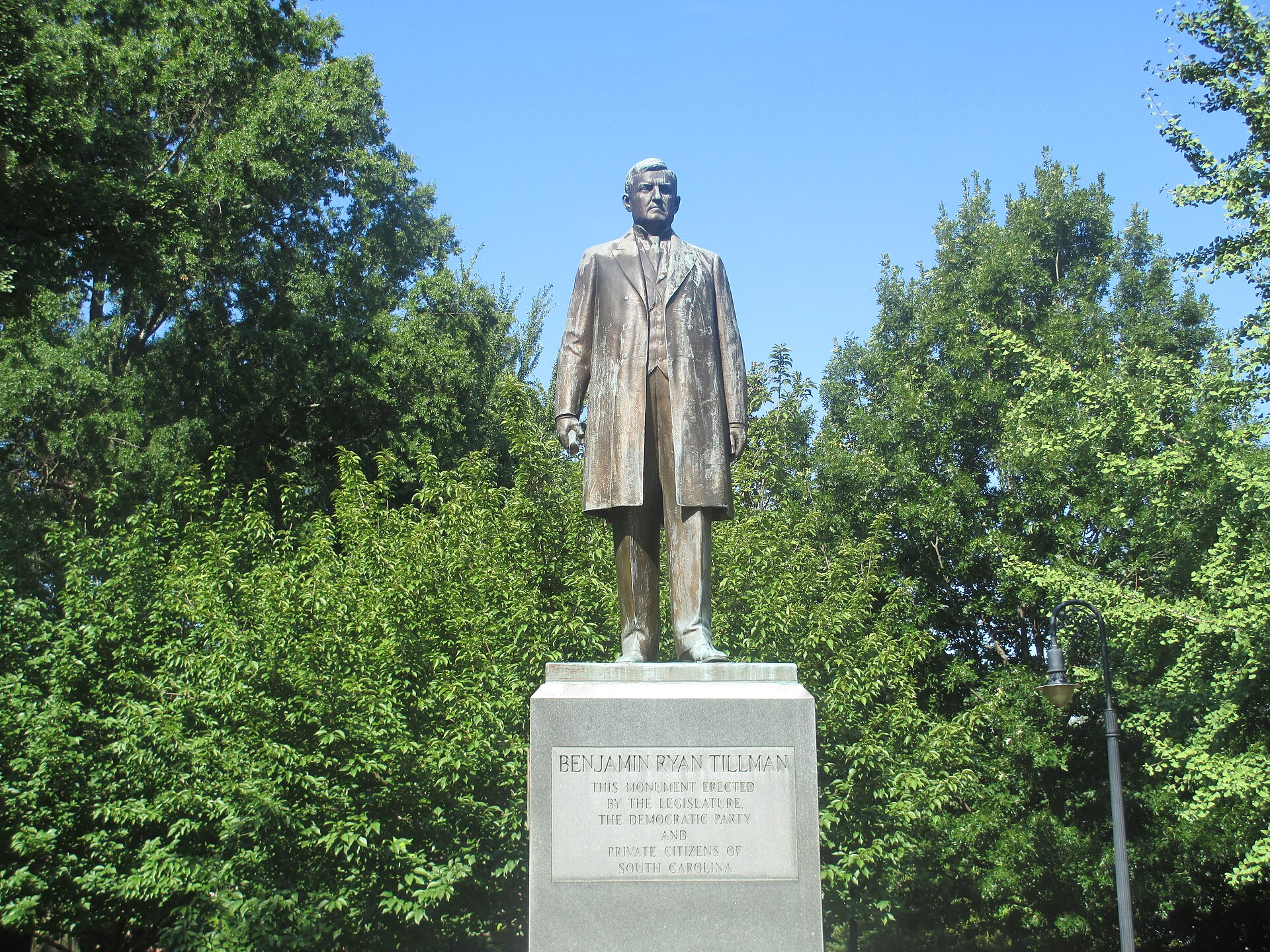
    What happened in Hamburg provides a particularly egregious example of such racial terrorism catapulting political triumph. After that tragedy, several of the Red Shirts ringleaders went on to successful political careers, with two of them becoming U.S. senators – one of whom, Benjamin Tillman, also served as South Carolina governor.

    As Jenny Heckel, then a Clemson University graduate student, noted in her 2016 master’s thesis, it was “not in spite of the white Carolinians’ participation in the murder of six black men, but because of it, they won election to political offices.”


    In South Carolina’s 1876 gubernatorial race, the Democratic candidate, Confederate veteran Wade Hampton III, emerged triumphant and reinstated white supremacy as the fulcrum of state governance. His name had been put forward by former Confederate major general Matthew Butler, who had represented the two white farmers before the Hamburg attack and who himself went on to serve in the U.S. Senate.


    In 1895, South Carolina held a constitutional convention, spearheaded by the aforementioned Hamburg massacre ringleader Tillman, and adopted a new constitution that effectively ended the Black vote in the state.


    An enduring threat


    In the 1890s, renowned abolitionist and orator Frederick Douglass said white vigilantes offered three justifications for the lynchings of Black Americans: stamping out alleged race riots, protecting the white vote share and protecting white women from alleged sexual crimes by Black men.


    The first two were front and center in the Hamburg massacre. In fact, as Heckel reflected a decade ago, “white Carolinians blamed the black militia for starting the riot, and Southern white newspapers created images of riotous blacks to contest black descriptions.”
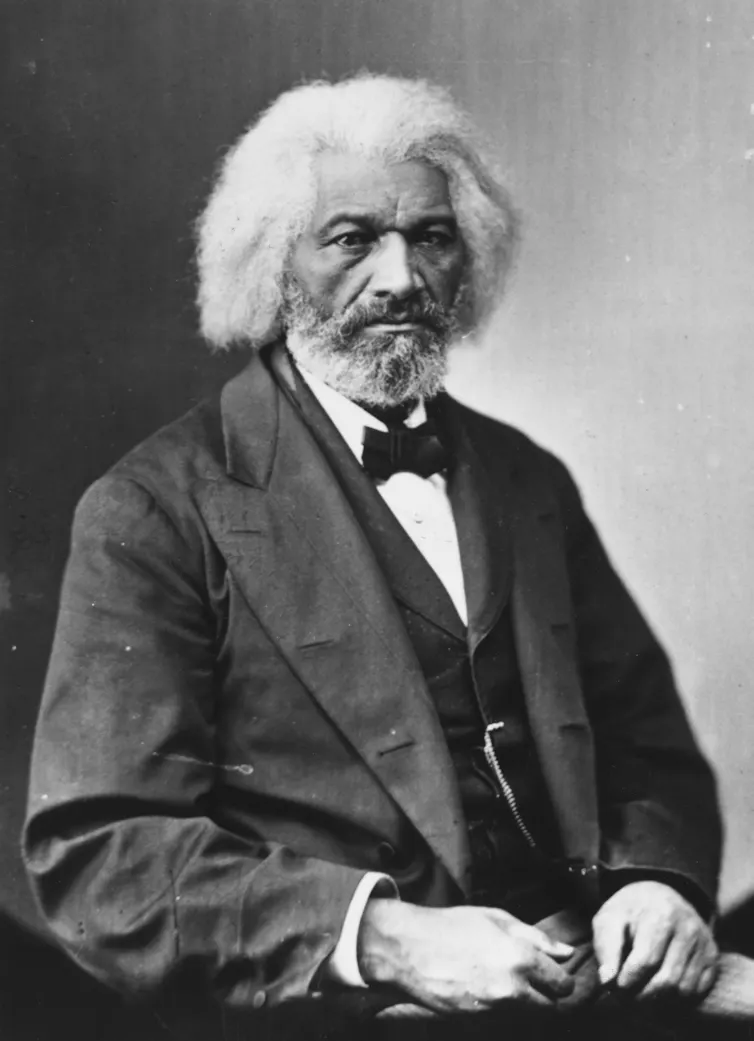
     
    A black-and-white image of a man in a suit and bow tie
    Abolitionist and orator Frederick Douglass said white mobs often justified lynchings as a response to riots, to Black voting and to alleged crimes against white women. Library of Congress/Getty Images
     

    Since the massacre, racial violence has had a long echo in the United States. And in many cases, the same justifications elucidated by Douglass remain.

    Both the Tulsa race massacre and the 1955 murder of Emmett Till, for instance, were sparked by false accusations of sexual harassment or assault made against young Black men.


    The violence persists today. In June 2015, just 150 miles (241 kilometers) from Hamburg, a white supremacist gunman entered the historically Black Mother Emanuel African Methodist Episcopal Church in Charleston, South Carolina, and opened fire, killing nine churchgoers.


    In May 2022, a white supremacist killed 10 Black Americans at the Tops Friendly Market in Buffalo, New York.


    Both gunmen made multiple references to the same conspiracy theories Douglass identified, with the Charleston domestic terrorist going as far as to praise segregation as “a defensive measure” while criticizing the “historical lies, exaggerations and myths” of the historical record of slavery and its aftermath.
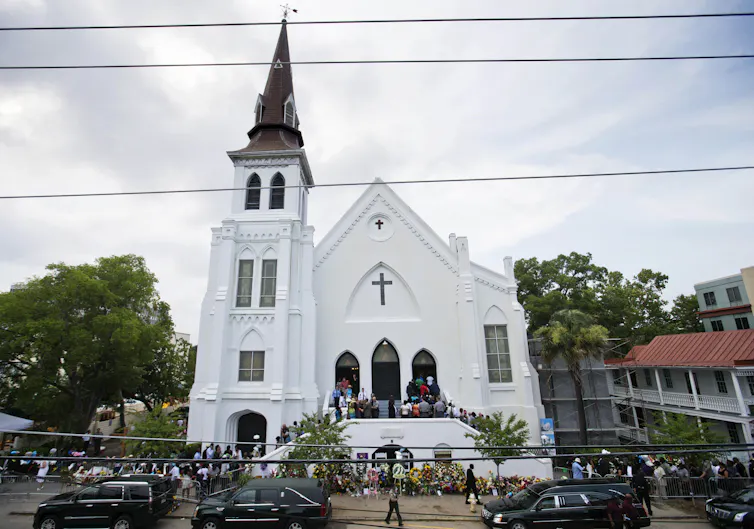
     
    A white church with dozens of people lined up outside, waiting to enter. A memorial with flowers lines the sidewalk.
    People line up to attend the June 2015 wake of Sen. Clementa Pinckney, one of the nine people killed in a shooting at Emanuel African Methodist Episcopal Church in Charleston, S.C. David Goldman/AP Photo
     

    Still, there are key differences between the attacks at Charleston and Buffalo and their Reconstruction predecessors. The political violence that tainted the Reconstruction and post-Reconstruction era clashes with traditional definitions of terrorism, which typically targets a power structure that such violence seeks to upend.


    Instead, attacks like the one in Hamburg, which sought to proactively protect the rights and power of white Americans – and which were often endorsed by state and local governments – have more in common with genocide and ethnic cleansing. Not only did the scale of the broader violence across the South indicate a campaign to mass-murder an ethnic subgroup for political purposes, but Tillman, perhaps the most infamous of the Hamburg murderers, never denied the attack’s goals.


    “We are not sorry for it,” he would proudly recall before the U.S. Senate in 1900. “We of the south have never recognized the right of the negro to govern white men.”


    ‘A painful duty’


    Attempting to commemorate all such anniversaries is an impossible task, simply because of the sheer volume. For example, September marks the 150th anniversary of the Ellenton Riot. In that massacre, Black South Carolinians were systematically hunted throughout their community over an alleged attack on a white elderly woman, which was later proved false. The death toll may have eclipsed 100.


    Countless similar incidents have plagued U.S. history.


    In my view, to tell the story of America’s founding without referencing these profound scars is akin to deceit, if not complicity. Civil rights leader and journalist Ida B. Wells put it this way in 1895: “It becomes a painful duty … to reproduce a record which shows that a large portion of the American people avow anarchy, condone murder and defy the contempt of civilization.”


    Or, as a local retired pastor said of Hamburg commemorations, “We want to keep it burning so people won’t forget what transpired.”


    The Conversation

    Jacob Ware, Adjunct Professor of Domestic Terrorism, Georgetown University


    This article is republished from The Conversation under a Creative Commons license. Read the original article.

     
    • Oklahoma Supreme Court Dismisses Tulsa Race Massacre Survivors’ Case
    • Judge Rules Tulsa Race Massacre Case By 3 Remaining Survivors Can Move Forward
    • A Century Later, Tulsa Puts $105M Toward Healing From Its Most Devastating Crime
    • This Day in History: The Tulsa Race Massacre Ends
    • Healing the Past: 5 Ways to Find Peace on a Trauma Anniversary
    Ben Tillman Hamburg Massacre South Carolina Thehub.news
    TheHub.news Staff
    • Website
    • Facebook
    • X (Twitter)

    TheHub.news is a storytelling and news platform committed to telling our stories through our lens.With unapologetic facts at the center, we document the lived reality of our experience globally—our progress, our challenges, and our impact—without distortion, dilution, or apology.

    Related Stories

    Body Like Serena

    July 15, 2025

    7 Books by Black Authors We Can’t Wait to Read This Summer

    June 20, 2025

    Tiny Desk Goes Big for Black Music Month — Here’s the Lineup

    June 6, 2025

    10 New Books by Black Authors for Your Kid’s Summer Reading List 

    May 30, 2025

    How the 2025 Met Gala Was a Historic Tribute to the Ancestors

    May 8, 2025

    Aja Naomi King and Katori Hall to Be Honored at the 10th Annual Black Women Film Network Summit

    March 10, 2025
    Recent Posts
    • US and WHO Monitor Russia After Anti-Plague Lab Worker Dies
    • This Day in History: October 7th
    • Where Are All the Black Play-By-Play “A-Team” Broadcasters?
    • AfroTech Conference to Return to Texas Next Month for Its 10th Anniversary
    • Did You Know Activist Fannie Lou Hamer Was Born on This Day?

    US and WHO Monitor Russia After Anti-Plague Lab Worker Dies

    By Veronika Lleshi

    This Day in History: October 7th

    By TheHub.news Staff

    Where Are All the Black Play-By-Play “A-Team” Broadcasters?

    By FirstandPen

    AfroTech Conference to Return to Texas Next Month for Its 10th Anniversary

    By Veronika Lleshi

    Subscribe to Updates

    A free newsletter delivering stories that matter straight to your inbox.

    About
    About

    TheHub.news is a storytelling and news platform committed to telling our stories through our lens. With facts at the center, we document the lived reality of our experience globally—our progress, our challenges, and our impact—without distortion, dilution, or apology.

    X (Twitter) Instagram YouTube

    US and WHO Monitor Russia After Anti-Plague Lab Worker Dies

    By Veronika Lleshi

    This Day in History: October 7th

    By TheHub.news Staff

    Where Are All the Black Play-By-Play “A-Team” Broadcasters?

    By FirstandPen

    AfroTech Conference to Return to Texas Next Month for Its 10th Anniversary

    By Veronika Lleshi

    Subscribe to Updates

    A free newsletter delivering stories that matter straight to your inbox.

    © 2026 TheHub.news A 501(c)(3) tax-exempt organization.

    Type above and press Enter to search. Press Esc to cancel.