

I’ll never forget the first time I saw a white person be the “only one” in the room.
I was 19 at the time, just starting my second year at the University of Chicago. She was a first-year in my house, hailing from a suburb in Texas. We hung out for house events and at ultimate frisbee nights on the Museum of Science lawn. Years later, she attended my wedding. We were friends. Maybe still would be, if we lived closer.
So when she approached me to ask if I would go to the post office down on 77th and Cottage Grove with her, I agreed.
I understood exactly why she asked me, but I did it anyway.
From the moment we hopped on the No. 4 bus and headed south out of Hyde Park, I clocked it right away. The side-to-side glances. The tense facial expression. The way she shrunk into her seat as I stood next to her.
She was terrified.
She’d probably never—or at best, rarely—been in this situation before in her life. Yet that was almost my entire life up to that point: living in spaces where no one looked like or came from the same space as I did.
What she didn’t realize is that she, as the only white person, was the safest person on that bus, with or without me.
Yet if the situations had been reversed, I couldn’t have said the same.
That’s why the conversation around Caitlin Clark, especially in this current environment, has lost any pretense about being about basketball.
******
This week, as Black people around the country relive the trauma and threat of being “the only one” in light of 18-year-old Nolan Wells’ untimely, mysterious death in the company of an all-white friend group, U.S. House Republicans are addressing their own tragedy.
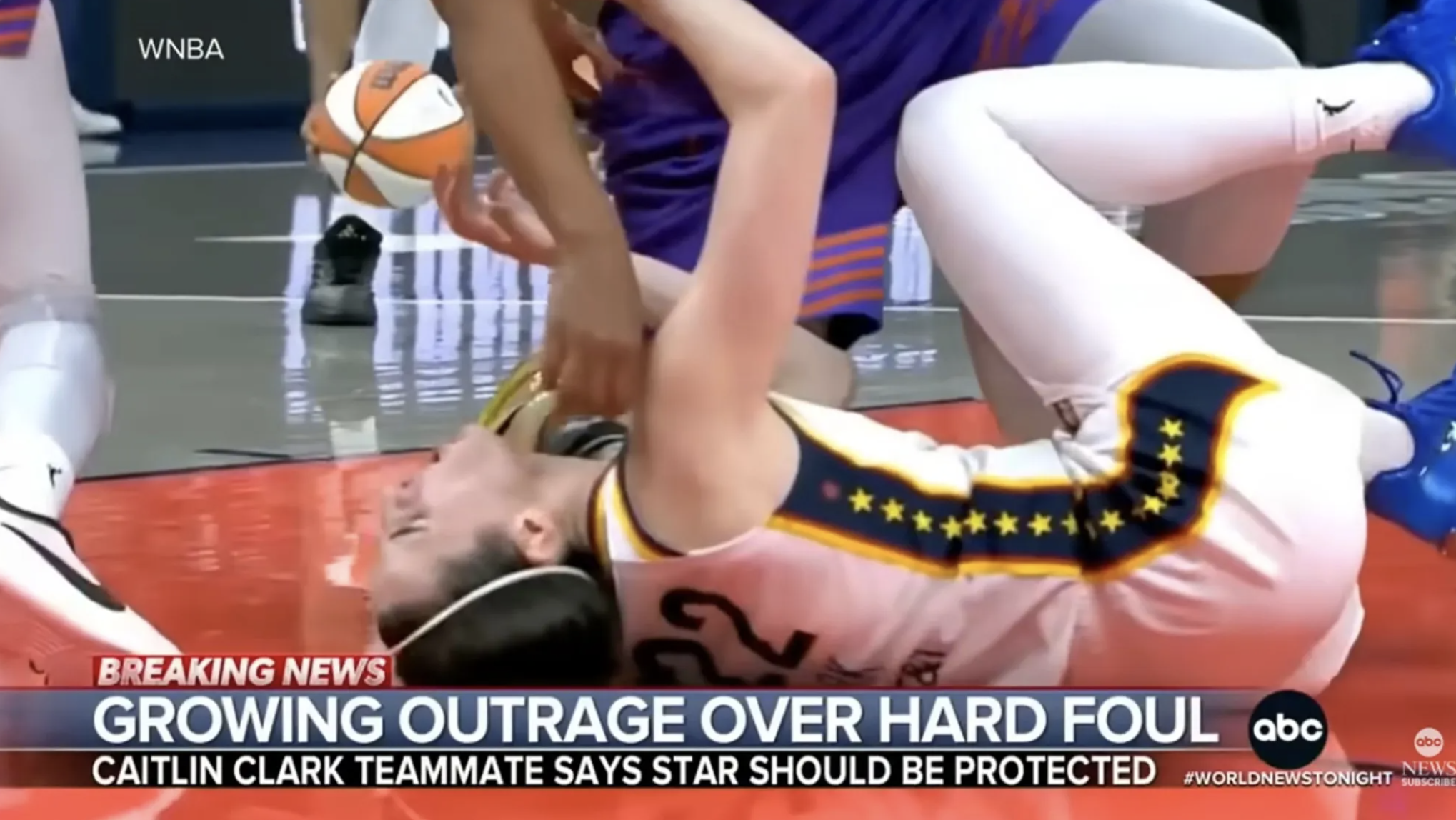
Hard fouls on Clark.
“Clark has been hip-checked, poked in the eye, and struck in the throat during games. These incidents go far beyond routine physical play, yet the WNBA and its officiating have too often failed to address these unacceptable incidents and hold players accountable,” wrote Texas Representative August Pfluger in a letter, signed by 11 Republican lawmakers, to WNBA commissioner Cathy Englebert.
“Caitlin Clark has transformed women’s basketball and inspired a new generation, while getting hammered for it with no accountability,” Alford, one of the undersigned lawmakers, said in a statement. “That’s not competition, that’s failure. Protect your players, enforce your rules, or don’t be surprised when it raises serious federal civil rights questions.”
I recently wrote about the singularity around Clark and how it reflects white America’s need to use Clark’s popularity to colonize women’s basketball, after which I received comments to the effect of: “I agree with most of what you’re saying, but why don’t you talk about the clear bias and mistreatment of Clark by the WNBA and its players?”
At the time, I responded by noting that the conversation is already oversaturated but if you wanted to read one of them, please do so.
I wanted to discuss the Clark phenomenon from a broader, more existential view around why America has chosen Clark as the savior of women’s basketball and not the Black women who built the league and the other straight, white stars who, after having gone through their own phase being called a “Great White Hope”, no longer carry that distinction.
As I watch conservative commentators and lawmakers, and even basketball legends like Dick Vitale, continue to harp on the notion of Clark being “targeted” by jealous, embittered WNBA players, my patience with these narratives about Clark has thinned.
And Wells’ death, coupled with the myriad stories of similar stories happening to countless Black people, has made it disappear.
What they don’t understand—or want to admit—is that Clark is in no real danger.
Yes, she’s taken hard fouls, including a few completely unnecessary ones—I don’t include the completely accidental Alyssa Thomas play in that category, by the way. But she punches opponents in the face and throat plenty without penalty, without anyone rushing to her opponents’ defense (ask Kiana Williams about being hit the neck by Clark), so “protect the players” is beginning to sound suspiciously like “let Clark do whatever she wants and lie down on the court so she can win and we can feel like we won, too.”