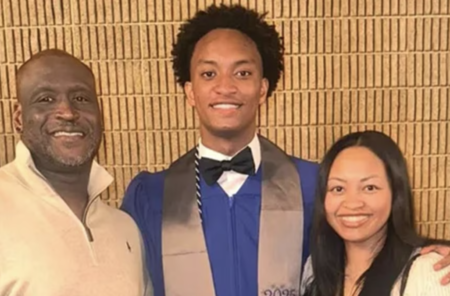



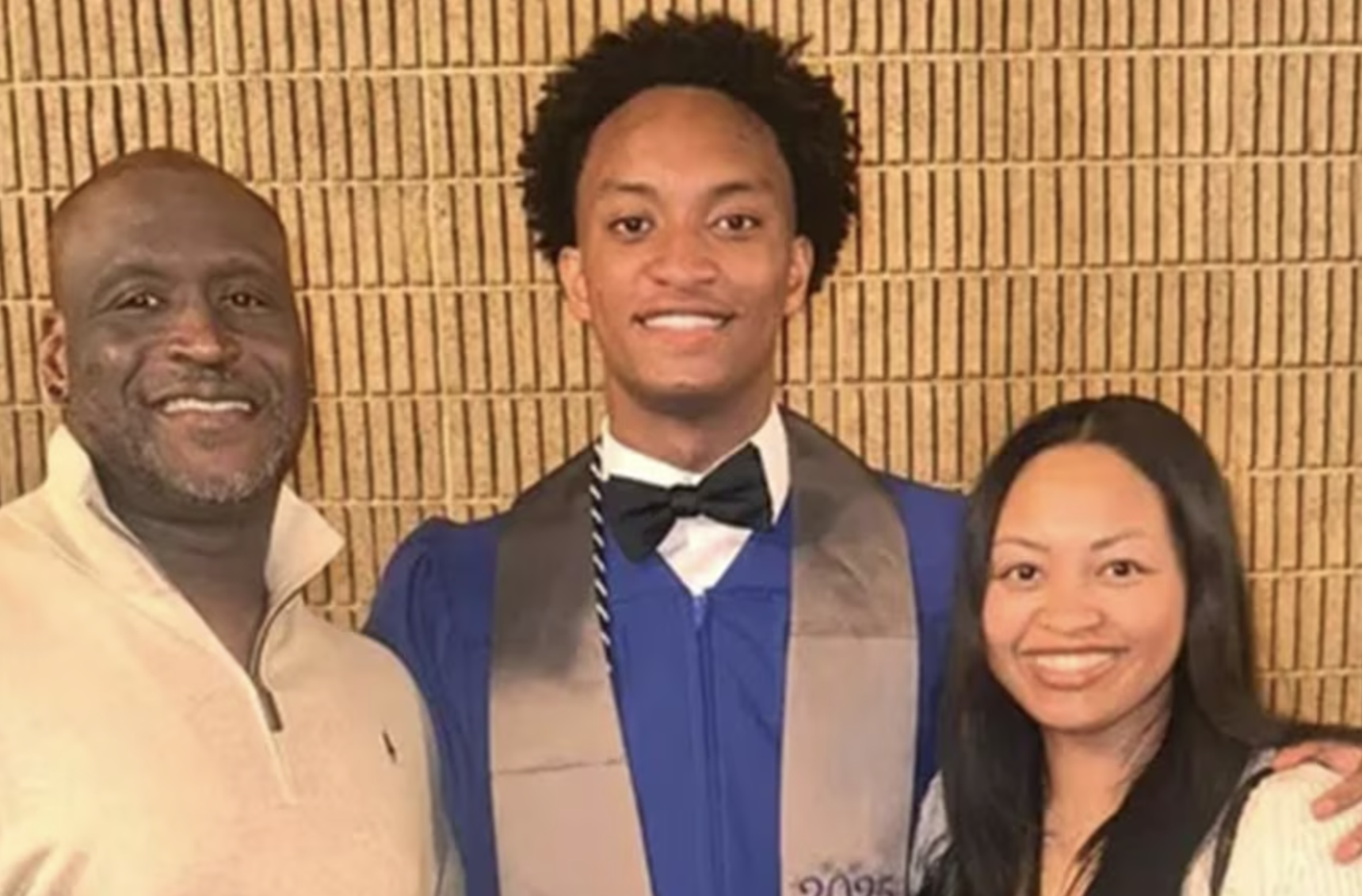
The mother of 18-year-old Nolan Wells pleaded on Friday (July 10) for anyone with information on her son’s death to come forward.
In a press conference, Christine and Elmore Wonsley called for a proper investigation into Wells’ death. Officials are alleging that Wells told his friends to leave the island of Mississippi’s Gulf Coast and the 18-year-old, who was an elite athlete, died by drowning.
Civil rights attorney Ben Crump, who is representing the family, confirmed that the family is commissioning an independent autopsy performed by a forensic pathologist based in Washington, D.C. The autopsy will be separate from the one conducted by Mississippi police.
Wells’ phone will also be looked at by experts. Messages were reportedly deleted from his phone. The phone was found in possession of one of the men who traveled with Wells to Horn Island. Christine Wonsley herself recovered it by tracking it with Life360.
The expert will recover the messages before turning the phone into law enforcement.
Early Monday, after the weekend of July 4th, Wells’ body was found on the shore of the Mississippi Island, which is only accessible by boat. He was accompanied by a group of high school friends on the remote island, which hosted about 200 people for the holiday weekend. His group of three friends, all of whom are white, said that he wanted to stay on the island with a young woman.
The young woman provided a conflicting account, claiming that he got on the boat to leave with his friends. A video is also reportedly circulating that shows Wells arguing with his friends.
Several open-ended questions about the case itself and the way that law enforcement is conducting the investigation of Wells’ death are prompting a discussion about how missing persons cases involving Black Americans are handled. Wells’ death is also starting conversations about racism, particularly within the state of Mississippi.
In Mississippi, in 1955, 14-year-old Emmett Till was abducted and murdered by a mob of white people after Carolyn Bryant falsely accused him of sexual harassment. Although the murderers were acquitted by an all-white-male jury, Till’s death helped galvanize the Civil Rights Movement as his murder drew attention to racism and hate crimes across the nation.
Eleven years after Till’s murder, civil rights activists James Chaney, Andrew Goodman and Michael Schwerner were murdered by white supremacists. Bodies were found over a month after the activists were reported missing. All three of their bodies were exhumed 14 feet underground on a local farm.
Just ten months ago, 21-year-old Demartravion “Trey” Reed was found hanging on the Delta State University campus in Mississippi. As Mississippi state officials ruled his death as a suicide, his family demanded answers, reporting that they received “conflicting accounts and incomplete information” about his death.
“The history of Mississippi is something that they don’t just read about in books,” said Crump per ABC News. “It’s a lived experience for many Black Americans that oftentimes when our children are killed in highly questionable situations that there is this notion that ‘Oh, there was nothing wrong, no foul play, let’s just sweep it under the rug.’ Well, we refuse to sweep it under the rug.”