

On this day in 1852, Frederick Douglass, social justice warrior, delivered a speech in New York that rocked the nation. While many focus on the question: “What to the slave is the Fourth of July? What isn’t highlighted is that he was in New York on July 5th to deliver a speech in commemoration of the emancipation of Africans in New York—not the United States.
New York abolished slavery on July 4, 1817, but because of white violence that erupted because Blacks had the audacity to celebrate on the same day, they moved the festivities to July 5th. Douglass was there for that. But Douglass used the invitation as an opportunity to point out that while in New York, Africans were free, it was the height of hypocrisy to celebrate while millions of others still languished in bondage.
When the 13 Colonies celebrated their formation as the United States on the Fourth of July 1776 with its cry of “liberty and justice for all,” it still enslaved millions of Africans. In fact, all of the 13 original colonies held people in bondage.
The first state to abolish slavery wasn’t even among the original 13. It was Vermont, which was an independent territory at the time and did not become part of the United States until 1791. But in 1777, one year after the official formation of the United States, Vermont’s constitution banned the enslavement of adults (it had a loophole that allowed for children to be enslaved until they turned 21 years of age for men and 18 for women). When Vermont became the 14th state in the USA, it was the only state to prohibit slavery.
New York, however, was the first original state to abolish slavery—gradually. In 1799, New York passed a law that said children born to enslaved mothers after July 4, 1799, were legally free. However, they were required to “work” as indentured servants wherever their mother was enslaved until the age of 28 for men and 25 for women. serve the mother’s enslaver as indentured servants until age 28 for men and 25 for women.
(Note: The average life expectancy for an enslaved person during this time in New York was between the ages of 21 and 36. Archaeological studies of the excavated remains of the African Burial Ground in Manhattan revealed that more than 50% of African men and 80% of African women did not survive past the age of 40. Nearly half of the population didn’t make it to 12).
In 1817, New York passed legislation freeing those born prior to the 1799 Act. And in 1827, on the Fourth of July, New York declared slavery over.
(Fun Fact: Sojourner Truth was born enslaved in New York in 1797, and walked away from bondage in 1826, a year before New York officially abolished slavery. She left all but her baby girl on the plantation and her former “master” sold her son down south. When New York ended slavery, a year later, Truth sued her son’s new master for his freedom and won. It was the first time a Black woman sued a white man and won in this country.)
On July 4, 1827, New York freed all enslaved Blacks—the date to coincide with the nation’s Independence Day. It became a holiday for the 30,000 newly freed Africans. Celebrations erupted throughout the state as parades and other festivities commenced. But the white folks didn’t like the idea of celebrating their liberation alongside the formerly enslaved.
For the Blacks, the celebration was an opportunity to “claim not only, of course, their freedom [and] the end of slavery, but also their place in the nation,” says historian and Northwestern University professor Leslie M. Harris, who wrote In the Shadow of Slavery: African Americans in New York City, 1626-1863.
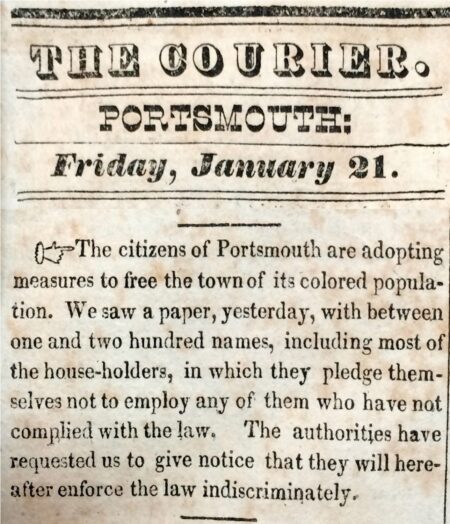
But their jubilance was often met by violence from whites who wanted to make sure that they knew their place—and that place would not be equal or beside them.
“There would be parades and things that celebrated the Fourth of July by the white majority, but Black people often found those times to be…perilous…in terms of anti-Black violence,” Harris wrote.
Instead of the Fourth of July, the following day would become the time for Blacks to celebrate their liberation. That day would be known in New York State as the Fifth of July or Emancipation Day.
Frederick Douglass was invited by the Rochester Ladies’ Anti-Slavery Society in Rochester, New York, as their keynote speaker for their annual celebration of the end of slavery in their state.
Douglass used this stage to ask a larger question—not just of those several hundred in that room that day, but also of the country itself: “What to the slave (to those in bondage, to the oppressed) is your Fourth of July?”
While Douglass left the people of his time with that question, we still have several to answer in our time: What does it mean to be an American? Is America a nation? And what does freedom look like in a time such as this?
In order for these celebrations to have any meaning, we must actively and purposefully define who we are in this place and fight for our common humanity and liberation daily.
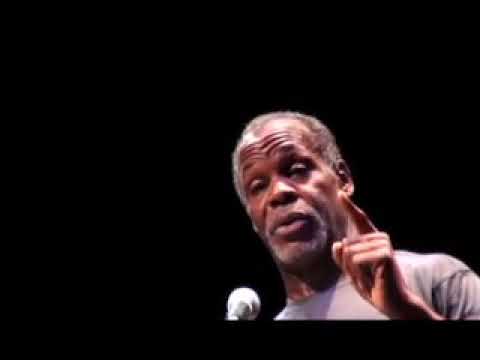
Watch Danny Glover deliver Douglass’s speech below:
You can read the entire speech below.