


Close Menu
TheHub.news

    First Came the Flock Cameras. Now Local Cops Want Autonomous Drones.

    By TheHub.news Staff

    How Flo Anthony Changed the Way We Tell Black Stories

    By Danielle Bennett

    WHO Says Congo’s Ebola Outbreak Began Months Earlier Than Reported

    By Veronika Lleshi

    Subscribe to Updates

    Get the latest creative news from FooBar about art, design and business.

    X (Twitter) Instagram YouTube
    X (Twitter) Instagram YouTube
    TheHub.news
    Support Our Work
    • Home
    • Our Story
      • News & Views
        • Politics
        • Injustice
        • HBCUs
        • Watch
      • Food
        • Cuisine Noir
        • soulPhoodie
      • Passport Heavy
      • Travel
      • Diaspora
      • This Day
      • Entertainment
      • History
      • Art
      • Music
    • Health
    • Money

      Cashflow Coach: I Planted a Money Tree!

      August 4, 2026

      Breaking Down the 2 Different Types of Income

      July 7, 2026

      Black Americans Are Already Living Through a Recession

      July 6, 2026

      You Must Be an Owner to Win 

      June 23, 2026

      Economic Empowerment Has Always Been a Part of Black History

      February 12, 2026
    • Books
    • Business
    • Sports
      1. First and Pen
      2. View All

      Enes Kanter, Royce White’s Foolishness Is Part of a Much Larger Attack on Women’s Sports and Rights

      August 11, 2026

      Chicago White Sox Great Tim Anderson Retires

      August 11, 2026

      NFL Running Backs Finally Get Their Just Paydays

      August 10, 2026

      The WPBL Can Right Past Wrongs and Welcome Black Women Baseball Players

      August 3, 2026

      Enes Kanter, Royce White’s Foolishness Is Part of a Much Larger Attack on Women’s Sports and Rights

      August 11, 2026

      Chicago White Sox Great Tim Anderson Retires

      August 11, 2026

      NFL Running Backs Finally Get Their Just Paydays

      August 10, 2026

      The WPBL Can Right Past Wrongs and Welcome Black Women Baseball Players

      August 3, 2026
    • Tech
    • Podcasts
      1. Karen Hunter is Awesome
      2. Lurie Breaks it Down
      3. Human(ing) Well with Amber Cabral
      4. Financially Speaking
      5. In Class with Carr
      6. View All

      First Came the Flock Cameras. Now Local Cops Want Autonomous Drones.

      August 13, 2026

      How Flo Anthony Changed the Way We Tell Black Stories

      August 13, 2026

      WHO Says Congo’s Ebola Outbreak Began Months Earlier Than Reported

      August 13, 2026

      This Day in History, August 13th

      August 13, 2026

      First Came the Flock Cameras. Now Local Cops Want Autonomous Drones.

      August 13, 2026

      How Flo Anthony Changed the Way We Tell Black Stories

      August 13, 2026

      WHO Says Congo’s Ebola Outbreak Began Months Earlier Than Reported

      August 13, 2026

      This Day in History, August 13th

      August 13, 2026

      First Came the Flock Cameras. Now Local Cops Want Autonomous Drones.

      August 13, 2026

      How Flo Anthony Changed the Way We Tell Black Stories

      August 13, 2026

      WHO Says Congo’s Ebola Outbreak Began Months Earlier Than Reported

      August 13, 2026

      This Day in History, August 13th

      August 13, 2026

      First Came the Flock Cameras. Now Local Cops Want Autonomous Drones.

      August 13, 2026

      How Flo Anthony Changed the Way We Tell Black Stories

      August 13, 2026

      WHO Says Congo’s Ebola Outbreak Began Months Earlier Than Reported

      August 13, 2026

      This Day in History, August 13th

      August 13, 2026

      First Came the Flock Cameras. Now Local Cops Want Autonomous Drones.

      August 13, 2026

      How Flo Anthony Changed the Way We Tell Black Stories

      August 13, 2026

      WHO Says Congo’s Ebola Outbreak Began Months Earlier Than Reported

      August 13, 2026

      This Day in History, August 13th

      August 13, 2026

      In Class with Carr: Beginning Black August

      August 3, 2026

      In Class with Carr: “Rock the Vote!”

      July 21, 2026

      In Class with Carr: “Odds and Ends”

      July 13, 2026

      In Class with Carr: “Belonging Beyond 1776: The Semiquincentennial Blues”

      July 6, 2026
    TheHub.news
    Diaspora

    FIFA’s Haiti Jersey Ban Echoes the Long Campaign to Discredit and Downplay the Haitian Revolution

    By Insight NewsJuly 3, 20266 Mins Read
    Share Email Copy Link
    Share
    Facebook Twitter LinkedIn Email Copy Link Threads

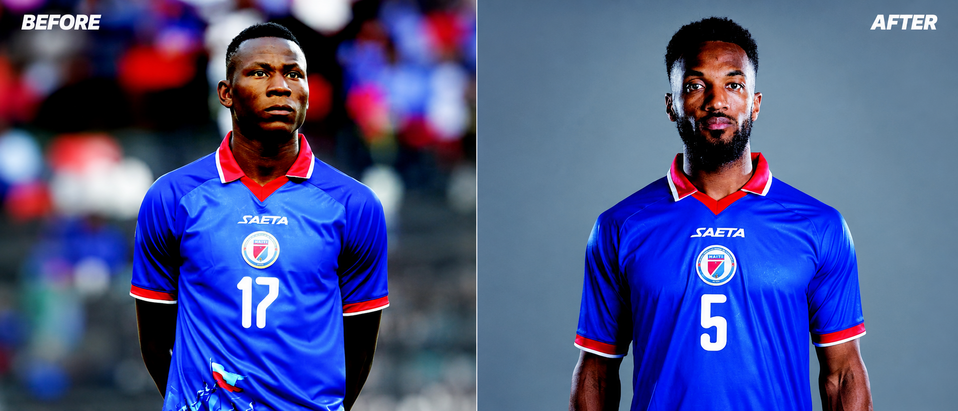
    Ahead of its first match in the 2026 World Cup, the Haitian national soccer team was forced to make a last-minute change. But it didn’t have anything to do with its roster or travel plans. It was the team’s jersey.

    FIFA, the sport’s global governing body, said the jersey design violated its rules, which ban political slogans or imagery.

    FIFA didn’t elaborate on which components of the jersey were problematic. But the issue almost certainly stemmed from the small image of a group of people holding the Haitian flag that appeared on the right hip of the jersey. After the decision was made, a spokesperson for the team confirmed that the original jersey included “an image depicting the Battle of Vertières and some independence heroes raising the Haitian flag.”

    The commemoration was doubly symbolic since Haiti officially qualified for the World Cup for just the second time in the men’s tournament’s history on Nov. 18, 2025, which also marked the 222nd anniversary of the famous 1803 battle that secured Haiti’s victory over France in its war for independence.

    While the spokesperson for the team described the image as including “some independence heroes,” I think it’s safe to assume that Jean-Jacques Dessalines, who led the Haitian revolutionaries during the Battle of Vertières, is the central figure of the vignette.

    The subject of my 2025 book, “I Have Avenged America,” Dessalines was the man who declared Haiti’s independence from France, and he was Haiti’s first head of state.

    But because of his radical and violent fight for freedom, Dessalines’ enemies often described him as ferocious and barbaric, both during his lifetime and in the centuries after his death. They sought to undermine his leadership and undermine Haiti as a country, depicting him as a figure whose sole purpose was violence for violence’s sake, rather than a revolutionary driven by any ideological or political commitments.

    A successful slave revolution

    In the late 17th century, France had colonized the western third of Hispaniola, the island that Haiti now shares with the Dominican Republic.

    By forcing enslaved men, women and children to work on sugar and coffee plantations, the French turned the colony, which they called Saint-Domingue, into one of the wealthiest in the world.

    In August 1791, enslaved men and women rose up in revolution. It was the world’s first and only successful slave revolution: Within two years, they forced the French to abolish slavery.

    The Haitian Revolution – as the event is known today – became a war for independence only when the French tried to reinstitute slavery in 1802. Dessalines declared Hai­tian independence on Jan. 1, 1804, and Haiti became the first nation to permanently ban slav­ery.

    The ‘silencing’ of the revolution

    The effort to discredit the Hai­tian Revolution by targeting Dessalines began during the war for independence against the French. Criticism only in­tensified after the Declaration of Independence.

    That year, French propagandist Louis Dubroca, a mouthpiece of the Napoleonic government, published a slant­ed, factually incorrect biogra­phy of Dessalines. Even though the book got some basic facts wrong, such as claiming that Dessalines was born in Africa, its impact has been indelible.

    “Cunning and hypo­critical,” Dubroca wrote, Des­salines “is also brutal, impetu­ous, and violently excessive. He inspires a kind of terror in all around him.”

    An image that accom­panied an 1806 Spanish transla­tion of the book still haunts the memory of the Haitian Revolu­tion: It depicts Dessalines hoist­ing a sword in one hand and holding the severed head of a white woman in the other

    In the decades after the revolution, opponents of the young nation routinely claimed that Dessalines had massacred the entire white population on the island after declaring inde­pendence.

    Yes, in the context of ongoing war with France, Des­salines executed some French citizens, including those who had participated in Napoleon Bonaparte’s bloody campaign from 1802 to 1803 to regain control over the colony and re­introduce slavery. After 1804, however, hundreds of white French people remained in Haiti and were naturalized as Haitian citizens, securing equal rights under Dessalines’ 1805 Haitian constitution.

    But the facts didn’t matter. The hyperbolic narrative of unmitigated violence served to discredit and undermine the revolution’s successes.

    Thomas Jefferson be­came so worried that enslaved people in the United States would be inspired by the Hai­tians that in his correspondence he frequently depicted the Hai­tian Revolution as a violent upheaval rather than a struggle for freedom. Jefferson went on to ban trade with Haiti in 1806, and the U.S. did not formally recognize Haiti’s independence until 1862.

    The strategy of deny­ing Haiti’s success became so effective that the Haitian anthro­pologist Michel-Rolph Trouillot called it the “silencing” of the Haitian Revolution.

    A pattern emerges

    The World Cup jersey ban marks Haiti’s second sartorial controversy of 2026.

    In early 2026, the In­ternational Olympic Committee required Haiti’s Winter Olym­pics team to modify its opening ceremony outfit for similar rea­sons.

    The garments, de­signed by Stella Jean, a Haitian Italian fashion designer, fea­tured a painting of the Haitian revolutionary Toussaint Louver­ture, Dessalines’ fellow revolu­tionary.

    Once again, the de­sign was deemed political.

    Dessalines and Louverture fought togeth­er throughout the revolution, but they are often portrayed as opposites. Louverture, in this framing, is strategic, diplomat­ic, rational and reasonable. In contrast, Dessalines is typically described as violent, unthink­ing, emotional and heartless.

    But there’s a note­worthy distinction between the Olympic ban and the current one imposed by FIFA. For the Olympics opening ceremony, the banned outfits depicted a single, specific person: Louver­ture. In the case of the World Cup jerseys, the mere impli­cation of Dessalines, standing alongside his fellow revolu­tionaries, was enough to elicit a backlash.

    Ever since the Haitian revolutionaries first rebelled against the French in 1791, the proslavery and imperialist pow­ers of Europe and the Americas had a special interest in ensur­ing that Haiti failed.

    Both then and now, targeting revolutionaries like Dessalines has supported that goal. The irony is that more people may be learning about Haiti’s revolutionary history in the process. Saeta, the company that designed the controversial jersey, has announced on Insta­gram that it will restock it. The jersey has become a fan favor­ite.

    Disclosure statement

    Julia Gaffield does not work for, consult, own shares in or receive funding from any company or organisation that would benefit from this article, and has disclosed no relevant af­filiations beyond their academic appointment.

    • Social Media Celebrates Haitian Flag Day
    • Black August Is a Time Of Revolution and Black Sportswomen
    • Karen Hunter Explains How Colonialism Shaped the Way Jesus Is Still Depicted
    • What You Should Know About the Haitian Revolution
    • Afro Connect: Haitian Immigration Update
    FIFA Haiti Jersey World Cup
    Insight News

    Insight News started in 1974 as a color cover magazine based in and serving Minneapolis’ African American north side. It was owned by Graphic Services, Inc., a general printing and magazine publishing firm in Northeast Minneapolis. Al McFarlane, headed the Midwest Public Relations division of Graphic Services. McFarlane, a 26 year-old media enthusiast, had previously worked for the St. Paul Pioneer Press as a reporter and for General Mills in public relations. He purchased rights to Insight News in 1975 and began publishing as a community newspaper in 1976.

    Related Stories

    ICE Is Strapping Ankle Monitors on Haitians as Trump’s TPS Crackdown Takes Effect

    August 10, 2026

    Soccer’s Racism Pauses for Nothing, Including the World Cup

    July 10, 2026

    NYC Mayor Zohran Mamdani Secures 1000 $50 World Cup Tickets for NYers

    May 21, 2026

    Jamaica, Haiti and Cuba Brace for Its Strongest Hurricane Ever as Melissa Hits Category 5

    October 27, 2025

    Meet the Stars of the World Cup: Sadio Mané

    July 8, 2025

    Racists Target Black Players After Euro 2020 Final

    January 2, 2024
    Recent Posts
    • First Came the Flock Cameras. Now Local Cops Want Autonomous Drones.
    • How Flo Anthony Changed the Way We Tell Black Stories
    • WHO Says Congo’s Ebola Outbreak Began Months Earlier Than Reported
    • This Day in History, August 13th
    • Make Measles Great Again? Trump Just Rewrote the Childhood Vaccine Schedule

    First Came the Flock Cameras. Now Local Cops Want Autonomous Drones.

    By TheHub.news Staff

    How Flo Anthony Changed the Way We Tell Black Stories

    By Danielle Bennett

    WHO Says Congo’s Ebola Outbreak Began Months Earlier Than Reported

    By Veronika Lleshi

    This Day in History, August 13th

    By Shayla Farrow

    Subscribe to Updates

    A free newsletter delivering stories that matter straight to your inbox.

    About
    About

    TheHub.news is a storytelling and news platform committed to telling our stories through our lens. With facts at the center, we document the lived reality of our experience globally—our progress, our challenges, and our impact—without distortion, dilution, or apology.

    X (Twitter) Instagram YouTube

    First Came the Flock Cameras. Now Local Cops Want Autonomous Drones.

    By TheHub.news Staff

    How Flo Anthony Changed the Way We Tell Black Stories

    By Danielle Bennett

    WHO Says Congo’s Ebola Outbreak Began Months Earlier Than Reported

    By Veronika Lleshi

    This Day in History, August 13th

    By Shayla Farrow

    Subscribe to Updates

    A free newsletter delivering stories that matter straight to your inbox.

    © 2026 TheHub.news A 501(c)(3) tax-exempt organization.

    Type above and press Enter to search. Press Esc to cancel.