


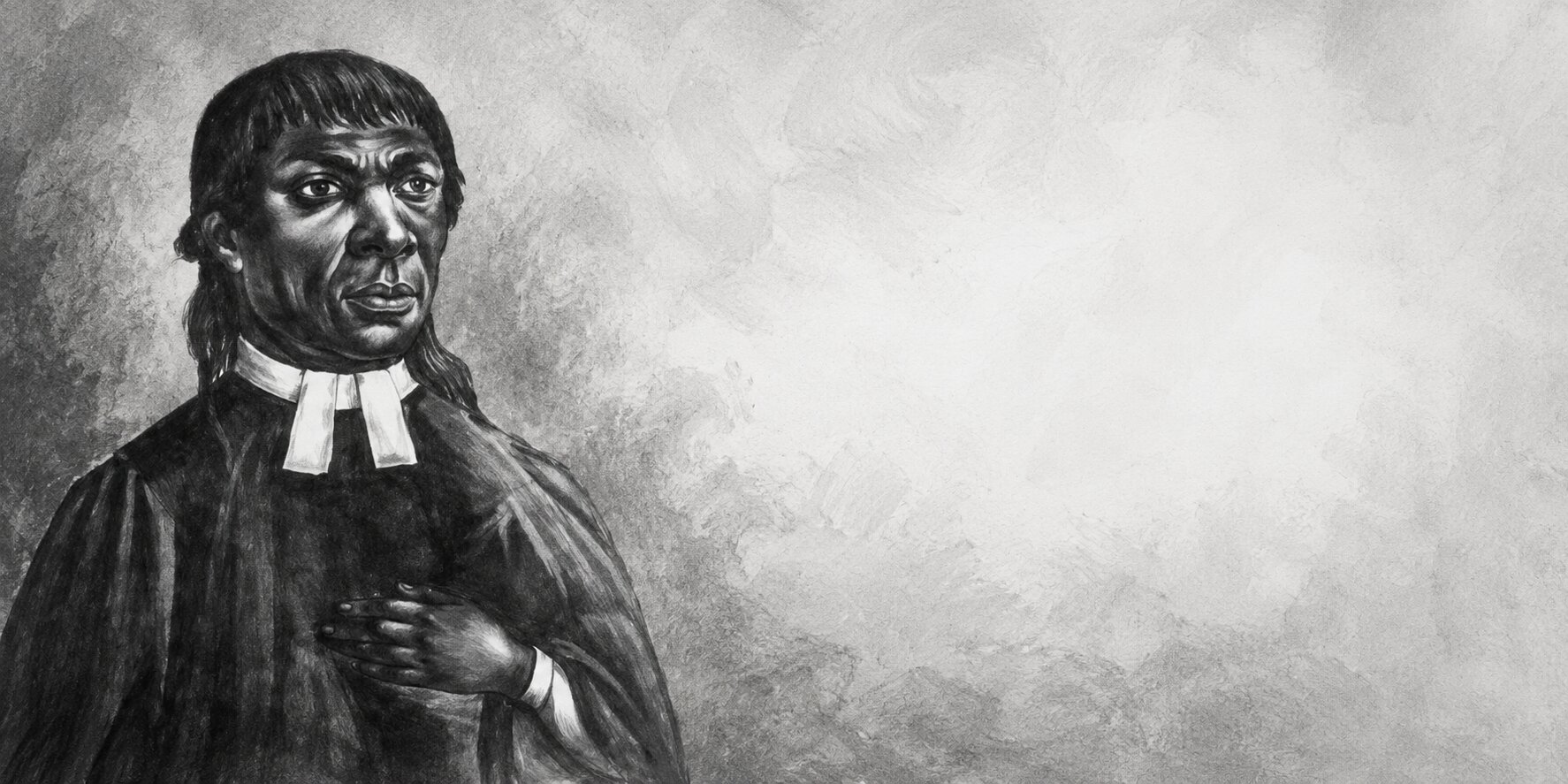
On May 15, 1785, John Marrant, a free Black preacher born in colonial America, was ordained as a Methodist minister in Bath, England.
Marrant would emerge as one of the first Black missionaries to preach extensively among Native American communities and one of the earliest Black evangelical voices to publish his own life story.
Born in New York City in 1755, Marrant spent much of his childhood in Charleston, South Carolina, after the death of his father. His family later moved through Florida and Georgia, where he learned to read and write, an uncommon privilege for a Black child in the colonial South. He studied music, played violin and French horn, and performed for wealthy audiences in Charleston before apprenticing as a carpenter.
His life changed dramatically at age 13 after hearing the preacher George Whitefield during the religious revivals known as the Great Awakening. Marrant described collapsing during the sermon and undergoing a spiritual conversion that alienated him from parts of his family. After leaving home, he wandered into the wilderness outside Charleston and eventually lived among Cherokee communities for nearly two years.
According to his memoir, Marrant preached Christianity among Cherokee, Creek and Catawba communities while learning their customs and language. Historians regard him as one of the earliest Black missionaries to work closely with Native Americans in the colonial era. His writings also documented the complicated relationships between Black and Indigenous communities in 18th-century America.
During the American Revolution, Marrant aligned himself with the British and later relocated to London. There, he became associated with the Countess of Huntingdon’s Connexion, an evangelical movement tied to the rise of Methodism. Supported by Selina Hastings, the Countess of Huntingdon, Marrant entered the ministry and was ordained on May 15, 1785.
Later that year, he sailed to Nova Scotia to minister to Black Loyalists, formerly enslaved people who had joined the British cause during the war in exchange for freedom. In Birchtown, one of the largest free Black settlements in North America, Marrant founded a church and traveled widely preaching to Black settlers, white congregations and Indigenous communities.
His 1785 memoir, “A Narrative of the Lord’s Wonderful Dealings with John Marrant”, became one of the earliest published autobiographies by a Black writer in North America and circulated widely in Britain and the United States.