



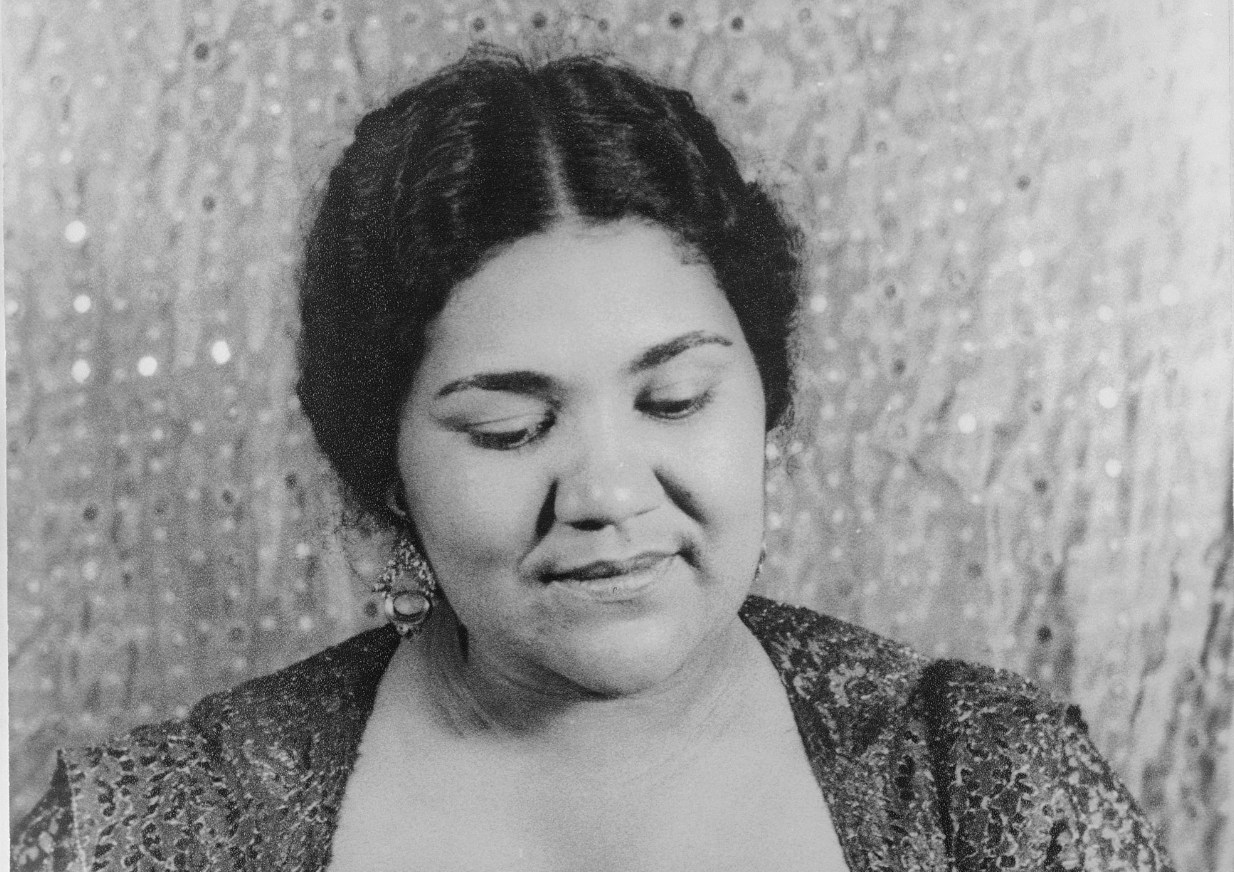
Dorothy Maynor died on February 19, 1996, in West Chester, Pennsylvania, closing the life of a singer and educator who reshaped American concert music and arts access long before those contributions were widely acknowledged.
Born Dorothy Leigh Mainor on Sept. 3, 1910, in Norfolk, Virginia, Maynor was the daughter of the Rev. John J. Mainor, a Methodist minister, and Alice Jefferson Mainor. She showed musical promise early and pursued formal training at Hampton Institute, where she studied with composer and educator R. Nathaniel Dett. After graduating in 1933, she earned a four-year scholarship to the Westminster Choir School in Princeton, New Jersey, a rare opportunity for a Black classical singer at the time.
Maynor’s professional breakthrough came in 1939 at the Berkshire Festival, where she auditioned for Sergei Koussevitzky, the conductor of the Boston Symphony Orchestra. Her performance of German lieder, spirituals and an aria from Wagner’s “Die Walküre” left a lasting impression. Koussevitzky famously called her voice a miracle and urged her to sing for the broader music world. That December, her New York debut at Town Hall was hailed by critics as one of the most important musical events of the year, earning her the Town Hall Endowment Series Award for 1940.
Throughout the 1940s and 1950s, Maynor built an international concert career, touring the United States, Europe and Latin America. Although she learned more than 20 operatic roles, racism prevented her from performing in opera houses. Instead, she became one of the most respected concert sopranos of her generation. Critics praised her vocal range, control and emotional clarity, and her rendition of “Depuis le jour” from Charpentier’s “Louise” became her signature piece.
In 1949, Maynor made history as the first African American to sing at a presidential inauguration, performing at President Harry S. Truman’s inaugural gala. She later sang at President Dwight D. Eisenhower’s 1953 inauguration at DAR Constitution Hall, a venue that had barred Marian Anderson in 1939. Despite these milestones, Maynor’s role in breaking racial barriers in national civic ceremonies received limited attention during her lifetime.
Her most enduring contribution came in 1964, when she founded the Harlem School of the Arts. Created to provide affordable, high-quality arts education to Black and Latine children, the school began as a one-person operation, with Maynor serving as teacher, administrator, and janitor. Under her leadership, enrollment grew from 20 students to roughly 1,000 by the time she retired in 1979. The school remains a major cultural institution in New York.
Maynor also became the first African American to serve on the Metropolitan Opera’s board of directors in 1975 and received honorary degrees from several universities. Her death on Feb. 19, 1996, marked the loss of a figure whose influence extended far beyond the concert stage.