





On May 7, 1844, the New England Anti-Slavery Society endorsed a strikingly radical proposition for its time: that Northern states should dissolve their ties to a Union controlled by slaveholding interests.
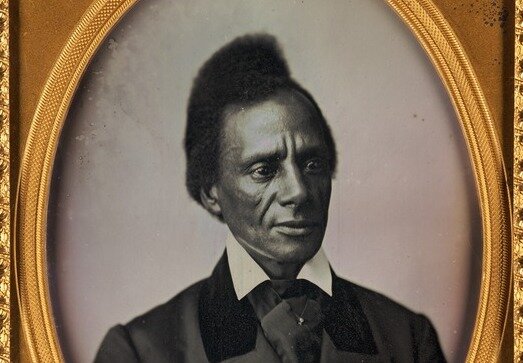
The resolution, adopted by a vote of 252 to 24 at the group’s convention in Boston, followed speeches from prominent abolitionists including Charles Lenox Remond, a Black activist and lecturer who argued that the federal government had become morally indefensible. To remain within the Union, he contended, was to remain complicit in slavery.
Remond dismissed the overall reverence Americans expressed for the Constitution, arguing that Black Americans had little reason to celebrate a system that denied them fundamental rights while protecting human bondage. The Constitution, he said, served the interests of most white Americans while excluding African Americans from its promises of liberty and citizenship.
By the mid-1840s, a faction within the abolitionist movement had embraced disunion as both a political strategy and a moral necessity. Supporters argued that Northern banks, merchants and manufacturers helped sustain slavery through economic ties to the South. More importantly, they believed the federal government had repeatedly shown its disinclination to protect free Black Americans or challenge the proliferation of slavery.
Long before Southern secession in 1860 and 1861, some of the earliest calls to dismantle the Union came from abolitionists in the North but at the time, the goal was not to preserve slavery, but to isolate and weaken it.
“I need not say how greatly I am troubled whenever a difference of opinion exists in the minds of those who love the cause of Freedom. I have tried in my own mind to make out a case for those who do not see eye to eye with us in this matter. But the more I have labored at it, the stronger becomes my conviction of duty in calling for a dissolution of the union between Freedom and Slavery. I speak after long thought, free and full discussion, and the clearest view of all the consequences and all the obstacles. I have taken all things into consideration; and in view of each and of all, I say here, as I did in New York, that if I can only sustain the Constitution, by sustaining Slavery, then—”live or die—sink or swim—survive or perish,” I give my voice for the dissolution of the Union.” – Charles Lenox Remond
Five years later, on May 7, 1849, Frederick Douglass spoke at a gathering of Black citizens at the Abyssinian Baptist Church in New York City, where many of the same frustrations surfaced again. Joined by Remond and the abolitionist Henry Highland Garnet, Douglass condemned the discrimination Black Americans faced in nearly every part of public life, including schools, churches, hotels and transportation.
Douglass called out the contradiction of Black citizens paying taxes while being denied equal access to education, employment and civic participation. In one example, Douglass noted that Black Americans were barred by law from carrying U.S. mail, while newly arrived immigrants could obtain such positions immediately upon entering the country.
Douglass reserved some of his sharpest criticism for what he viewed as passivity within the Black community itself, arguing that progress required organization, self-reliance and sustained activism. White allies could assist the struggle, he said, but African Americans would ultimately have to secure their own advancement through collective effort and public engagement.