


Celebrated every March, Women’s History Month begins the first week of the month. Honored annually, the commemorations honor the contributions of women throughout American history.
This Women’s History Month, we are honoring the lives and impact of several Black women throughout history, beginning with a woman often considered to be the “Mother of the Civil Rights Movement.”
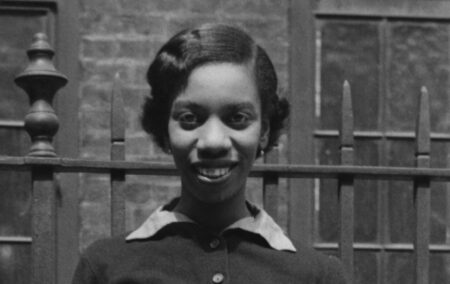
Born in 1914 in Huttig, Arkansas, civil rights activist Daisy Bates was raised in a foster home after three white men murdered her biological mother.
The death of her mother and advice given to her by her adoptive father on his deathbed both stoked Daisy’s desire to confront injustices and racism.
At the age of 15, she met Lucious Christopher Bates, a journalist who would soon become her husband. Together, they helped found the Arkansas State Press in 1941. At the time, the newspaper, distributed across the U.S., was considered one of the few Black-led newspapers dedicated to supporting the Civil Rights Movement.
With the Arkansas State Press, Bates highlighted underreported news of racially motivated murders as the editor, co-publisher and contributor to the newspaper.
In 1942, they covered the murder of Sergeant Thomas P. Foster, a Black soldier from North Carolina who was shot by Arkansas police. After he confronted military police officers for the assault of Private Albert Glover, Foster was cornered in an Alcove where the police attacked him with a nightstick. After he let go of police officer Abner J. Hay in the fight, Foster was shot a total of four times by Hay. He passed away several hours later at the University of Arkansas for Medical Sciences Hospital.
Through the story, Bates drew attention to the lack of Black police officers in the city, writing that Foster was the “highest specimen of military manhood training to make the world safe for democracy, that now, he will never know.”
The Arkansas State Press also became notable as the only newspaper in the state to advocate for school integration, a movement in which Bates became a crucial figure.
By 1952, the civil rights activist had become president of the Arkansas NAACP chapter, helping to lead the charge against school segregation. Along with providing attention to the landmark Brown v. Board of Education case through the Arkansas State Press, Bates became an advocate to the students when segregation was deemed unconstitutional.
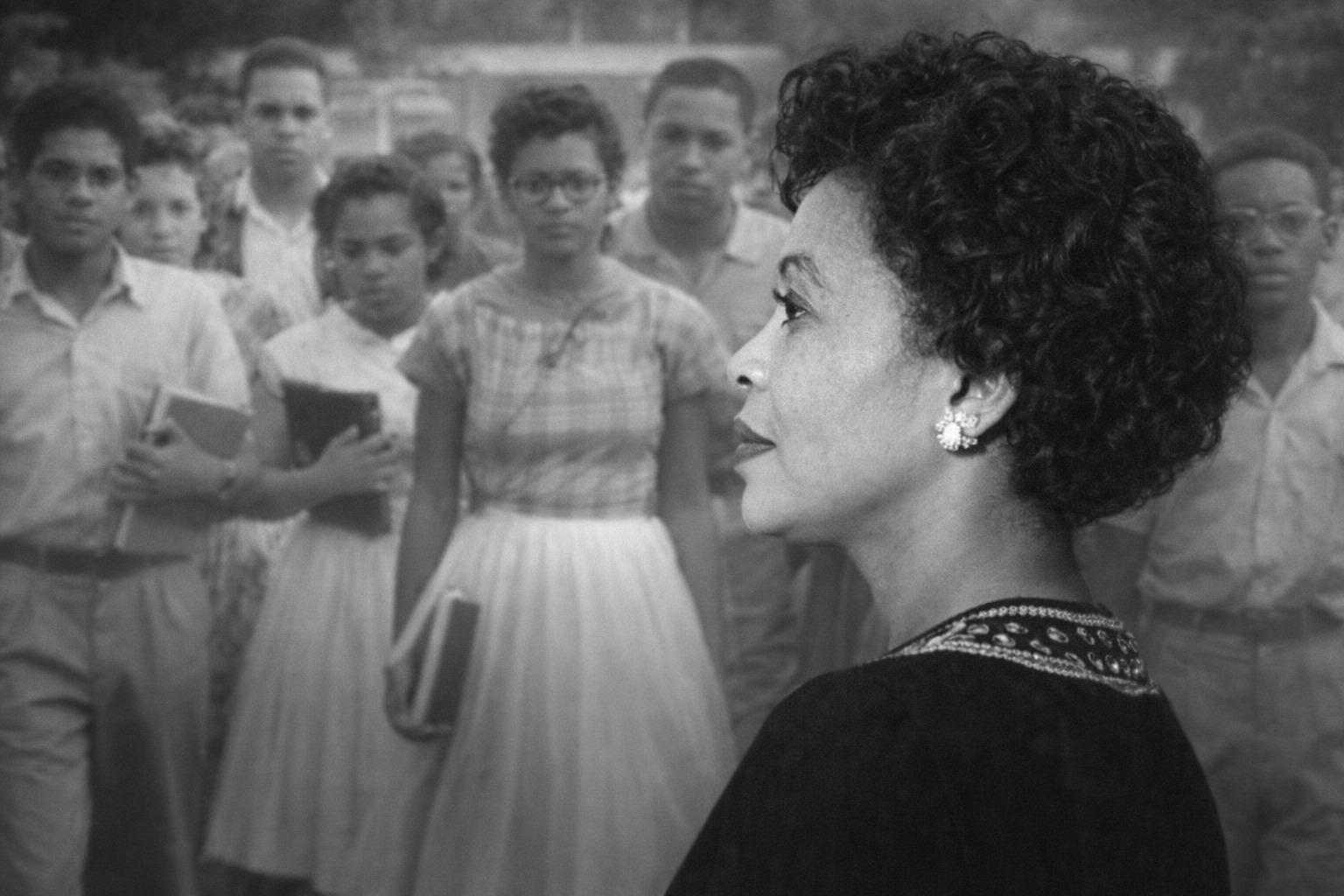
In 1957, when the national NAACP division looked into Arkansas schools, Bates planned the organization of the Little Rock Nine, a group of nine Black students who would be the first to attend Little Rock’s Central High School.
On September 25, 1957, after Governor Orval Faubus sent the National Guard to block their entrance and a mob prevented them from entering, the nine students Bates had chosen for the landmark moment left her home and successfully entered the school. With help from the National Guard and the U.S. Army, the Little Rock Nine began attending classes regularly at Central High.
Even after the school was successfully integrated, Bates continued to support the students, regularly driving them to school and protecting them from ongoing harassment. In her acclaimed memoir, she recounted meeting with the children each day.
“These meetings were not unlike group therapy,” wrote Bates. “In relating the day’s experiences, all the suppressed emotions within these children came tumbling out.”
As the students continued to face harassment, she kept appealing to the school heads, demanding stronger measures to protect them.
Throughout the entire situation, Bates herself was the recipient of violence. Along with bullet shells placed in her mailbox, the civil rights activist had rocks thrown at her home. Bates was undeterred, and by the end of the 1958 school year, eight of the nine students successfully completed their grade at Central High.
A year later, the Arkansas State Press was forced to shut down due to ongoing threats and low advertising revenue stemming from her involvement with the Little Rock Nine.
Bates and other NAACP figures also surrendered themselves after the Little Rock City Council ordered the local police to arrest them. Charged with failing to provide information on the NAACP membership list, Bates was fined. A U.S. Supreme Court ruling reversed the convictions after the NAACP appealed. She remained on the NAACP board until 1970.
In 1963, Bates also became the only woman to speak at the March on Washington after a last-minute change.
“We will kneel-in, we will sit-in, until we can eat in any corner in the United States,” said Bates in her speech. “We will walk until we are free, until we can walk to any school and take our children to any school in the United States.”
In the late 60s, she moved to Mitchellville, Arkansas, a predominantly Black neighborhood. The neighborhood was already struggling due to a lack of economic resources. While there, Bates organized the Mitchellville Office of Economic Opportunity Self-Help Project, helping to improve the town’s financial stability for six years. She also held positions at the Democratic National Committee and within President Lyndon B. Johnson’s antipoverty programs.
Approximately 16 years later, Bates attempted to revive the Arkansas State Press. However, due to a lack of financial support, she sold the newspaper to Darryl Lunon and Janis Kearney in 1988, who continued to print it until 1997.
On November 4, 1999, Bates passed away in Little Rock at the age of 84 due to a series of strokes.
For her work within the civil rights movement, Bates was posthumously awarded the Medal of Freedom. She was also the recipient of the NAACP Spingarn Medal and Honorary Doctorate of Law from the University of Arkansas.
Bates’ formidable impact was further celebrated with a bronze statue installed in the U.S. Capitol’s National Statuary Hall in 2024.