


Mutual aid is becoming increasingly vital as tribes face climate disasters with insufficient state support.
Truthout is an indispensable resource for activists, movement leaders and workers everywhere. Please make this work possible with a quick donation.
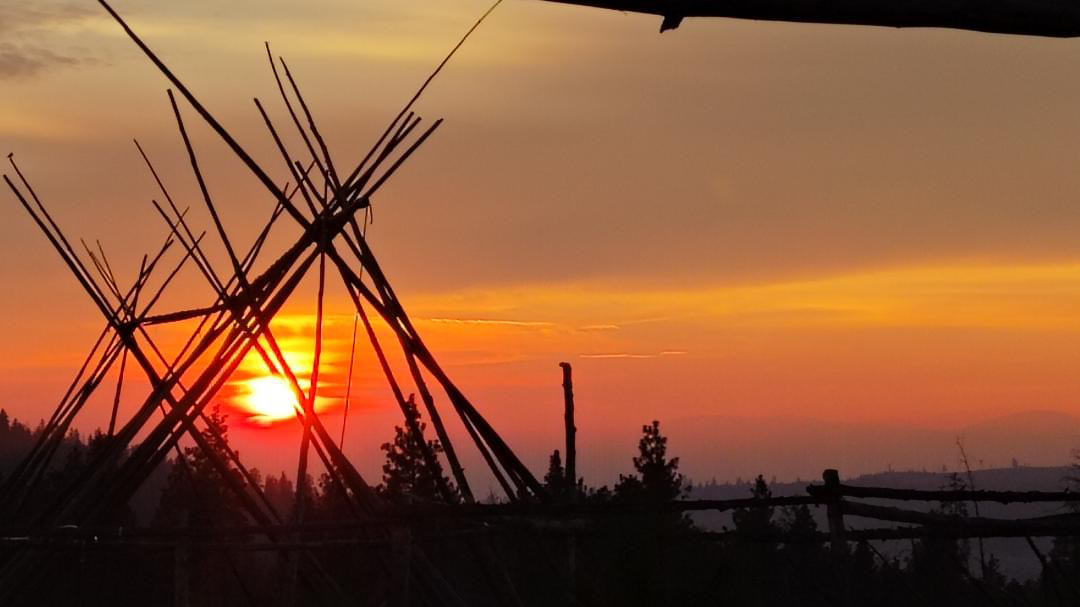
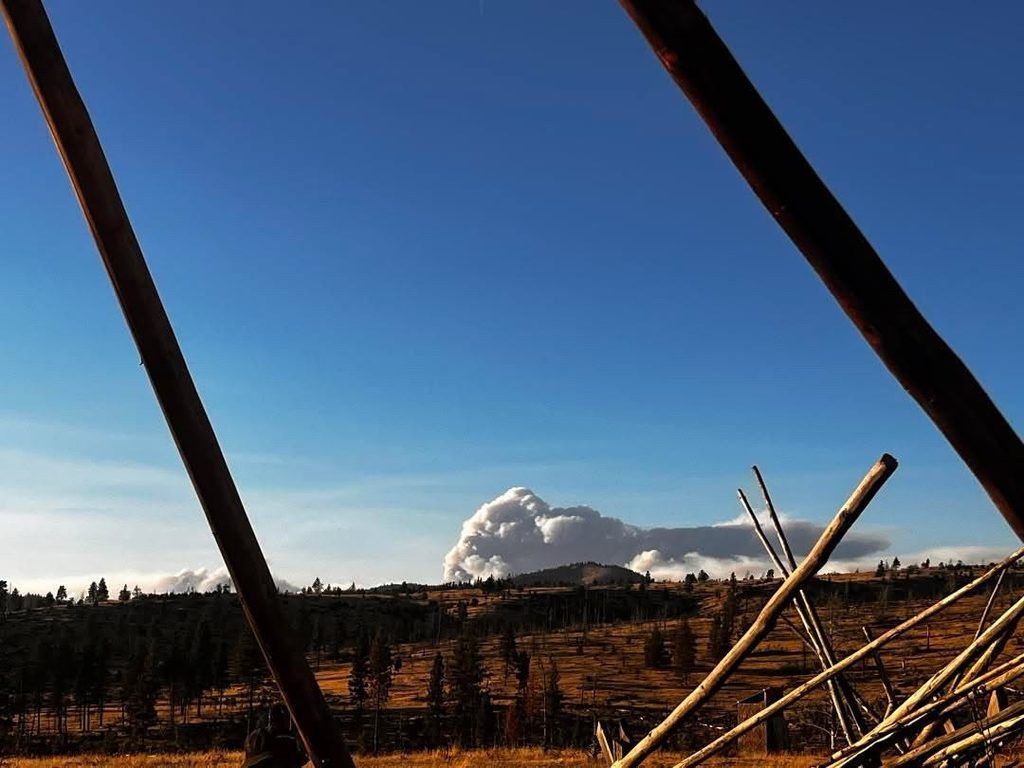
The Confederated Tribes of Warm Springs are still reeling from the Bench Fire, which tore through more than 60,000 acres of the reservation in north central Oregon in July and August, but Indigenous activists are working hard to provide for the community amid an ongoing water crisis with limited state resources.
Wildfires continue to grow more prevalent as a result of global warming, an outcome fossil fuel companies were well aware would come about decades ago, and Indigenous communities are forced to manage disproportionate impacts during a crisis that some see as a continuing erasure of their culture, people, and land.
As firefighting resources were stretched thin across Oregon, and even experienced firefighters were reportedly caught off guard by the erratic nature of the Bench Fire, Indigenous community members stepped in.
Nukshai
Warm Springs remains in recovery, but grassroots organizers who grew up on the reservation have managed to remedy some of the crisis during and after the fire through mutual aid and direct action.
Colletta Macy, or Nukshai, was one of those organizers, collecting donations from around the state, supplying drinking water for impacted families, and even fighting the fires.
“We have fires every year, we’re used to wildfires,” Nukshai told Truthout. “This year was way different…. Even we had to go under the radar and help out the families in an area that was close to the fire because there’s no resources for prevention. We had a security officer from the wildland firefighter team that was like, ‘We don’t have the resources or the manpower to do this.’”
Angela, or XulXiYut, another organizer, joined Nukshai in digging fire lines — clearing the ground of vegetation and debris to slow fires down — to protect community members and their homes despite officials advising against this due to the risks.
“We literally had people digging fire lines, but had to have escorts because it’s a risk,” XulXiYut said. “We had to kind of fly under the radar in order to be able to do this because we didn’t want to upset anybody, and we didn’t want our efforts to be stopped. We just wanted to help people.”
While digging fire lines and saving homes may be flashier than handing out supply drops, organizers raised almost $35,000 by the end of July for water, hygiene products, and other resources to distribute to the community.
“We literally had people digging fire lines, but had to have escorts because it’s a risk.”
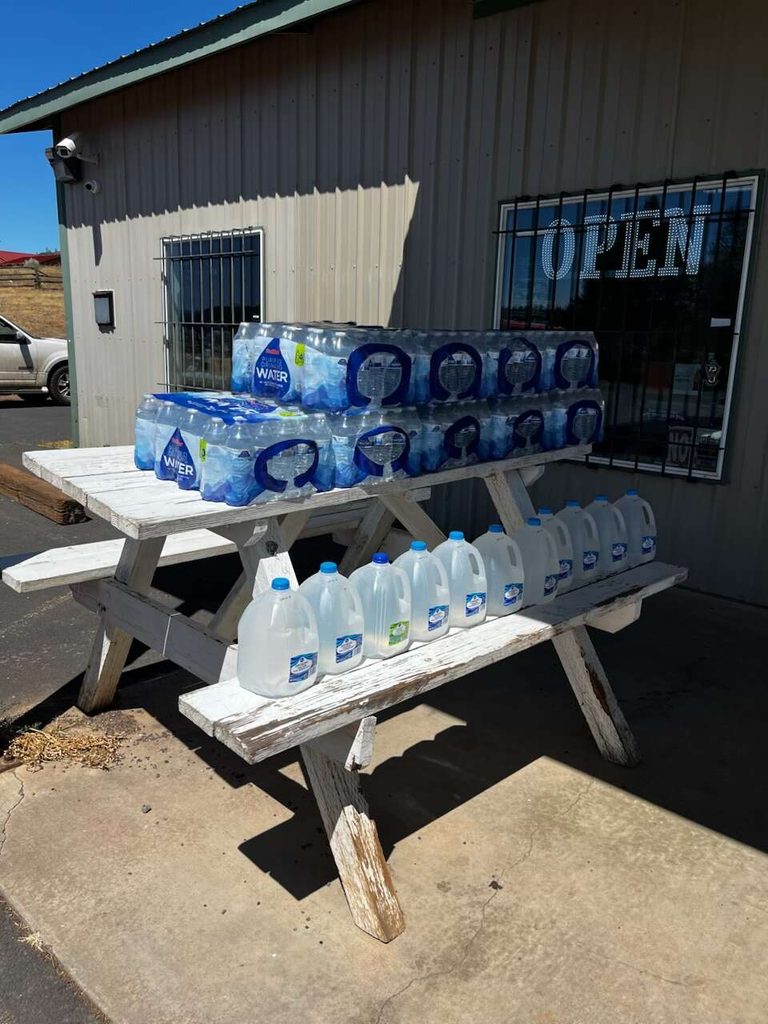
Water was particularly important as tribal authorities issued a water conservation order and boil water advisory to parts of the community on July 27.
Amanda Squiemphen-Yazzie, an organizer and outreach coordinator with Ecotrust, a social and environmental nonprofit working with communities around the country, stressed that water in Warm Springs was already a contentious issue before the fire.
XulXiYut
“The lack of infrastructure when this fire happened, it just really puts on the map our most vulnerable piece of our reservation is the ongoing water issue,” Squiemphen-Yazzie told Truthout.
Much of the water infrastructure in Warm Springs is outdated, meaning many families experienced periodic boil water advisories even before the fires, with some relying on mutual aid throughout the year. In some cases, tribe members don’t have vehicles to reach regular water drop stations, so organizers have to step in.
“No one should have to go out of their way just to be able to drink a clean glass of water,” XulXiYut said. “I think this was like six years ago, actually. I would bring a whole fridge truck to Simnasho Longhouse because that’s like a half an hour from Warm Springs and these are all backroads … There’s no bus that’s going to take them from place to place.”
Erasure
This story of infrastructure complications, lack of necessary state investment, and crises like wildfires falling on the community may be indicative of a broader problem.
A 2024 study published in Proceedings of the National Academy of Sciences found Indigenous communities in California face disproportionate impacts from wildfires — around 1.7 times the amount of wildfire smoke compared to statewide populations — which can lead to serious negative health impacts, according to the Environmental Protection Agency.
Indigenous communities in California face disproportionate impacts from wildfires — around 1.7 times the amount of wildfire smoke compared to statewide populations.
An analysis from the Urban Institute found that Indigenous communities are more likely to be exposed to disasters, while simultaneously facing “systemic social and economic challenges, such as undermaintained housing stocks and higher rates of chronic health conditions, which make disasters more damaging and more difficult to recover from.”
These concerns were echoed by Nukshai, XulXiYut, and Squiemphen-Yazzie, who all noted how those who lost their homes in the Bench Fire have nowhere to move into on the reservation.
“At the end of the day, this is a result of historical context, and different things, and how we have not been invested in since time immemorial,” Squiemphen-Yazzie said.
Even under ideal circumstances, a fire can be catastrophic. The Urban Institute notes how Indigenous communities across the country lost $4.4 billion in property and crop damage from fires between 2015 and 2024, only receiving a fraction of the recovery grant funding from the Federal Emergency Management Agency (FEMA) in the aftermath.
In Warm Springs, it appears there’s little difference. Squiemphen-Yazzie said 99 percent of the grazing district in Warm Springs burned, leaving families with massive hay expenses to be able to feed cattle and horses.
“It’s already a shitty reservation as it is because of where they put us,” Nukshai said. “We can’t hardly grow anything there, like it’s a barren area. We have to find other ways of growing our foods and sustaining ourselves. And so this is just going to add on to that.”
“It’s a barren area. We have to find other ways of growing our foods and sustaining ourselves. And so this is just going to add on to that.”
Combining historic injustice against tribal communities with the fact that fossil fuel companies have knowingly worsened the climate crisis paints a bleak picture.
As early as the 1950s and 1960s, oil industry scientists began raising concerns about the negative impacts of burning fossil fuels on the climate. Instead of drawing back fossil fuels or warning the public, the industry ran disinformation campaigns to cast doubt on the concept of global warming.
A 2023 analysis from the Union of Concerned Scientists found that “37% of the cumulative burned forest area in western North America since 1986 can be traced to carbon emissions” from cement manufacturers and the world’s 88 largest fossil fuel producers, such as ExxonMobil, BP, Shell, and Chevron.
Some communities, such as Boulder County, Colorado, have turned to suing fossil fuel companies for damages, but these companies largely have not paid back the damage they’ve caused. The case in Boulder awaits a decision from the Supreme Court.
“I feel like once everybody gets sick enough, it’s a part of the population control because they don’t want us here on these lands, they don’t want us around,” Nukshai said. “So this is another form of our genocide being used against us.”
An additional concern among some tribal members is that Big Tech will target their land for data center construction, which has already started across the country.
“We need things in places to sustain ourselves, to be able to have our own farms, have our own food, water, things that we need,” Nukshai said. “There’s other infrastructure and other business and economic development that could be had. Not with this AI data center because what are you going to leave for future generations?”
The fires bring desperation, but data centers offer a quick inflow of cash to the community, albeit with many long-term consequences, including a further land grab. Fossil fuel companies can then make even more money powering these facilities.
Resistance
In the Bench Fire, mutual aid was both a necessity and a means to get around bureaucracy to serve the community, but it’s not the only notable practice from the reservation.
In a post on Facebook, the U.S. Wildland Fire Service noted how “firefighters encountered areas where years of fuels management work by tribal staff, including prescribed fire, timber harvest, mastication and other fuels treatments, had improved conditions across the landscape.”
These practices reportedly improved safety, access, and fire suppression, demonstrating how traditional fire management practices in Indigenous communities are an effective strategy in fending off disasters. Some local fire agencies have even started to look at these once-outlawed practices for fire management.
Cultural burns represent just one area where Indigenous knowledge has been taken for granted for decades by leaders and agencies across the U.S. This care for the land and community can be seen as an act of resistance.
“I pride myself on never letting the world harden me,” XulXiYut said about the mutual aid efforts. “I’m conditioned to care. That’s how I was raised. That’s who I am … And that’s always been something that, as Indigenous people, I feel like has been such a powerful thing, that we never let the world harden us in that way.”
When the state often marginalizes Indigenous communities, that’s where community care and mutual aid efforts have picked up the slack.
“My mom was a boarding school survivor, and it’s been happening, they’ve been having to fight for clean water for so long,” XulXiYut said. “And I’ve been having to go and deliver food boxes because they are starving, basically. I’m having to deliver resources to my family because they don’t have enough.”
The Confederated Tribes of the Warm Springs will require years to recover from the Bench Fire, and they are currently facing the prospect of doing so without adequate government support to cover the damages, and without reparations from the fossil fuel companies that are responsible for worsening extreme weather events.
“I think for a lot of these fossil fuel companies, there really needs to be accountability,” Squiemphen-Yazzie said. “As someone who grew up on the reservation, and as someone who was there supporting mutual aid efforts after this catastrophic wildfire, you really get to see the impact on the families, the homes, and the land firsthand. And I think it really changes how we understand the issue when you get that firsthand experience.”
By Kevin Foster
Kevin Foster is an independent journalist covering activism, politics, and accountability.