





Article by media partner Cuisine Noir, the country’s first Black culinary lifestyle outlet since 2009 dedicated to connecting the African diaspora through food, drink and travel.
When we talk about dining culture, whether around a kitchen table or in a restaurant, the emphasis often falls on what goes on the plate. Although food, flavors, and aromas are central to any meal, what is often overlooked is how it is served.
From plates and bowls to serving dishes and cutlery, tableware used with intention can transform an entire experience. And when those pieces are handmade, such as ceramics, they can carry a deeper sense of meaning.
Black potters have known this for centuries, constantly innovating and reshaping the dining experience by creating work that helps us reimagine how we gather, feast, and fellowship at the table. Today, their creations are gaining wider recognition and steadily growing in popularity.
Crafting Ceramics Influenced by Black Culture and History
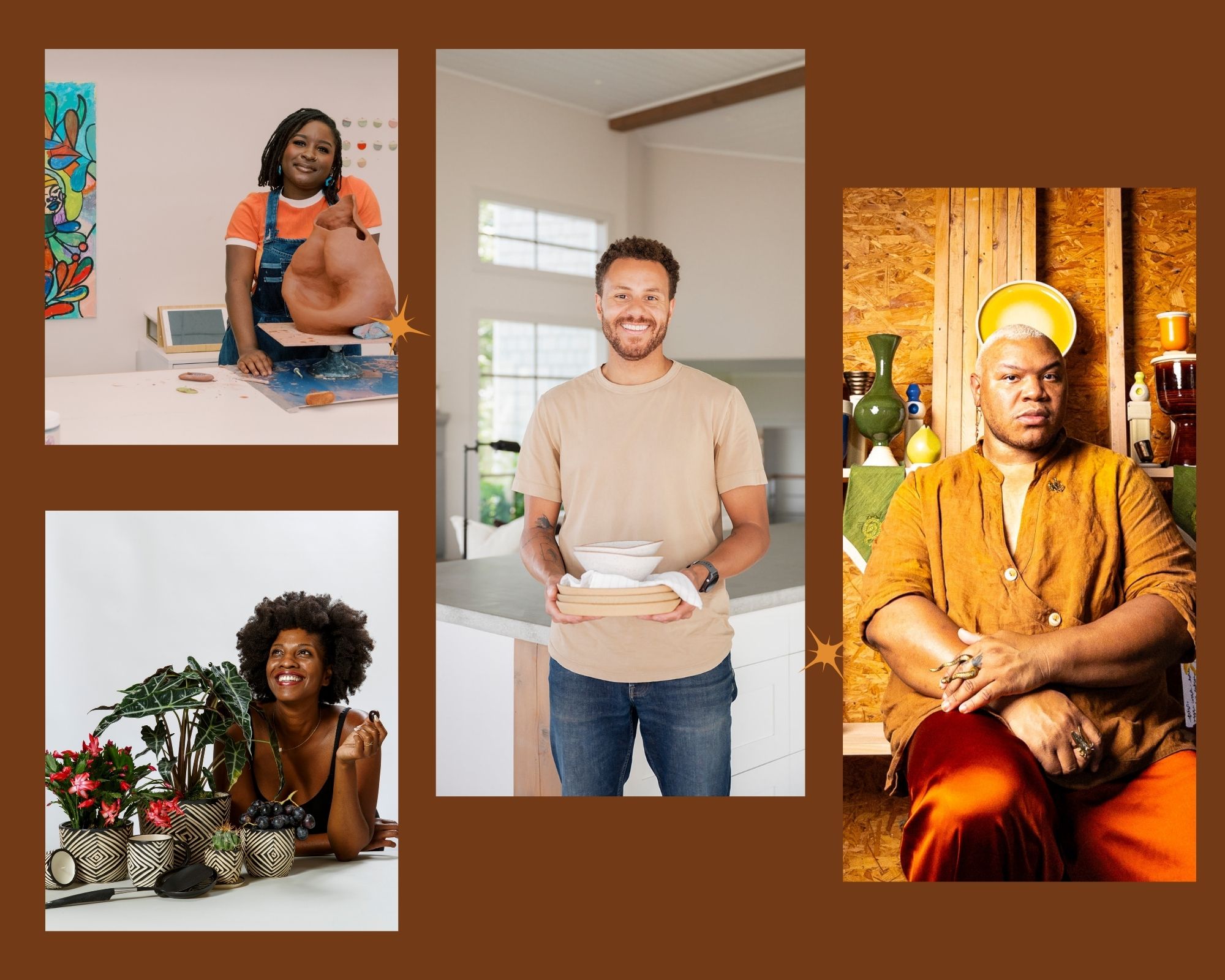
Before Sherród Faulks, founder of DEEP BLACK, became known for his stunning glazes and vibrant tableware, Faulks worked in the tech industry. A slew of life changes led him to take his first ceramics class. This class would ultimately change his career trajectory, eventually leaving corporate America to pursue his ceramics business full-time.
“For the first time in my life, I felt like I could make the things in my head real,” Faulks shares of what drew (and continues to draw) him to clay, “If that’s not magic, I don’t know what is.”
A native and current resident of Portsmouth, Virginia, Faulks grew up in a family where cooking and entertaining were a large part of their familial fellowship. However, he remembers the striking difference between dishes that were relegated to holidays or special occasions and those that could be used every day. This, in part, influenced his approach for DEEP BLACK.
“When I was growing up, we had nice dishes and then everyday dishes, and I always wanted to eat off the nice dishes,” Faulks reminisces. “I believe every meal is deserving of a beautiful dish. I always tell my friends, ‘I don’t want to see my dishes in a cabinet, I want to see them used in your everyday life,'”
Faulks continues, “I love making a space feel extraordinary. Hearing that someone set out my bowls and everyone noticed them, that’s when I know my mission is complete. For me, it’s not enough to just gather people. It has to be a full, immersive experience.”
The beauty, though, is that Faulks’ products aren’t just durable enough for daily use; he also draws from many influences, ranging from the Black queer community and ballroom culture to African history and his own trip to Egypt, an experience that influenced one of his most popular lines, Kemet.
“I’m not the kind of person who’s going to put an obvious Black diasporic symbol on every piece. That has never been my approach. Instead, who I am shows up in how I work. I make it a point to show myself. I want you to know there is a Black hand at work here.”
By Geo Banks-Weston