






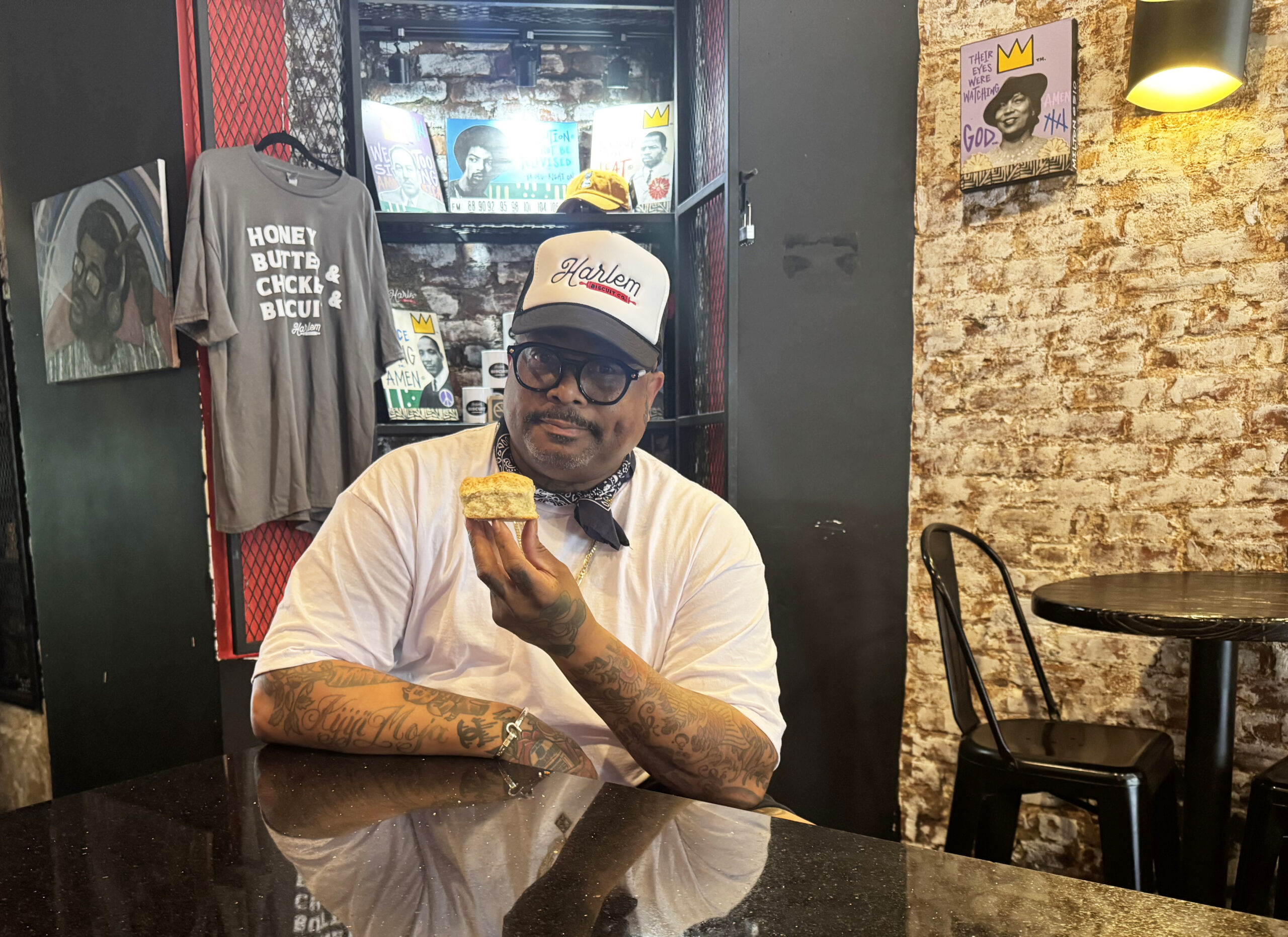
When it comes to cooking competitions, chef Melvin “Boots” Johnson can throw down with the best…and come out on top. The Los Angeles native, who goes by the nickname “Boots” as a nod to his favorite footwear from childhood, has won big as a chef on TV competitions.
Some of the many cooking competitions Chef Boots has conquered include “Chopped,” “Cutthroat Kitchen,” “Man vs. Child” and “Beat Bobby Flay”—where he beat his former boss using his grandmother’s biscuits and gravy recipe.
In addition to being a chef on TV, the culinary talent is also the owner of two restaurants: the iconic Harlem Biscuit Company in New York City and award-winning Bones Smokehouse in St. Croix (a restaurant Chef Boots opened in January of this year) and he also serves as the executive chef of the Victoria Theater Restaurant in the Renaissance Harlem NY hotel.
To top it all off, he’s also launching two new barbecue sauces for sale in restaurants and stores.
Inspiring the Next Culinary Stars
But beyond the accolades as a chef on TV and food industry success, Chef Boots is using his influence to lift up the next generation of culinary stars. “You have to be obsessed with this industry and being the best that you can possibly be in cooking,” shares the self-described southern chef about what motivates him during culinary competitions.
He hopes to instill that same passion in young cooks. To do that, Chef Boots is counting on his visibility as a chef on TV. He shares, “I live here in Harlem. I look like all the other brothers who walk around here. And so when I talk to kids—I speak at career day all the time—I’m relatable…They see themselves.”
Learning the Craft
To further open doors for young talent, Chef Boots runs his culinary mentorship program Drive Change. “I’ve had kids come through my kitchen as interns,” he shares. But finding success like the executive chef requires a reality check.
“Out of all the kids, I’ve hired one…because she had more experience. She worked in the industry first and knew she wanted to go to culinary school. Other kids come out of high school and see stuff on TV and say, ‘I can go to culinary school and become a chef.’ That’s not how it works,” he relates.
“You have to put in the time to learning the craft…You have to be obsessed with being a great chef. You can’t just say, ‘I like to cook.’ It doesn’t work that way. You have to live, breathe it.”
By Jocelyn Amador