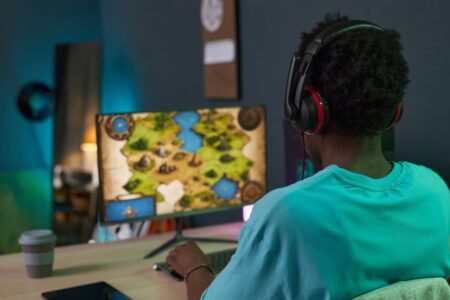





Nonprofit Games for Change announced a new program that will help families navigate their relationships with video games.
Created in partnership with Tencent Games, the program is an extension of the Raising Good Gamers initiative. Developed through global research published from 15 different countries, the new initiative will create a report to provide information to generate “balanced conversations” about video gaming to lawmakers, families and educators.
The initiative will further help families set boundaries around gaming and online behavior to cultivate a healthy online presence for young people. To do so, workshops and conversation guides developed by Games for Change Chief Program Officer Arana Shapiro will be made available.
The program will officially begin its roll-out in both the U.S. and the U.K. in September.
“For many parents, video games are a meaningful part of their children’s lives, but one they don’t always feel equipped to navigate,” said the President of Games for Change, Susanna Pollack, per a statement. “Through this partnership and accompanying research, we’re bringing together data, behavioural science and the voices of families themselves to help address the questions parents have and give them the tools to engage with gaming in a more informed, confident and constructive way.”
The latest program comes amidst an increase in video gaming amongst the youth. Per the Pew Research Center, in the U.S. alone, 85% of teens said that they play video games regularly with 45% identifying themselves as gamers. Globally, per the World Health Organization, at least 34% of adolescents play digital games every day. Approximately 22% of participants in the report spent at least 4 hours gaming.
The trends are consistent amongst adults as there are a reported 3.32 billion active gamers as of 2026.
With the rise in online and digital gaming, video game addiction rates are up. Per a 2024 study conducted by the Stephen M. Ross School of Business, out of a sample group of 13,400 gamers, approximately 15% to 18% showed symptoms of a gaming addiction. Overall, approximately three percent of the global population is addicted to gaming.
For those who are able to find a healthy balance with time designated to gaming, however, it has been linked to lower stress and loneliness while simultaneously increasing creativity.
“Video games are an enriching and widely enjoyed part of modern life, yet public debate around games is too often shaped by narrow or incomplete narratives,” said the Tencent Head of Public Affairs, Danny Marti, per a statement. “By grounding the conversation in evidence and practical experience, this partnership aims to support more informed decision-making and a more balanced understanding of the role video games play in young people’s lives.”