



Black History Month has truly transformed over the years, evolving into a celebration that goes beyond just remembering our past; it encapsulates the abundance of individuality within the African diaspora. This shift is particularly evident in Black cinema, which is currently experiencing a remarkable renaissance.
As we witness a surge of innovative Black directors, actors and diverse storytelling, the film industry is not just showcasing a wider array of experiences but also reflecting the complexity and spirit of our cultures. These narratives bring to life the multifaceted nature of our identities, allowing audiences to engage with stories that resonate on personal and communal levels.
This growth in representation does more than just enrich the cinematic landscape; it highlights the ongoing struggle for visibility and acknowledgment that has historically been denied.
In honor of Black History Month, let’s shine a light on five trailblazing films that have been pivotal in paving the way for greater representation in Hollywood. As noted by acclaimed film critic and editor, Robert Daniels, the films not only broke barriers and told our stories with authenticity and heart, but they were incredibly entertaining, educational and inspiring.
The Flying Ace (1926)
By the 1920s, the film industry began to expand, giving rise to “race films,” which were crafted primarily for Black audiences and often featured predominantly Black casts, despite being produced by white-owned companies. One notable player in this emerging genre was Richard E. Norman and his Norman Studios in Jacksonville, Florida. Among their creations was The Flying Ace, a six-reel film that drew inspiration from the pioneering aviator Bessie Coleman, who tragically lost her life in a plane crash the same year the film debuted.
The story follows Capt. Billy Stokes, a World War I veteran pilot portrayed by Laurence Criner, as he investigates a payroll robbery, with the station master (played by George Colvin) as his main suspect. The plot thickens as the station master’s daughter (Kathryn Boyd) finds herself caught in a love triangle with another pilot, Finley (Harold Platts).
True to the essence of race films, The Flying Ace is a spirited mix of action, romance, comedy and crime, all wrapped in an engaging narrative. One of its standout moments features a thrilling aerial dogfight between Stokes and Finley, showcasing impressive camera effects that highlight the magic of cinema during that era.
Murder in Harlem (1935)
When it came to finding investors and dealing with a complicated exhibition system, Black filmmakers had to be historically creative.
One of the best to ever navigate this was Oscar Micheaux, author, producer and the first major Black American feature filmmaker.
Micheaux started as a novelist and wrote a book called The Homesteader in 1918, which he pitched to the Black-owned Lincoln Motion Picture Company. He then adapted it into a film that he produced and directed through his own company, Micheaux Film and Book Company.
His 34th film, Murder in Harlem, was a remake of his earlier silent film The Gunsaulus Mystery from 1921. In this updated version, a Black novelist named Henry Glory (played by Clarence Brooks) becomes a detective hired by Claudia Vance (Dorothy Van Engle) to help her brother, who is accused of murdering a white woman.
Murder in Harlem is a politically charged mystery that also illustrates the growing financial power of Black people in the northern United States.
The Blood of Jesus (1941)
Watch it on Tubi and the Criterion Channel
In the early 1900s, many Black actors moved from vaudeville to film, and pioneering actor, screenwriter, director and producer Spencer Williams was one of them. He became well-known as a comedian on The Amos ‘n’ Andy Show and his most famous film, The Blood of Jesus, which reflects his interest in Black religious themes, was thought to be lost until the mid-1980s.
In this fantasy movie, a Baptist woman (Cathryn Caviness) accidentally gets shot by her husband (Williams) and falls into a coma. In her dreams, she finds herself at a spiritual crossroads where the devil tries to claim her soul. To show her journey, Williams contrasts beautiful visions of heaven with scenes from a jazz nightclub. He also includes the comforting voices of Reverend R.L. Robinson’s Heavenly Choir, who sing hymns like “Swing Low, Sweet Chariot,” offering a rare glimpse into rural Black life.
Cry, The Beloved Country (1951)
Rent or buy on most popular platforms
Based on Alan Paton’s powerful novel, Zoltan Korda’s film Cry, the Beloved Country features Canada Lee in a poignant role as Stephen Kumalo, a preacher who journeys from his small South African town to the bustling city of Johannesburg in search of his family. During his quest, Kumalo faces heartbreaking revelations: his sister has turned to sex work to survive and his son has been implicated in the murder of a white man. With the guidance of Reverend Msimangu, portrayed by Sidney Poitier, Kumalo grapples with his faith while confronting the brutal realities of apartheid.
It’s interesting to note that Lee and Poitier were not just co-stars but also friends who shared a commitment to civil rights, having both been part of the Committee for the Negro in the Arts alongside the legendary Paul Robeson. Their activism shaped their careers but it also led to significant challenges, including being blacklisted. They represented different eras of the fight for equality and the film’s message about the power of nonviolent resistance resonates with the ideals championed by Dr. Martin Luther King Jr. while Poitier ascended to become one of Hollywood’s leading Black stars.
Lee’s untimely passing in 1952 at just 45 years old marked a tragic moment, just when more doors were beginning to open for Black actors in film.
Black Girl (1966)
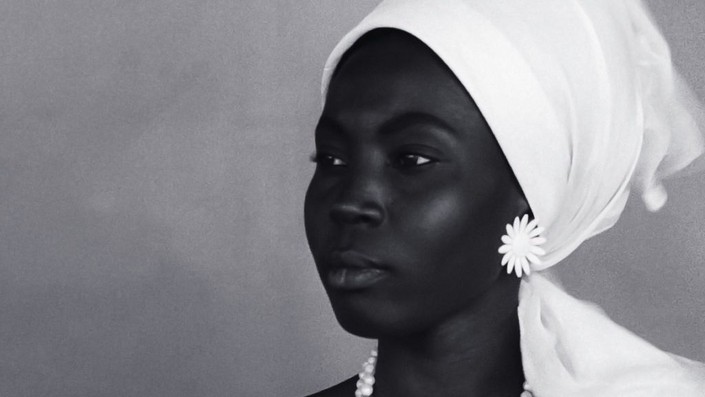
Racism wasn’t just a problem in the United States or South Africa; it also existed in Europe, as shown in the film “Black Girl” by Senegalese director Ousmane Sembène. The story follows Diouana (played by Mbissine Thérèse Diop), who leaves her poor life in Senegal for a job in France, but instead faces low-status work and discrimination. In France, she works as a nanny for a French family and becomes an object of sexual interest at a party hosted by her employers. These experiences lead to a powerful ending where Diouana takes back control of her body and her work.
Like filmmaker Oscar Micheaux, Sembène was a writer before he turned to making films, believing that movies could be an effective way to address political issues. He was inspired to create Black Girl after reading about the death of a Black woman in the news. This film, which was one of the first from sub-Saharan Africa to be recognized internationally, helped kickstart his career, and he is now often called the father of African cinema.