

Close Menu
TheHub.news

    Lessons From Prison on Media Consolidation and Censorship

    By Jeremy Busby

    “The Pivot” Moving to Netflix Shows ESPN Isn’t the Required Home It Once Was

    By FirstandPen

    ‘Eyes on Cuba’: A Conversation About Humanitarian Conditions Facing Cuba in the Midst of Crippling US Blockade

    By Insight News

    Subscribe to Updates

    Get the latest creative news from FooBar about art, design and business.

    X (Twitter) Instagram YouTube
    X (Twitter) Instagram YouTube
    TheHub.news
    Support Our Work
    • Home
    • Our Story
      • News & Views
        • Politics
        • Injustice
        • HBCUs
        • Watch
      • Food
        • Cuisine Noir
        • soulPhoodie
      • Passport Heavy
      • Travel
      • Diaspora
      • This Day
      • Entertainment
      • History
      • Art
      • Music
    • Health
    • Money

      Cashflow Coach: I Planted a Money Tree!

      August 4, 2026

      Breaking Down the 2 Different Types of Income

      July 7, 2026

      Black Americans Are Already Living Through a Recession

      July 6, 2026

      You Must Be an Owner to Win 

      June 23, 2026

      Economic Empowerment Has Always Been a Part of Black History

      February 12, 2026
    • Books
    • Business
    • Sports
      1. First and Pen
      2. View All

      “The Pivot” Moving to Netflix Shows ESPN Isn’t the Required Home It Once Was

      September 4, 2026

      Racist Who Harassed LA Sparks’ Dearica Hamby Fired by Employer

      September 3, 2026

      Stephen A. Smith Running to Fox News Exposed Bigger Issue of Black Media Disrespect

      August 24, 2026

      ESPN’s Black Talent Purge Sends Alarming Message to the Black Sports Community

      August 18, 2026

      “The Pivot” Moving to Netflix Shows ESPN Isn’t the Required Home It Once Was

      September 4, 2026

      Racist Who Harassed LA Sparks’ Dearica Hamby Fired by Employer

      September 3, 2026

      Stephen A. Smith Running to Fox News Exposed Bigger Issue of Black Media Disrespect

      August 24, 2026
      Wilt Chamberlain Portrait.

      This Day in History: The Legacy of Basketball Superstar, Wilt Chamberlain

      August 21, 2026
    • Tech
    • Podcasts
      1. Karen Hunter is Awesome
      2. Lurie Breaks it Down
      3. Human(ing) Well with Amber Cabral
      4. Financially Speaking
      5. In Class with Carr
      6. View All

      Lessons From Prison on Media Consolidation and Censorship

      September 4, 2026

      “The Pivot” Moving to Netflix Shows ESPN Isn’t the Required Home It Once Was

      September 4, 2026

      ‘Eyes on Cuba’: A Conversation About Humanitarian Conditions Facing Cuba in the Midst of Crippling US Blockade

      September 4, 2026

      This Day in History: September 4th

      September 4, 2026

      Lessons From Prison on Media Consolidation and Censorship

      September 4, 2026

      “The Pivot” Moving to Netflix Shows ESPN Isn’t the Required Home It Once Was

      September 4, 2026

      ‘Eyes on Cuba’: A Conversation About Humanitarian Conditions Facing Cuba in the Midst of Crippling US Blockade

      September 4, 2026

      This Day in History: September 4th

      September 4, 2026

      Lessons From Prison on Media Consolidation and Censorship

      September 4, 2026

      “The Pivot” Moving to Netflix Shows ESPN Isn’t the Required Home It Once Was

      September 4, 2026

      ‘Eyes on Cuba’: A Conversation About Humanitarian Conditions Facing Cuba in the Midst of Crippling US Blockade

      September 4, 2026

      This Day in History: September 4th

      September 4, 2026

      Lessons From Prison on Media Consolidation and Censorship

      September 4, 2026

      “The Pivot” Moving to Netflix Shows ESPN Isn’t the Required Home It Once Was

      September 4, 2026

      ‘Eyes on Cuba’: A Conversation About Humanitarian Conditions Facing Cuba in the Midst of Crippling US Blockade

      September 4, 2026

      This Day in History: September 4th

      September 4, 2026

      Lessons From Prison on Media Consolidation and Censorship

      September 4, 2026

      “The Pivot” Moving to Netflix Shows ESPN Isn’t the Required Home It Once Was

      September 4, 2026

      ‘Eyes on Cuba’: A Conversation About Humanitarian Conditions Facing Cuba in the Midst of Crippling US Blockade

      September 4, 2026

      This Day in History: September 4th

      September 4, 2026

      In Class with Carr: King Me: Africana Governance and Purpose in a Changing World

      August 31, 2026

      In Class with Carr: Beginning Black August

      August 3, 2026

      In Class with Carr: “Rock the Vote!”

      July 21, 2026

      In Class with Carr: “Odds and Ends”

      July 13, 2026
    TheHub.news
    Spotlight

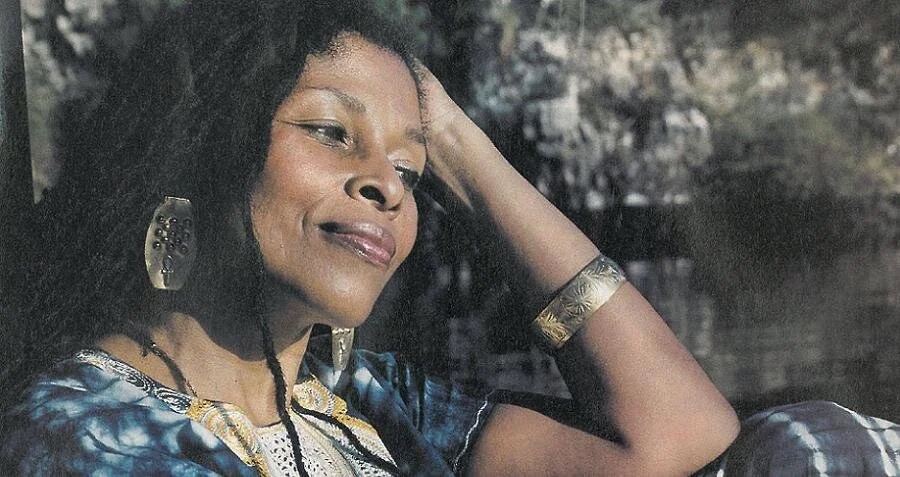
    Assata Shakur, Black Liberation Icon and Former Political Prisoner, Dead at 78

    By TheHub.news StaffSeptember 26, 20256 Mins Read
    Share Email Copy Link
    Share
    Facebook Twitter LinkedIn Email Copy Link Threads

    Assata Shakur, a political activist and former member of the Black Liberation Army who escaped from a New Jersey prison in 1979 and later received political asylum in Cuba, has died.

    She was 78.

    The news was first announced in a press release issued by the Ministry of Foreign Affairs and confirmed shortly after by her daughter, Kakuya Shakur, via Facebook.

    “At approximately 1:15 PM on September 25th, my mother, Assata Shakur, took her last earthly breath. Words cannot describe the depth of loss that I am feeling at this time,” Kayuya’s post reads. “I want to thank you for your loving prayers that continue to anchor me in the strength that I need in this moment. My spirit is overflowing in unison with all of you who are grieving with me at this time. Sending much love and appreciation to you all.”

    On July 16, 1947, Assata Olugbala Shakur, born JoAnne Deborah Byron, was first introduced to the world in Flushing, Queens, New York. Later known by her married name, Joanne Chesimard, she grew up surrounded by a tight-knit family of women after her parents’ early divorce.

    As a small child, Shakur spent her time between Queens and Wilmington, North Carolina, where her grandparents, Lula and Frank Hill, owned and operated a beachfront restaurant. Her summers were spent helping out at the family business, but her grandfather also encouraged her love of books, sparking a lifelong passion for reading.

    Back in Queens, Shakur began to experience the sting of racism and discrimination firsthand. By her early teens, another family breakup left her restless, and she eventually ran away. At just 17, she dropped out of high school and left her mother’s home behind, determined to forge her own path.

    Image credit: WIkimedia Commons

    Shakur joined campus protests, engaged in debates on the Vietnam War, and became active in the Black liberation movement. Shakur briefly joined the Black Panther Party in Harlem, working on its community-based programs, but soon grew critical of its leadership culture. She then gravitated toward the Black Liberation Army (BLA), a militant offshoot that embraced armed struggle.

    Between 1971 and 1973, Shakur faced multiple criminal charges, ranging from bank robbery to assault, most of which ended in acquittals or dismissals. But her life, and public image, would forever be tied to the May 2, 1973, shootout on the New Jersey Turnpike.

    That night, Shakur, along with BLA members Sundiata Acoli and Zayd Malik Shakur, was stopped by state troopers James Harper and Werner Foerster and Foerster and Zayd Shakur were killed, Harper was wounded, and Assata herself was shot twice.

    In 1977, despite arguments from her defense that her wounds made it impossible for her to fire a weapon, Assata was convicted of Foerster’s murder and seven related felonies. She was sentenced to life in prison.

    Mugshot of Assata Shakur, April 1971

    In 1979, just two years into her sentence, Shakur made a daring escape from New Jersey’s Clinton Correctional Facility for Women with the assistance of BLA comrades and the May 19 Communist Organization. After years underground, she resurfaced in Cuba in 1984, where she was granted political asylum.

    Despite attempts to silence her, Shakur continued to speak out.

    “My name is Assata Shakur, and I was born and raised in the United States. I am a descendant of Africans who were kidnapped and brought to the Americas as slaves. I spent my early childhood in the racist segregated South. I later moved to the northern part of the country, where I realized that Black people were equally victimized by racism and oppression,” she wrote an open letter posted to AssataShakur.org.

    Shakur later adds, “I was falsely accused in six different ‘criminal cases,’ and in all six I was eventually acquitted or the charges were dismissed. But these outcomes did not mean that I received justice in the courts.It only meant that the ‘evidence’ presented against me was so flimsy and false that my innocence became evident. This political persecution was part and parcel of the government’s policy of eliminating political opponents by charging them with crimes and arresting them with no regard to the factual basis of such charges.”

    In 1987, she wrote her acclaimed autobiography Assata. She mentored younger activists, but her conflict with the U.S. government continued, culminating in her becoming the first woman to be placed on the FBI’s Most Wanted Terrorists list, with a $2 million bounty on her head.

    In an interview with Pastors for Peace (2000), she opened up about her life after exile.

    “Well, exile is difficult. Anyone who says it’s nothing, that it’s easy, is simplifying things. Exile for me was hard. When I came here I spoke very little Spanish, like two words! I couldn’t communicate, and people would talk to me like I was a blooming idiot. Like, how did they know? The only conversation they could have with me were simple things like “Hello, how are you?” There was no way I could express my personality in Spanish, tell jokes, be specific, describe anything. It was a hard adaptation process. But I went through it and in some ways I guess I continue to go through it,” Shakur explained.

    “For me personally, Cuba has been a healing place. When I first got here I had no sense that I had to heal or anything. When you’re struggling for your life and you’re in the midst of things, you don’t feel all the blows.”

    Shakur’s legacy has had a profound influence on generations of artists. Her godson Tupac Shakur carried her revolutionary spirit into his music, while groups like Public Enemy and Dead Prez invoked her in their fight-the-power anthems.

    Common dedicated a track, “A Song for Assata,” to her, and artists like Mos Def, Talib Kweli and Killer Mike have frequently cited her as an inspiration. Beyond hip-hop, Shakur’s words have appeared in the poetry of figures like June Jordan and Sonia Sanchez, as well as in protest murals and activist art around the world and even global superstar Beyoncé has echoed Shakur’s famous declaration, “It is our duty to fight for our freedom,” in her live performances.

    Rest in Power, Assata Shakur.

    Assata Shakur Cuba political exile revolutionary Thehub.news
    TheHub.news Staff
    • Website
    • Facebook
    • X (Twitter)

    TheHub.news is a storytelling and news platform committed to telling our stories through our lens.With unapologetic facts at the center, we document the lived reality of our experience globally—our progress, our challenges, and our impact—without distortion, dilution, or apology.

    Related Stories

    Did You Know Leonard C. Bailey Was Granted a Patent for His Foldable Bed Design on This Day?

    July 18, 2026

    Did You Know John Stanard Patented Improvements for the Refrigerator on This Day?

    July 14, 2026

    Did You Know Actress Tichina Arnold Was Born on This Day?

    June 28, 2026

    This Day in History: June 24th

    June 24, 2026

    On This Day: Mary Jane Patterson Breaks Ground as the 1st Black Women to Receive a Bachelor’s Degree

    May 21, 2026

    Did You Know Zimbabwe Gained Independence on This Day?

    April 18, 2026
    Recent Posts
    • Lessons From Prison on Media Consolidation and Censorship
    • “The Pivot” Moving to Netflix Shows ESPN Isn’t the Required Home It Once Was
    • ‘Eyes on Cuba’: A Conversation About Humanitarian Conditions Facing Cuba in the Midst of Crippling US Blockade
    • This Day in History: September 4th
    • Racist Who Harassed LA Sparks’ Dearica Hamby Fired by Employer

    Lessons From Prison on Media Consolidation and Censorship

    By Jeremy Busby

    “The Pivot” Moving to Netflix Shows ESPN Isn’t the Required Home It Once Was

    By FirstandPen

    ‘Eyes on Cuba’: A Conversation About Humanitarian Conditions Facing Cuba in the Midst of Crippling US Blockade

    By Insight News

    This Day in History: September 4th

    By TheHub.news Staff

    Subscribe to Updates

    A free newsletter delivering stories that matter straight to your inbox.

    About
    About

    TheHub.news is a storytelling and news platform committed to telling our stories through our lens. With facts at the center, we document the lived reality of our experience globally—our progress, our challenges, and our impact—without distortion, dilution, or apology.

    X (Twitter) Instagram YouTube

    Lessons From Prison on Media Consolidation and Censorship

    By Jeremy Busby

    “The Pivot” Moving to Netflix Shows ESPN Isn’t the Required Home It Once Was

    By FirstandPen

    ‘Eyes on Cuba’: A Conversation About Humanitarian Conditions Facing Cuba in the Midst of Crippling US Blockade

    By Insight News

    This Day in History: September 4th

    By TheHub.news Staff

    Subscribe to Updates

    A free newsletter delivering stories that matter straight to your inbox.

    © 2026 TheHub.news A 501(c)(3) tax-exempt organization.

    Type above and press Enter to search. Press Esc to cancel.