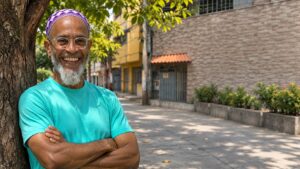


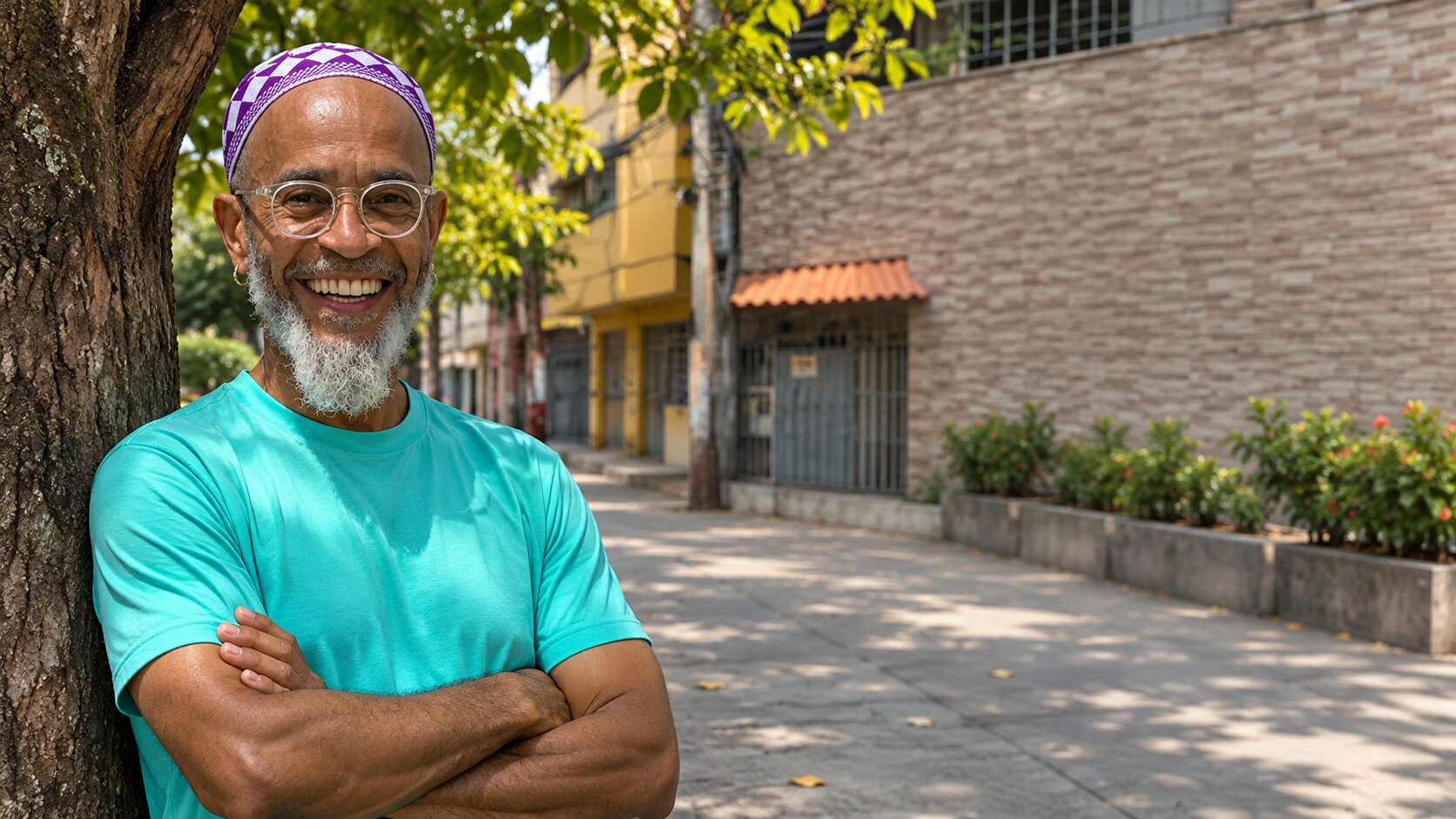
Yoji Senna Adewale Ogunsola discusses Lula’s victory, Nordestino voters and the organizing behind political participation.
“We won.” That was the message Yoji Senna Adewale Ogunsola gave Al McFarlane by phone from Bahia, Brazil, on the morning after the country’s Oct. 25 presidential runoff. A short time later, in an interview on The Conversation with Al McFarlane, Ogunsola described the victory of President Luiz Inácio Lula da Silva as a win for people long discriminated against inside their own country.
“I say that the good won over evil.” — Yoji Senna Adewale Ogunsola
Ogunsola, a capoeira master who lives in Bahia, spoke as a supporter of Lula. He framed the result in moral terms. “I say that the good won over evil,” he said. By “we,” he explained, he meant the people of Brazil’s Northeast, and of Bahia in particular, who he said tipped the balance in the previous election and were fundamental in this one.
Ogunsola focused on the Nordestinos, the people of the Northeast, who he said migrate to Brazil’s industrial areas in search of work. He compared their place in Brazilian society to that of Latino and Mexican immigrants in the United States. Many people in the South, he said, call Nordestinos undereducated and dependent on social welfare.
Lula is himself a Nordestino, Ogunsola noted, one who migrated south looking for a better job. He described Lula’s rise from a child shoeshiner to factory work and to organizing workers’ strikes during the last years of Brazil’s military dictatorship.
He tied the region’s politics to questions of development. The Northeast has historically suffered droughts, he said, and still lacks investment. He credited Lula with the transposition of the São Francisco River, a large infrastructure project to bring irrigation to places that were historically dry.
But the conversation was also about organization. Flávio Bolsonaro, Lula’s opponent in the runoff, and his allies won the first round, Ogunsola said, and believed the contest was over. “That was their mistake: they got complacent,” he said.
Ogunsola described a digital campaign as the other half of that effort. After the first-round loss, he said, congressman André Janones assembled an online network in the last two weeks of the campaign. It is called O Exército de Lula, or Lula’s Army. Supporters, Ogunsola said, used WhatsApp lists to coordinate actions against what he called big tech, meaning Instagram and Facebook, and to launch hashtags on X.
“I think what we did is we gave a blueprint for how to defeat fascists in the twenty-first century.” — Yoji Senna Adewale Ogunsola
He called the combination of street action and online mobilization a model for defeating what he calls fascists. “I think what we did is we gave a blueprint for how to defeat fascists in the twenty-first century,” he said. He then spelled out the two parts of the strategy. “It’s not only necessary to have boots on the streets, but it’s necessary to have that same mobilization online,” he said. Protest alone, he warned, leaves people open to being gassed, killed and beaten up, so demonstrations need a strategy not to get hurt, paired with coordinated action on social media.
Ogunsola drew parallels with the United States. Brazil, he said, is a large country of immigrants and of descendants of enslaved and Indigenous people, much like the United States, and what happens culturally and politically in the United States tends to reach Brazil sooner or later. He said the rise of the MAGA movement empowered Brazil’s far right.
He also pointed to higher education. Free federal universities and quota policies, he said, mean many students are now the sons and daughters of maids, bricklayers, factory workers and market vendors. After the first-round loss, he said, university students began protesting.
McFarlane tied the Brazilian result to the coming U.S. midterm elections, which he called a test of whether people can reclaim and save democracy. Ogunsola said that, good or bad, the United States is the beacon of the world, and that an authoritarian government there lends legitimacy to others with a fascist lineage.
He urged American voters, including those he said have been disenfranchised by Donald Trump, to go to the polls. “Do not stay home,” he said. He added a call to organize. “Join arms, find another person of good heart, and vote,” he said.
Lula recognized that he lost the first round because his sympathizers were not mobilized, Ogunsola said. The lesson he drew from Bahia was that people who organize together, on the streets and online, can change the outcome.