
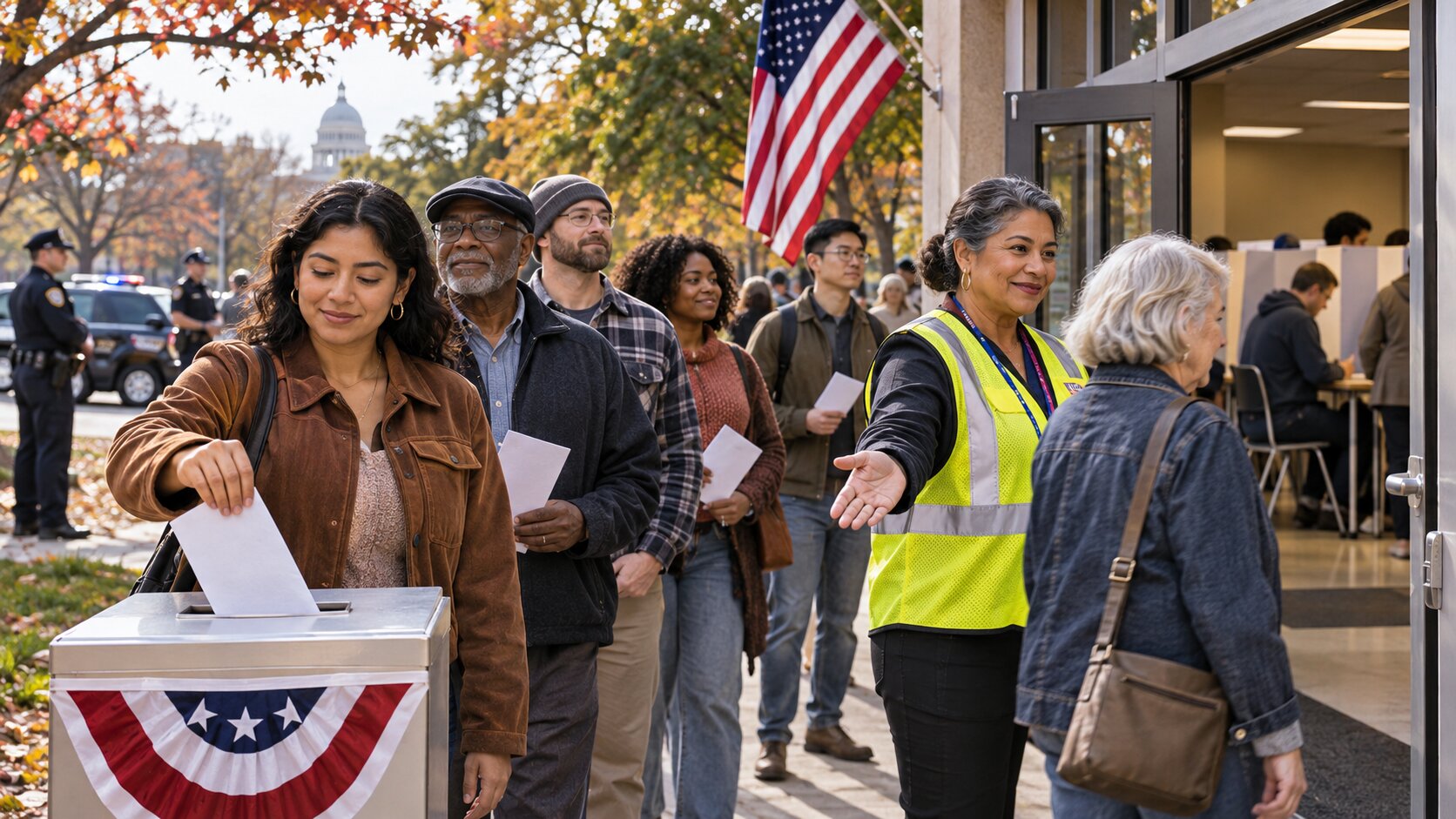
With the 2026 midterm elections set for Tuesday, Nov. 3, voting rights advocates urge Americans to take precautions to protect themselves from intimidation, misinformation, and potential confrontations at polling places.
The Southern Poverty Law Center (SPLC) has released a voter safety guide offering practical advice for eligible voters concerned about the possible presence of Immigration and Customs Enforcement agents, law enforcement officers or extremist groups during the election.
The organization reminds Americans that voter intimidation is illegal and that eligible voters have the right to cast their ballots without threats or interference.
Here are five ways the SPLC recommends staying safe while exercising your right to vote.
Make a voting plan and know your state’s requirements
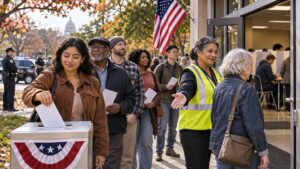
Before heading to the polls, verify your voter registration status, confirm your polling location and review your state’s identification requirements.
The SPLC recommends voting early or by mail when possible to avoid potential disturbances at polling locations. With Election Day approaching, voters should check whether early voting remains available and confirm the deadlines for returning mail ballots.
Voters should also bring any required identification and keep backup documents accessible in case questions arise about their eligibility.
Bring friends or family members for support
“There is safety, joy and community in numbers,” the SPLC states.
The organization recommends traveling to polling places with other eligible voters who understand and follow election rules.
Having someone accompany you can provide reassurance and ensure there is a witness if an uncomfortable interaction occurs.
Voters should also identify official election workers upon arrival. These individuals are responsible for overseeing the voting process and can help address questions or concerns.
Avoid confrontations with law enforcement or suspicious individuals
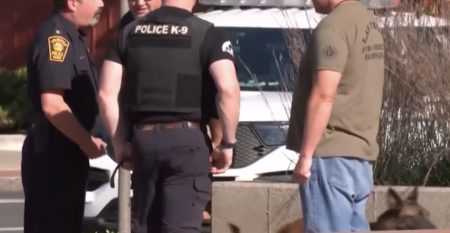
The SPLC advises voters not to confront people they believe may be federal agents, extremists or other individuals attempting to disrupt voting.
“You should never confront or provoke anyone you see at the polls, even if they appear threatening,” the organization warns.
Voters should avoid yelling, arguing or engaging in aggressive behavior, particularly near polling entrances where electioneering restrictions may apply.
If you suspect federal agents are interfering with voting, contact the Election Protection Hotline at 866-OUR-VOTE (866-687-8683). If it is safe, notify an official election worker about what you observed.
Avoid spreading misinformation about ICE activity
The SPLC cautions voters against sharing unverified reports of immigration enforcement activity at polling locations.
Someone’s uniform, mask, badge or appearance does not necessarily establish whether they are a federal agent.
Unconfirmed reports circulating on social media can create unnecessary fear and discourage eligible voters from participating in elections.
Instead of posting allegations online, voters should contact the Election Protection Hotline so trained volunteers can assess suspicious activity and determine whether further action is necessary.
Know your rights and prioritize your safety
Eligible voters have the right to cast their ballots without intimidation or unlawful interference.
The SPLC also reminds Americans that speaking a language other than English at a polling location does not eliminate their voting rights.
If a situation becomes threatening, voters should prioritize their personal safety, move away from the disturbance and seek assistance.
Those experiencing intimidation or other election-related problems can call 866-OUR-VOTE (866-687-8683) for assistance in English or 888-VE-Y-VOTA (888-839-8682) for assistance in Spanish.
“Voting is how we hold the people in power to account,” the SPLC states.
The organization also provides state-specific voter protection resources for Alabama, Florida, Georgia, Louisiana and Mississippi.
Voters can access the SPLC’s complete voter safety guide for additional information ahead of Election Day.