



A Black Woman’s Guide to Turkey Hair Transplants
With 24 years of experience as a hairdresser, I can say (with my whole chest!), when it comes to Black women, hair is never just hair.
Every twist, braid, silk press and loc is a beautiful mix of identity, how we deliberately choose to show up in the world and an act of sheer resilience. It is our story – a physical manifestation of the deep roots of our ancestors and the unmatched creative genius of our culture.
But above all, I believe that the salon chair and the rituals of our hair care offer something even deeper.
They create a soft space for self-love, healing and community in a world that constantly challenges us. It’s a time when we are reminded that we are worthy of gentleness, patience and celebration.
So when tension, tight styles or biology take a toll on our hair – our hairlines especially – the emotional weight can be unbearably heavy.
And the journey to fix it can often feel isolating and absurdly expensive.
This is why an increasing number of Black women are taking control of the narrative and the outcome. They are packing their neck pillows, updating their passports and leaving the edge control at home for direct flights to Turkey to reclaim their confidence and peace of mind.
Istanbul has quietly become the global epicenter for hair restoration. What used to be a niche medical trip for balding British white men has turned into the newest wellness Black-girl getaway. And it is a powerful pipeline for those seeking real, lasting relief.
These bright, seaside Turkish clinics are offering specialized care at a fraction of Western costs, turning what was once a source of daily anxiety for Black women into an empowering, life-improving investment in themselves.
It’s a bold, calculated move and for thousands of women, the return on investment is nothing short of life-changing.
But while the payoff can be immense, this endeavor requires sharp eyes and careful choices.
Let’s break down exactly why this phenomenon is exploding, what the risks are and how to make sure you’re keeping your scalp (and your life) in safe hands.
Last fall, Eloise Dufka, a 25-year-old fashion and lifestyle content creator from New York City, began to notice her hairline thinning, a concern that arose after she had been styling her hair in an ultra smooth, slicked-back bun almost every day since 2022.
A dermatologist never officially diagnosed her hair condition.
While searching for solutions, she stumbled upon a TikTok video featuring a woman who shared her encouraging experience with a Turkish clinic called HairNeva.
Numerous testimonials from women who had undergone successful procedures swayed Eloise to reach out through their website; for her, the process was refreshingly simple: she sent the clinic photos of her hairline and spoke with a concierge about the procedure.
Following their chat, she received a detailed text recap that included images illustrating what the surgery would entail, the estimated number of grafts she would need and a price quote. Excited by the possibilities, Eloise quickly booked her round-trip flights from Paris to Istanbul, eager to embark on her journey toward feeling better and achieving the look she desired.
In a recent interview with Allure, Eloise shared that she arrived in Istanbul on November 13, 2025. She was greeted by a transportation service arranged by HairNeva and taken to a Marriott hotel conveniently located in the same building as the clinic.
The following morning was all about the formalities. She met with her doctor for a comprehensive consultation that included taking her blood, performing an EKG and marking her new hairline for her approval – an important step in making sure that she was happy with the plan. After this, the medical team shaved a small area on the back of her head to prepare for the extraction of donor follicles. Once everything was set, she was taken into the operating room, where she was numbed before the procedure began.
Eloise had a total of 1,850 grafts removed, a process that took around four hours.
“You’re face down, you’re not asleep,” she described to the beauty publication, “and then after that, they flip you from face down to face up and they go straight into implanting.”
According to Allure, Eloise’s procedure clocked in at about eight to nine hours in the operating room, with one break at the halfway mark. Reflecting on the experience, she now thinks she could have easily flown back home the next day, but her cautious side led her to book a hotel stay until November 19, just in case her swelling turned out to be more than she anticipated.
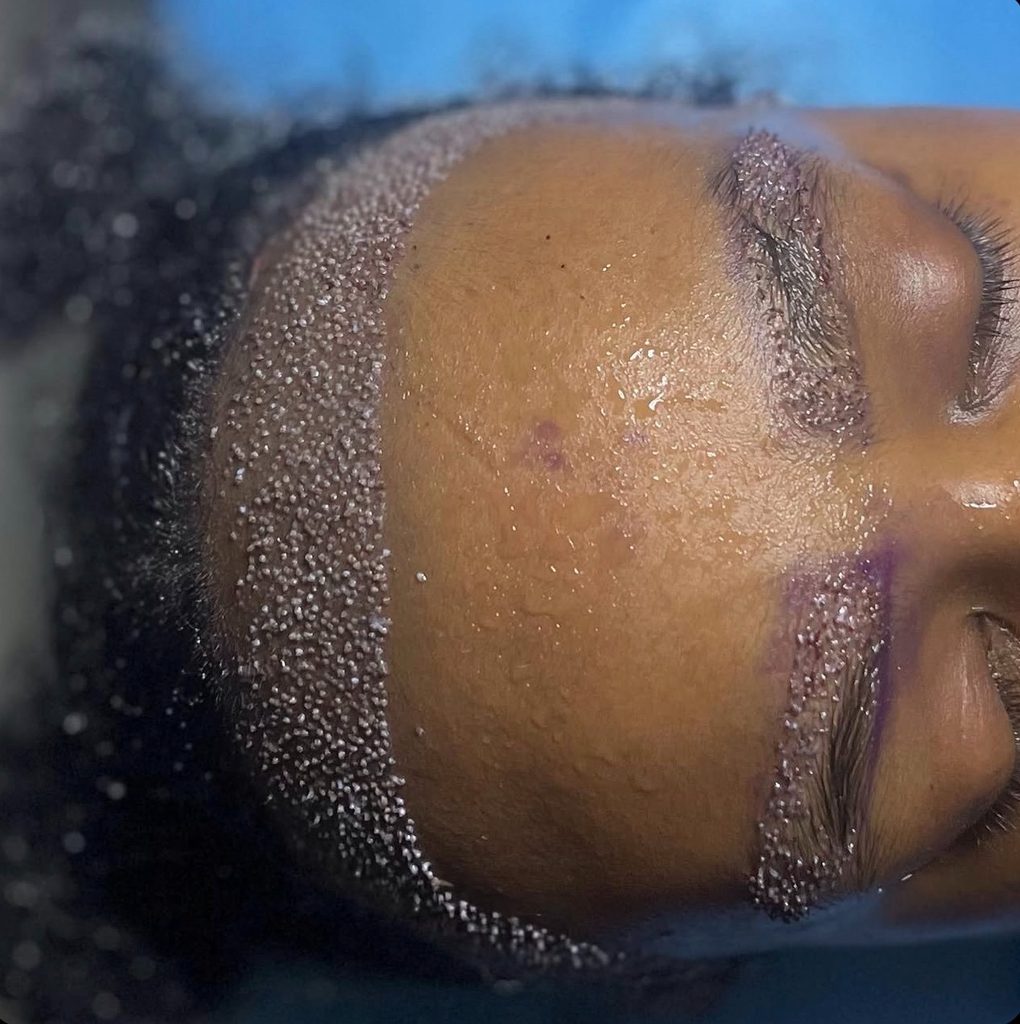
Her total bill came in at $2,900, thanks to a “winter discount” off the original price of $3,300.
Allure reports that, according to the International Society of Hair Restoration Surgery, the number of women undergoing hair transplants worldwide increased by 16.5% from 2021 to 2024.
The publication explains that it’s not because their doctors have secret, futuristic technology. It really comes down to two major things: unbeatable prices and incredible marketing.
Turkish clinics have mastered the art of the hassle-free, all-inclusive package, plastered all over social media to take the stress out of the planning.
Take Eloise’s experience, for example.
Her bundle covered:
- – The transplant itself
- – PRP therapy to boost hair regrowth
- – Post-op meds and a month of special shampoo
- – Local rides and two nights in a hotel
She just had to handle her own flights and food.
In the United States, getting that exact same bundle would cost you anywhere from $7,000 to over $20,000, with the average patient paying around $9,000 to $15,000.
Unlike U.S. clinics, overseas packages like Eloise’s are affordable, straightforward and make a life-changing confidence boost accessible to so many more women. But if you’re looking into this, please remember that our hair isn’t just unique. It is highly nuanced, and it requires a specialist who truly understands it.
So before you book that flight to Turkey, here’s what dermatologists want you to look out for:
1. You need a medical diagnosis first, not just a quote.
A successful transplant depends entirely on why your hair is thinning.
For example, Black women are especially prone to CCCA (Central Centrifugal Cicatricial Alopecia), a type of scarring hair loss.
The risk: If a clinic puts new hair into an actively inflamed or scarring scalp, the transplant will fail completely.
What to do: Many high-volume overseas clinics won’t check for this. You need a dermatologist to confirm your hair loss is from something like traction alopecia and female pattern hair loss before you choose a scalpel.
2. The surgeon and their team need to know the distinctive “C-Shape” of your hair roots.
Your curls don’t just happen on the outside. Afro-textured hair roots curl like a “C” underneath the skin, too.
The risk: If a doctor uses a standard straight tool, they will slice right through your curved hair root and kill the follicle. This is called transection, and that hair will never grow.
What to do: You must find a surgeon who uses specialized tools specifically designed to safely extract curly follicles.
3. Textured hairlines require different mathematics.
Although its natural curl creates the illusion of thickness, Afro-textured hair actually has a lower follicle count per square inch than straight hair.
The risk: A doctor who only works on straight hair won’t know how to angle your grafts. If they get the angle wrong, your hair will grow out looking stiff, straight and unnatural.
What to do: Look for a clinic that has an extensive portfolio showcasing natural-looking results, specifically for Black women.
4. Beware of the “Mega-Session” trap.
Some clinics will try to sell you on a massive number of grafts for one low price.
The risk: Because your donor hair at the back of your head is naturally a bit less dense, pulling too many grafts at once can permanently thin out the back of your head, leaving it looking patchy.
What to do: If a clinic promises you a massive number of grafts over WhatsApp without examining your hair texture in person, view it as a major red flag.
5. Beware of the “Technician vs. Doctor” switch.
In Turkey, there are quite a few “hair mills” where a doctor draws your hairline, walks out and leaves unlicensed technicians to do the actual surgery.
The risk: Because an Afro hair transplant is widely considered the most difficult to perform, you cannot afford to let an assistant practice on you.
What to do: Demand to know exactly who is doing the extractions and the incisions. You deserve a licensed, experienced surgeon from start to finish.
In the end, a trip to Turkey can absolutely be a life-changing win. And for many women like Eloise, it turned out to be a wonderful success story.
Still, because your hair is so incredibly precious, protecting it means doing your homework and knowing the risks beforehand. You deserve to walk into that clinic feeling safe, seen and completely confident that your curls are in expert hands.
Take your time, ask the tough questions and make sure whoever you trust with your crown treats it like royalty.