

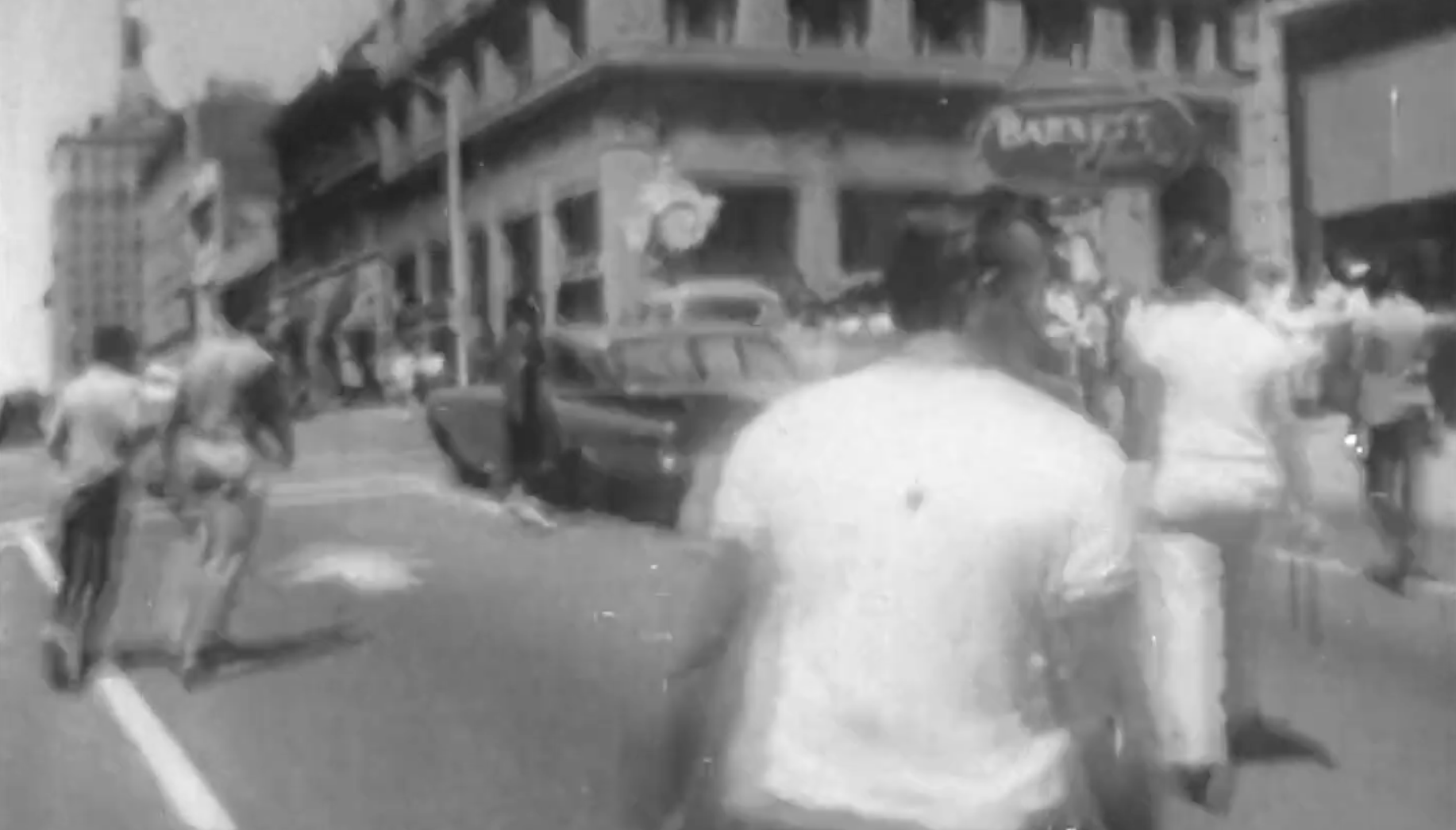
On this day in 1960, a group of Black teenagers who were part of the NAACP was attacked by a mob of white people while protesting in a racially motivated attack known as “Axe Handle Saturday.”
On August 27, NAACP Youth Council President Rodney Hurst, 16, and a dozen of his fellow teenagers took part in a peaceful demonstration. They had organized a sit-in at the Woolworth’s lunch counter.
Across Jacksonville, they had successfully taken part in several sit-ins at places such as Morrison’s Cafeteria after being denied service. The students had at that point organized multiple sit-ins throughout the course of more than two weeks after they initially were racially abused, physically abused and spat at.
When they took part in the sit-in on August 27, however, a group of over 200 white people descended on the teenagers, violently attacking them with baseball bats and axe handles. Initially, the white mob had taken to verbally abusing the group, spitting on them while yelling racial slurs at them.
The demonstrators, however, did not respond. In response to the lack of acknowledgment, the mob violently beat the teenagers with wooden ax handles and baseball bats. They then proceeded to leave the restaurant and continued to attack Black people walking down the street. The police reportedly did not intervene to stop them until Black residents attempted to stop the violence. As the children ran for help, many of the officers did nothing and, at times, even joined in on the violence.
As a result, members of the NAACP called on leaders in Jacksonville to train police officers on how to respond in order to prevent any other future instances of retributive violence.
Over 50 people were left injured as part of the attacks. Approximately 62 people, most of whom were Black, were arrested. The event was reported across newspapers in Chicago, Atlanta, Miami, New York and Tampa, with major outlets such as Life Magazine also reporting on the story. Local newspapers, however, including the Jacksonville Journal and the Jacksonville Times-Union, were reportedly not allowed to cover the attacks.
“We could spend our money there, but not eat where we wanted,” said Hurst per NBC News while recollecting the year. “We had had enough. And we did not let the attackers deter us. We knew they were coming and we voted to sit in anyway. And after an agreed ‘cooling off’ period (of three weeks), we continued to protest and sit in.”
“The intent was to scare, intimidate, and bring physical harm,” added Hurst about the group of attackers.
Following the attacks during the Axe Handle Saturday, the NAACP called on residents to boycott all the segregated businesses in the area after city leaders denied their request for integration.
The Chamber of Commerce ultimately met with NAACP leaders to reach a solution, fearing the economic impact on the city.
To remember the events of the Axe Handle Saturday, a marker was installed at James Weldon Johnson Park yesterday. The plaque is a part of the Jacksonville Civil Rights Trail. It will pay tribute to the brave men and women who participated in the sit-in in the fight for justice during the Civil Rights Movement.
The latest marker is one of 40 markers placed across Jacksonville to commemorate key moments of the Civil Rights Movement. The city joined the U.S. Civil Rights Trail earlier this year alongside other cities such as Virginia, Louisiana, and Tennessee.
Launched in 2018, the U.S. Civil Rights Trail includes more than 130 landmarks, primarily in the South. Each marker represents people or events pivotal to the fight against segregation throughout the 1950s and 1960s.
“We are honored to be chosen as one of the U.S. Civil Rights Trail’s 2026 expansion locations and grateful to everyone who worked so hard to make it possible,” said Jacksonville Mayor Donna Deegan earlier this year when the city joined the trail. “Each of the Jacksonville sites being added to the Trail will add unique and powerful stories that will deepen our understanding of the Civil Rights Movement and the role our city played in it.”