




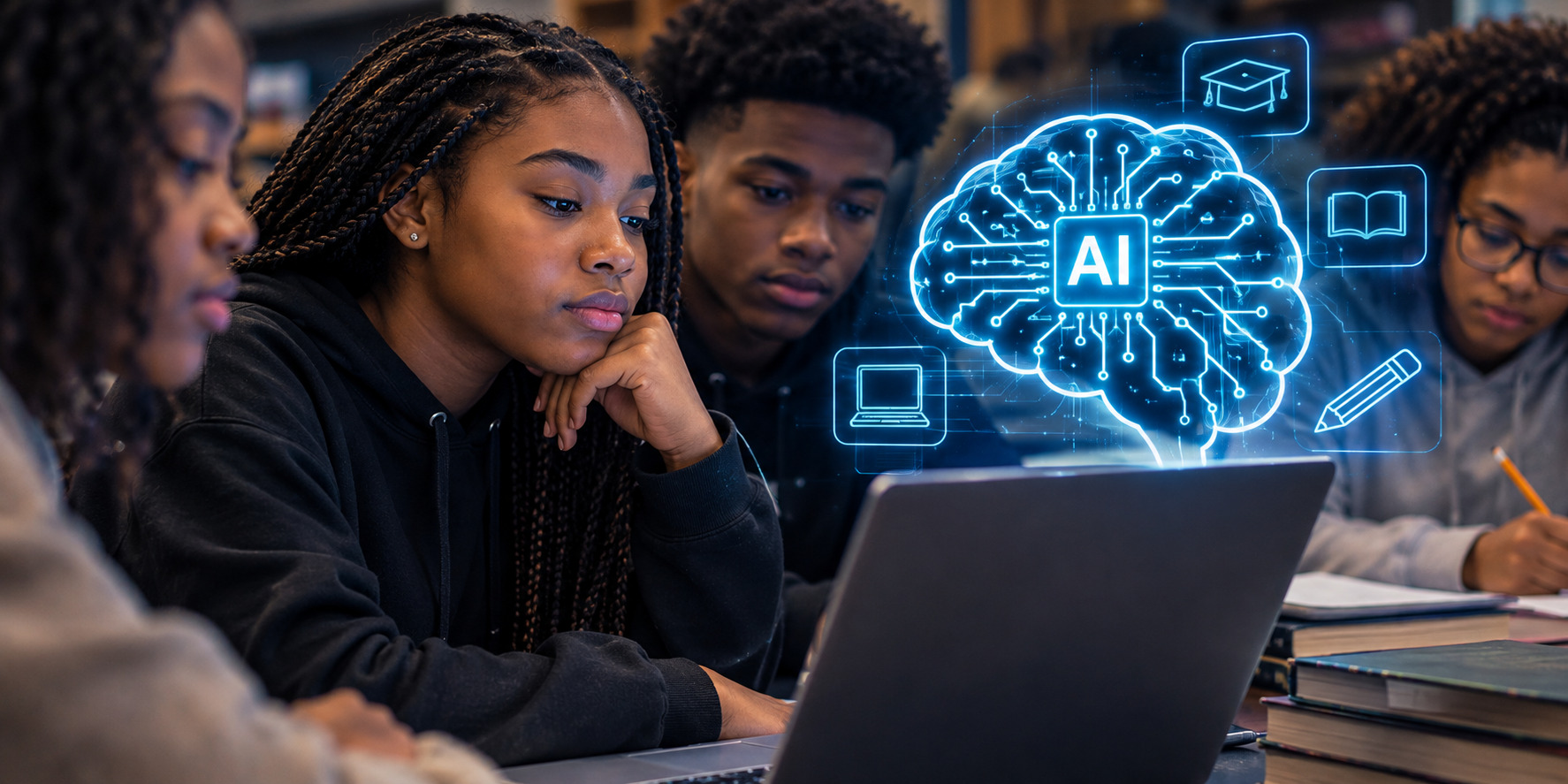
Teens are increasingly using artificial intelligence for schoolwork without developing AI literacy skills, according to a new study by Common Sense Media.
Among a group of 1,000 U.S. teens, about 70% said they used AI for schoolwork despite acknowledging that it can affect the learning experience. About 25% said they tend to use the system’s answer as-is, while 31% and 35% said they often rewrite it or add to it, respectively.
Despite 70% of teens admitting to using AI, only 27% said a teacher taught them how to use it effectively. These conversations with teachers revolve mainly around when to use AI, how it works and how to tell whether the information offered is accurate. Approximately 73% said that they were not taught how to safely incorporate it into their lives. More than 35% said they weren’t even sure of their school’s rules on it.
With increased AI use, teens report feeling the effects. About 38% said it led to fewer ideas of their own, while 39% said they felt they weren’t learning when using AI.
“This practice may make starting homework less challenging by reducing friction in the moment, but could undermine two key skills: initiation of challenging tasks and flexible thinking
that generates new ideas,” wrote the researchers in their report. “These skills are important aspects of executive functioning, which is still developing in the teenage years and helps with planning, focusing, and following through with tasks.”
According to the report, students use AI even when their school has banned it, using personal devices to get around blocked AI tools.
So far, approximately 40% of U.S. high schools have AI tools, such as ChatGPT and Google Gemini, blocked to prevent students from using them.
Universities are quickly following suit and are implementing similar rules. The University of Chicago announced yesterday that it will prohibit the use of AI in its social science courses specifically. Social science courses are one of the nine mandatory topics each undergraduate student must study for their general education curriculum.
The school will aim to facilitate independence from AI, encouraging students to take part in a device-free version of the courses.
“Across campus, members of the UChicago community are building a human-centered vision for AI that balances its potential as a tool for research, pedagogy, and productivity with recognition of its limitations,” said spokesperson Katelyn Yoshimoto per the Chicago Maroon. “President Paul Alivisatos articulated this vision in his February remarks at a campus conference on AI research and a recent message calling on students to think ‘with, without, and about’ machines.”